
.png)
Albums

L'Amante, Mora Vocis, medieval music, sacred vocal music, sacred vocal music, female vocal ensemble, female vocal ensemble, female voices, medieval song, Hildegard von Bingen, contemporary vocal creation, ancient and contemporary music, ancient and contemporary music, medieval music, medieval monody, medieval polyphony, medieval polyphony, medieval polyphony, female vocal ensemble, female vocal ensemble, female voice, medieval polyphony, female vocal ensemble, female voice, medieval song, medieval polyphony, female vocal ensemble, female voice, medieval polyphony, female vocal ensemble, female voice, medieval polyphony, female vocal ensemble, female voice, medieval polyphony, female vocal ensemble, female voice, medieval polyphony, female vocal ensemble, female vocal ensemble, female voice, medieval polyphony, female vocal ensemble, female vocal ensemble


L'Amante — Vocal stroll in a garden of hymns
L'Amante is a vocal and sensory journey into the heart of medieval sacred music, set against contemporary creations written for the Mora Vocis ensemble. Inspired by the Song of Songs, the program explores themes of desire, spiritual quest, and mystical love, in a subtle dialogue between ancient repertoires and contemporary writings. The voice becomes the common thread of a poetic meditation out of time.
Conceived as a true sonic journey, L'Amante unfolds in architectural space, playing with resonances, distances and the memory of places. The female singers of Mora Vocis perform this repertoire from memory, in an approach close to orality, where medieval monodies, ancient polyphonies and contemporary works are mixed. This vocal journey combines pieces by Hildegard von Bingen in particular with compositions by Anne-Marie Deschamps, Jean-Jacques Di Tucci, Daniel Meier, Klaus Huber and Caroline Marçot.
Recorded at night in the Grand Refectory of Fontevraud Abbey, this album benefits from exceptional acoustics that magnify the expressive density of the voices and the almost ritual dimension of the program. L'Amante fully embodies the unique approach of Mora Vocis, where medieval music, contemporary creation and sensory experience intersect. More than just a recording, this album offers immersive, intimate and deeply spiritual listening.
Johann Sebastian Bach, Goldberg Variations, Goldberg Variations guitar duo, Goldberg Variations guitar duo, Duo Mélisande, Duo Mélisande, Sébastien Lestoquoy, piano transcription, baroque music guitar, classical guitar duo, chamber music Bach, chamber music Bach, Bach counterpoint Bach, counterpoint Bach, Bach counterpoint, Bach counterpoint, Bach counterpoint, Bach, counterpoint, Bach, counterpoint, Bach, counterpoint, Bach, counterpoint, Bach, Bach, counterpoint, Bach, Bach, counterpoint, Bach, Bach, counterpoint, Bach, Bach, counterpoint, Bach, Bach, counterpoint, Bach, Bach, counterpoint, Bach, Bach, counterpoint, Bach, Bach, counterpoint, Bach, Bach, counterpoint, Bach, Bach, counterpoint, Bach, Bach, counterpoint, Bach, Bach, counterpoint, Bach
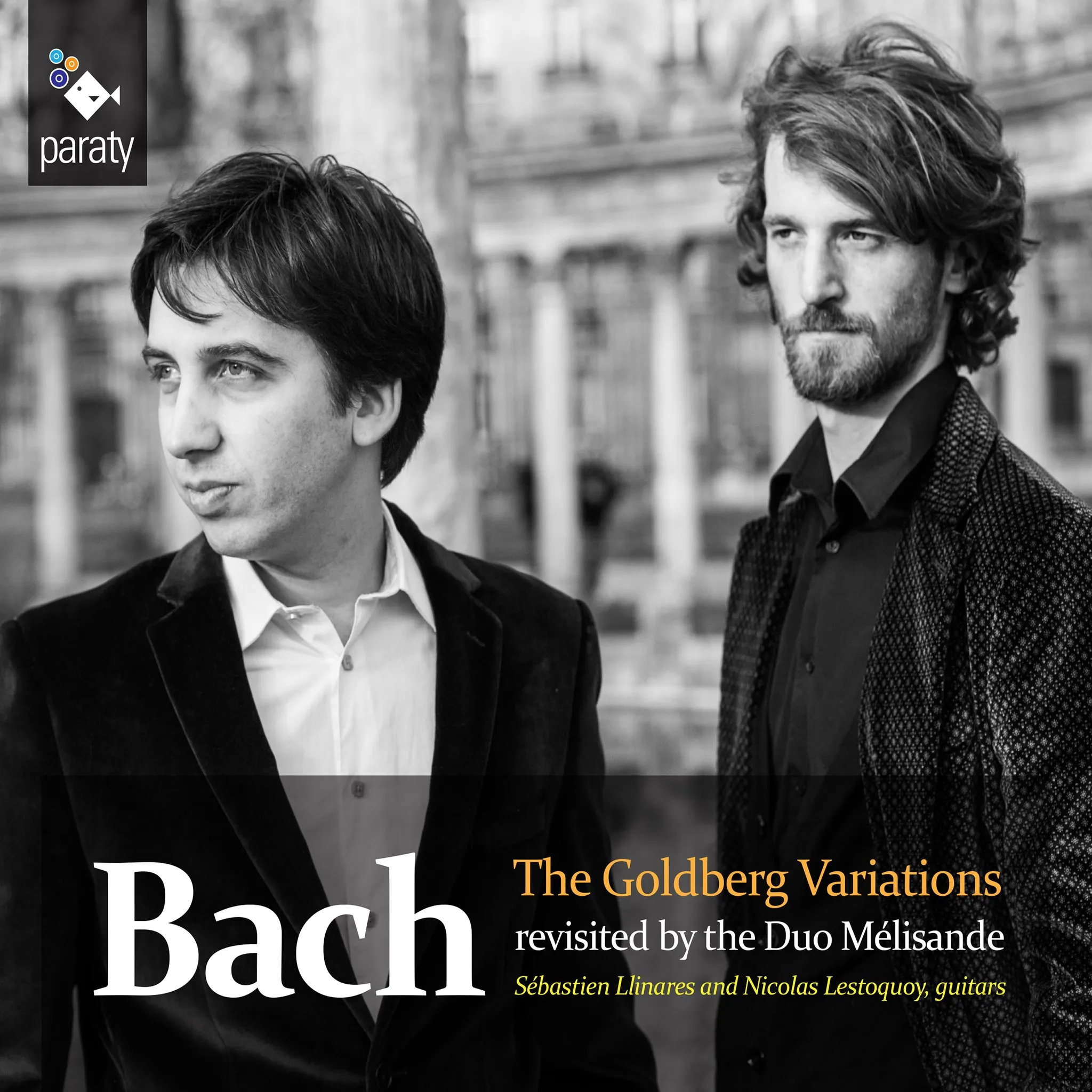
Bach — Goldberg, Duo Mélisande
Addressing Johann Sebastian Bach's Goldberg Variations with two guitars is both daring and deeply thoughtful. For the Duo Mélisande, formed by Sébastien Llinares and Nicolas Lestoquoy, it is neither a question of recreating a period color nor of competing with the harpsichord, but of looking for what remains, what is resistant to time. This approach, which the performers describe as a “black and white” vision, favors the contrapuntal essence and structure of the work, stripped of any expressive overload.
Transcription is part of a fully Bachian tradition. As Sébastien Llinares and Gilles Cantagrel recall in the libretto, Bach himself has continued to adapt and transform his works according to the instruments available, convinced of the fundamentally abstract nature of his music. The transition from harpsichord to guitar is not a break but a natural transition between two plucked string instruments, allowing greater autonomy of the voices and a new readability of the contrapuntal lines, in a unity of tone that the keyboard cannot offer.
Working as a duo involves a common listening and reflex, specific to chamber music. Without seeking artificial homogeneity, Sébastien Llinares and Nicolas Lestoquoy make their differences live in a subtle balance, allowing variations to gradually inhabit them. This reading renews the perception of a masterpiece often considered intangible and recalls that the vitality of the Goldberg Variations is precisely due to their ability to arouse, generation after generation, new appropriations without ever betraying their profound nature.
Olivier Messiaen, Messiaen piano, Marie Vermeulin, 20th century piano music, 20th century piano music, Vingt Regards sur l'Enfant-Jésus, Catalogue d'Oiseaux, Eight Preludes Messiaen, Petites Esquisses d'Oiseaux, Quatre Études de Rhythm, Quatre Études de Rhythm, Mode of values and intensities, Mode of values and intensities, mode of values and intensities, contemporary music piano, contemporary piano, French music 20th century, modern piano, modern piano, musical ornithology, sound-color, non-retrogradable rhythm, musical mysticism, musical mysticism, Roger Muraro, Olivier Messiaen Competition, La Grave Church, Messiaen au Pays de la Meije, Paraty Productions
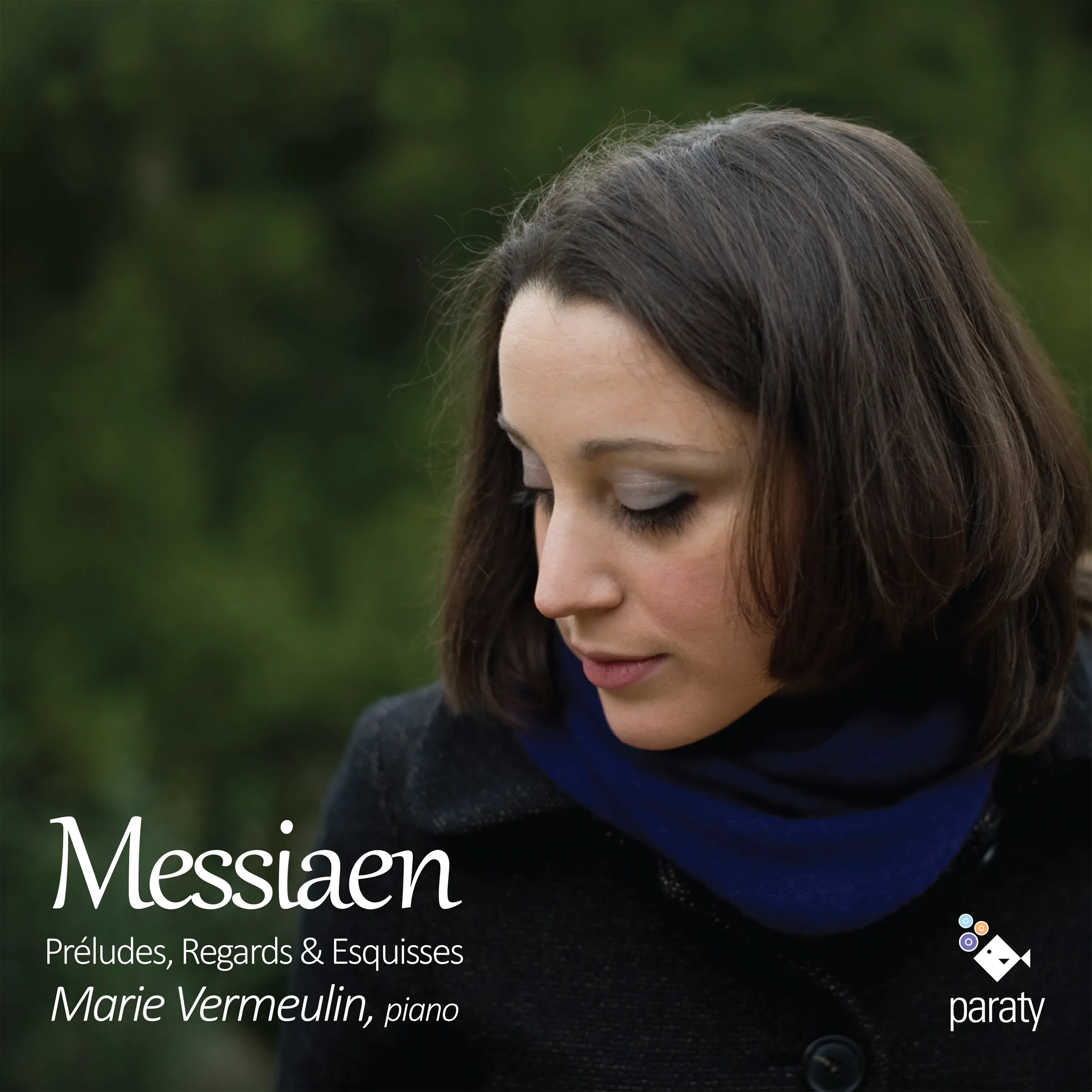
Olivier Messiaen — Piano works
Olivier Messiaen's piano work is one of the absolute peaks of the 20th century repertoire. Through monumental cycles such as Les Vingt Regards sur l'Enfant-Jésus or the Catalogue d'Oiseaux, Messiaen forges a unique language where rhythmic research, sound color, religious symbolism and religious symbolism and a fascination for birds' songs come together. His piano music acts as a bridge between Debussy's heritage and radical modernity, affirmed in particular in the Four Studies of Rhythm and the famous Mode of Values and Intensities. With rare force, it concentrates all the parameters of a deeply personal and immediately recognizable musical universe.
This first monographic disc by Marie Vermeulin offers a coherent journey through this abundant work, from the Eight Preludes of Youth composed between 1928 and 1929 to the final Petites Esquisses d'Oiseaux written in 1985. Two Views from Les Vingt Regards sur l'Enfant-Jésus structure this journey, revealing the evolution of Messiaenian language, from the discovery of sound-color to the affirmation of a multicolored musical mysticism, nourished by non-retrogradable rhythms, polymodality and ornithological references. Far from being a simple overview, this program offers an internal and progressive reading of the composer's thoughts.
A performer deeply committed to this universe, Marie Vermeulin approaches this music with technical mastery, a colorist sensitivity and an expressive intensity that are unanimously acclaimed. Winner of the Olivier Messiaen International Competition, she was encouraged in this exploration by Roger Muraro, a major figure in Messiaen interpretation. Recorded at the church of La Grave, the emblematic venue of the Messiaen Festival in the Pays de la Meije, this record restores the entire spiritual, poetic and visionary dimension of a work that continues to fascinate pianists and listeners around the world.

Jean-Philippe Rameau, Harpsichord pieces in concerts, baroque chamber music, baroque chamber music, baroque music baroque baroque music, Baroque music, Rameau 1741, Bruno Procopio harpsichord, Patrick Bismuth violin, François Lazarevitch flute, François Lazarevitch flute, François Lazarevitch flute, Emmanuelle Guigues flute, Emmanuelle Guigues viola da gamba, Emmanuelle Guigues viola da gamba, French harpsichord, Rückers harpsichord, Rameau 1741, Bruno Procopio harpsichord, French harpsichord, Patrick Bismuth violin, François Lazarevitch flute, François Lazarevitch flute, French flute, Emmanuelle Guigues, Viola da gamba, Emmanuelle Guigues, Viola harpsichord, historically informed interpretation, baroque music Paris, Paraty Productions, baroque music recording
Jean-Philippe Rameau — Harpsichord pieces in concert
Published in Paris in 1741, the Harpsichord Pieces in Concerts occupy a singular place in the work of Jean-Philippe Rameau. Composed at the age of full maturity, when Rameau established himself as the undisputed master of French opera, these pages are his unique contribution to chamber music. Designed for concerted harpsichord accompanied by a violin or flute and a viola or second violin, they are at the crossroads of the Italian traditions of the trio sonata and the French aesthetics of character and dance.
In these five concerts, Rameau gives the harpsichord a central and resolutely solo role. Far from a simple continuo, the instrument dialogues on an equal footing with the tops, alternating unison, colorful accompaniment and concerting passages of great virtuosity. Each piece, generally endowed with an evocative title, sketches the portrait of a place, a patron or a musician close to the composer, revealing a refined art of suggestion and a writing of remarkable formal freedom, nourished by Rameau's theatrical experience.
For this recording, Bruno Procopio brings together Patrick Bismuth on violin, François Lazarevitch on German flutes and Emmanuelle Guigues on viola da gamba, around a harpsichord inspired by the Flemish models of the Rückers family, adapted to the French way. This instrumental choice highlights the clarity of speech, the balance of the tones and the expressive richness of these works, complemented by pieces for solo harpsichord from the Nouvelles suites of harpsichord pieces. The ensemble thus reveals all the modernity and the power of invention of a composer who has never ceased to fascinate his contemporaries as well as the following generations.

Simon Bolivar symphony orchestra, Simon Bolivar, Rameau in Caracas, Jean-Philippe Rameau, French baroque music, baroque ballet, lyric tragedy, Zoroaster Rameau, Castor and Pollux, Dardanus, Les Indes Galantes, Les Indes Galantes, Les Indes Galantes, Les Indes Galantes, Acanthe Galantes, Jean-Philippe Rameau, Jean-Philippe Rameau, Jean-Philippe Rameau, Jean-Philippe Rameau, Rameau and Pollux, Dardanus, Les Indes Galantes, Les Indes Galantes, Acanthe and Céphise, Acanthe and Céphise, Acanthe and Cephise, symphony orchestra, Simón Bolívar Symphony Orchestra of Venezuela, El Sistema, Bruno Procopio, Dardanus, Les Indes Galantes, Les Indes Galantes, Galantes, Chaconne baroque, opera overture, orchestral baroque music, historically-informed interpretation, French Baroque in Venezuela, Paraty Productions, orchestral recording
Rameau in Caracas, Simón Bolívar Symphony Orchestra
Rameau in Caracas was born from the meeting between Bruno Procopio and the musicians of the Simón Bolívar Symphony Orchestra of Venezuela, as part of Sistema. This project offers an immersion in the orchestral and choreographic universe of Jean-Philippe Rameau, through a vast choice of dances and overtures extracted from his lyrical tragedies and operas-ballets, from Zoroaster to Castor and Pollux, from Dardanus to Les Indes Galantes. Designed as a coherent journey, the program highlights the dramatic power, rhythmic richness and orchestral inventiveness of a composer who dominated the 18th century French scene.
Approaching Rameau with a modern symphony orchestra is an assumed artistic challenge. Under the direction of Bruno Procopio, the musicians of the Simón Bolívar Symphony Orchestra of Venezuela appropriate the specificities of the French Baroque language — inequality, ornaments, articulation, hierarchy of dances — to bring out a lively and eloquent reading of this repertoire. Far from a simple series of pieces, the program is built like a real orchestral dramaturgy, structured around large forms such as the chaconnes, real expressive pillars that give the ensemble an almost symphonic dimension.
Recorded in the Simón Bolívar Hall at the Centro de Acción Social por la Música in Caracas, this record testifies to a singular human and musical adventure. It reveals the ability of Sistema orchestras to open up to new repertoires and to integrate their stylistic requirements with remarkable intensity. Rameau in Caracas does not content itself with bringing together two musical worlds: it affirms the universal vitality of French Baroque music and its capacity to fully resonate within a large contemporary orchestra.
Outre-Mers, Marcos Portugal, Missa Grande, Portuguese sacred music, Portuguese sacred music, Luso-Brazilian music, Luso-Brazilian music, music from Portugal, Grande, Missa Grande, Portuguese sacred music, Portuguese organ, Cuenca organ, Olivier Houette, Olivier Houette, sacred music 18th century, Luso-Brazilian music, Luso-Brazilian music, Portuguese-Brazilian music, Olivier Houette, sacred music 18th century, Portuguese-Brazilian music, Olivier Houette, sacred music 18th century, Portuguese-Brazilian music, Olivier Houette, sacred music 18th century, Luso-Brazilian music, music from Portugal, Olivier Houette, sacred music from Portugal, Cuenca organ, Olivier Houette, 18th century sacred music, Olivier Houette, sacred music 18th century, Luso-Brazilian music, music from Portugal, Olivier Houette, sacred music from Portugal, Olivier Houette
Missa Grande, Marcos Portugal
Outre-Mers offers a musical and spiritual journey to the heart of the Luso-Brazilian world at the end of the 18th and the beginning of the 19th centuries, at a pivotal moment when the political, religious and cultural history of Portugal is moving towards the South Atlantic. The Missa Grande by Marcos Portugal, originally composed for the Royal Chapel, embodies this court music intended to magnify royal power while interacting with the liturgical traditions inherited from Europe. The work, of exceptional magnitude, alternates concerted writing, virtuoso solo passages and grand choruses, revealing a language that is both theatrical and deeply expressive.
This interpretation brings together the L'Échelle Choir, directed by Bruno Procopio for the Missa Grande, and Charles Barbier for the plainchants and the contemporary work Quetzal by Caroline Marçot. Halfway between vocal ensemble and chamber choir, the Chœur l'Échelle is distinguished by the versatility of its singers, capable of taking on solo roles while maintaining great collective cohesion. The historic organ of Cuenca Cathedral, played by Olivier Houette, offers an exceptional sonic terrain, making it possible to deploy all the expressive richness of Marcos Portugal's sacred music thanks to its games of echoes, contrasts and spatialization.
With regard to this sacred repertoire, Quetzal by Caroline Marçot introduces a poetic and contemporary dimension, inspired by the imaginaries of the Antilles and the intermingling of transatlantic cultures. Plainsong, choral writing and vocal improvisation are superimposed to form a sonic fresco where European traditions, African memories and Creole memories intersect. Outre-Mers is thus established as a project that is both historical and living, linking the sacred music of the Portuguese court to the cultural horizons opened by crossing the Atlantic.
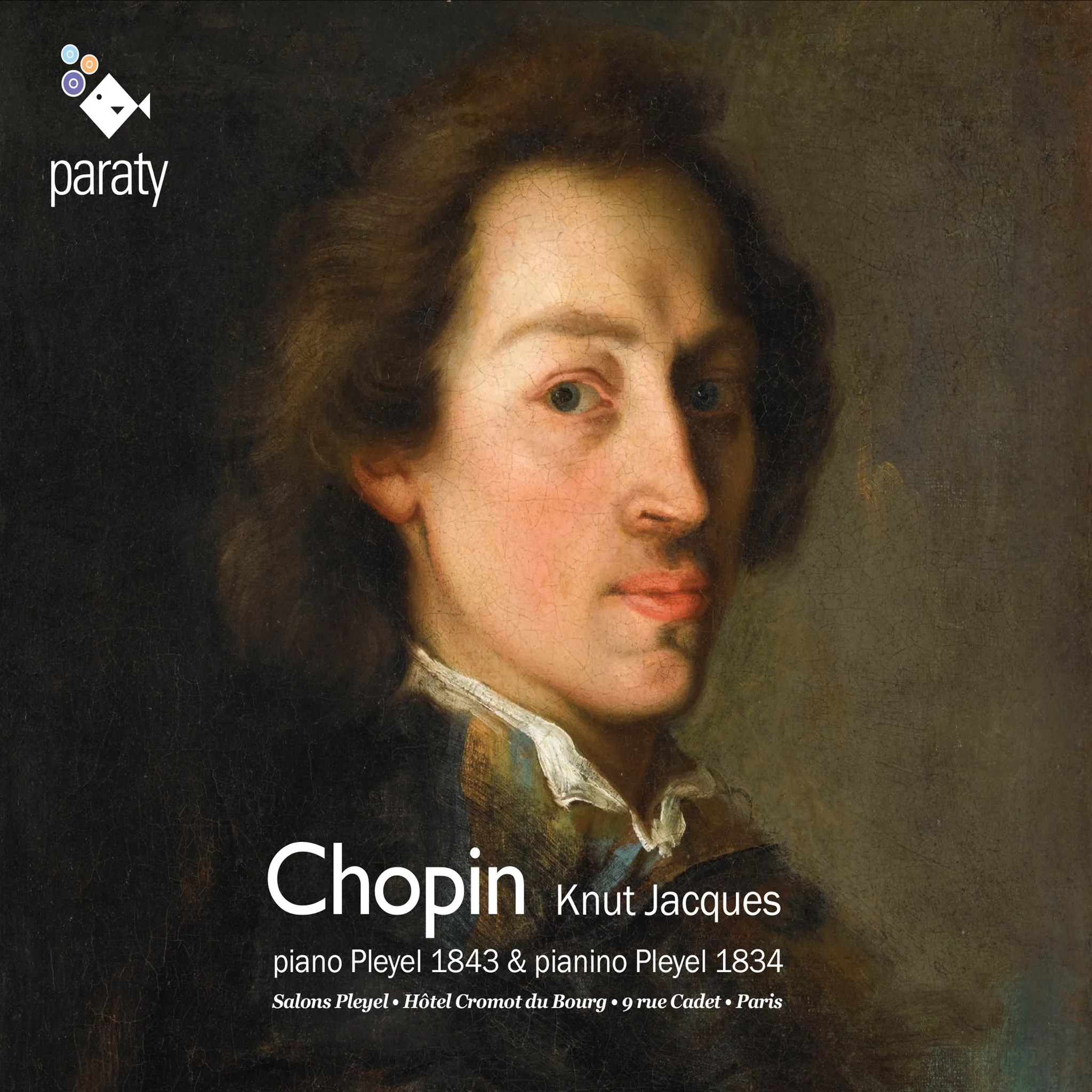
Chopin piano, Frédéric Chopin, Knut Jacques piano, Chopin piano, Pleyel piano, piano Pleyel, historic piano, historically-informed interpretation, French romanticism, Chopin Ballads, Chopin Sonatas, Chopin Sonatas, Nocturnes by Chopin, Chopin Nocturnes, Chopin Nocturnes, Chopin Nocturnes, Chopin, Chopin Nocturnes, Chopin, Chopin Nocturnes, Chopin, Nocturnes by Chopin, Chopin, Chopin, Nocturnes, Chopin, Chopin, Nocturnes, Chopin, Chopin, Nocturnes, Chopin, Chopin, Nocturnes, Chopin, Romantic period instruments
Chopin — Knut Jacques, piano & pianino Playel
At the dawn of European Romanticism, Frédéric Chopin incarnated the figure of the exiled composer, steeped in history and memory. For him, leaving Poland in 1830 meant breaking with his native land without ever leaving it internally. Based in Paris, in the heart of an unprecedented artistic effervescence, Chopin creates a deeply intimate work, nourished by melancholy, vocal lyricism and pianistic inventiveness that permanently redefines the language of the piano.
In this recording, Knut Jacques offers a historically informed and poetic reading of this major repertoire, performed on piano Pleyel from 1843 and pianino Pleyel from 1834, instruments closely linked to Chopin's sound universe. Their clear, supple and singing tone lights up the Ballads, Sonatas and Nocturnes in a new light, revealing a writing that is both narrative and deeply vocal, where each sentence seems to breathe like a song line.
Far from any spectacular demonstration, this approach highlights the inner and expressive dimension of Chopin's music. Through these emblematic pages — marked by the memory of Poland, the influence of Italian bel canto and the impetus of Parisian romanticism — Knut Jacques recreates a Chopin who is both fragile and visionary, whose modernity continues to inform our contemporary listening.
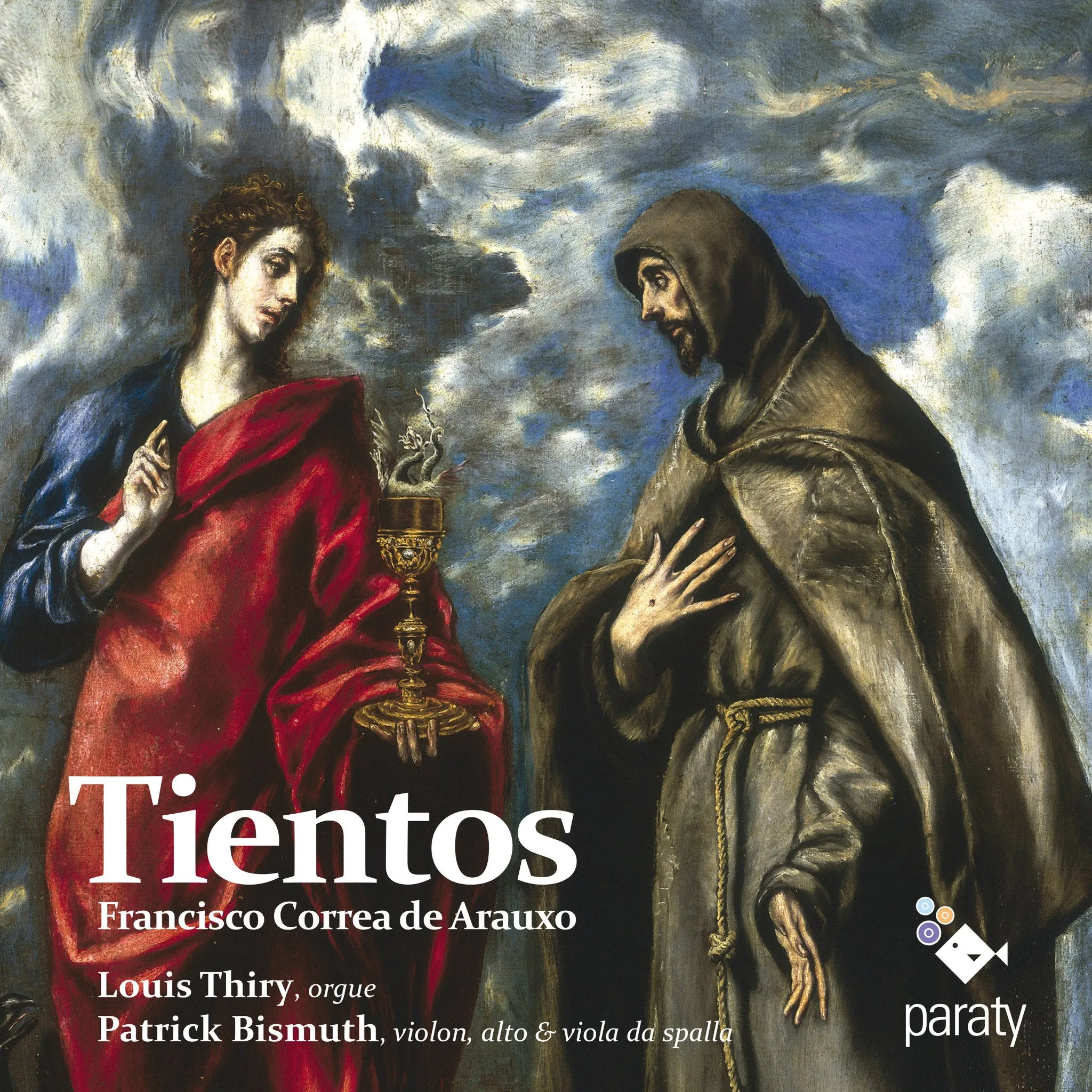
Francisco Correa de Arauxo, Tientos, Facultad orgánica, Spanish music 17th century, Spanish Baroque organ, Iberian music, Spanish Golden Age, Louis Thiry organ, Patrick Bismuth violin, Patrick Bismuth viola, Patrick Bismuth alto, Patrick Bismuth viola da spalla, Patrick Bismuth viola da spalla, ancient music, early music, Renaissance polyphony, Spanish baroque, Paraty recording, organ and string music, Historic organ and organ, historically-informed interpretation
Tientos — Francisco Correa de Arauxo
At the heart of the Spanish Golden Age, the keyboard work of Francisco Correa de Arauxo occupies a singular place in the history of European music. Composer, theorist and major organist of the early 17th century, Correa de Arauxo developed in his tientos a writing that was both scholarly and free, inherited from Renaissance polyphony but already oriented towards the rhythmic and harmonic audacity of the emerging Baroque. These pieces, published in 1626 in the collection Facultad orgánica, bear witness to an art of experimentation where form becomes a space for research, controlled improvisation and expressive virtuosity.
For this recording, Louis Thiry and Patrick Bismuth offer a singular and deeply musical reading of these tientos, by combining the string organ with the bow. Louis Thiry, on the organ, deploys all the richness of the registrations and the architectural clarity specific to Iberian writing, while Patrick Bismuth brings violin, viola and viola da spalla into dialogue with organic discourse. This approach highlights the polyphonic dimension and rhythmic flexibility of these works, emphasizing their almost improvised nature and their expressive power.
Far from any fixed reconstruction, this recording makes Les Tientos sound like a living, moving, open music, where each piece reveals its own personality. The choice of organ and string instruments, the freedom of phrasing and the precision of the musical discourse offer a new listening to Correa de Arauxo, restoring to this music its poetic force, its modernity and its power of evocation.
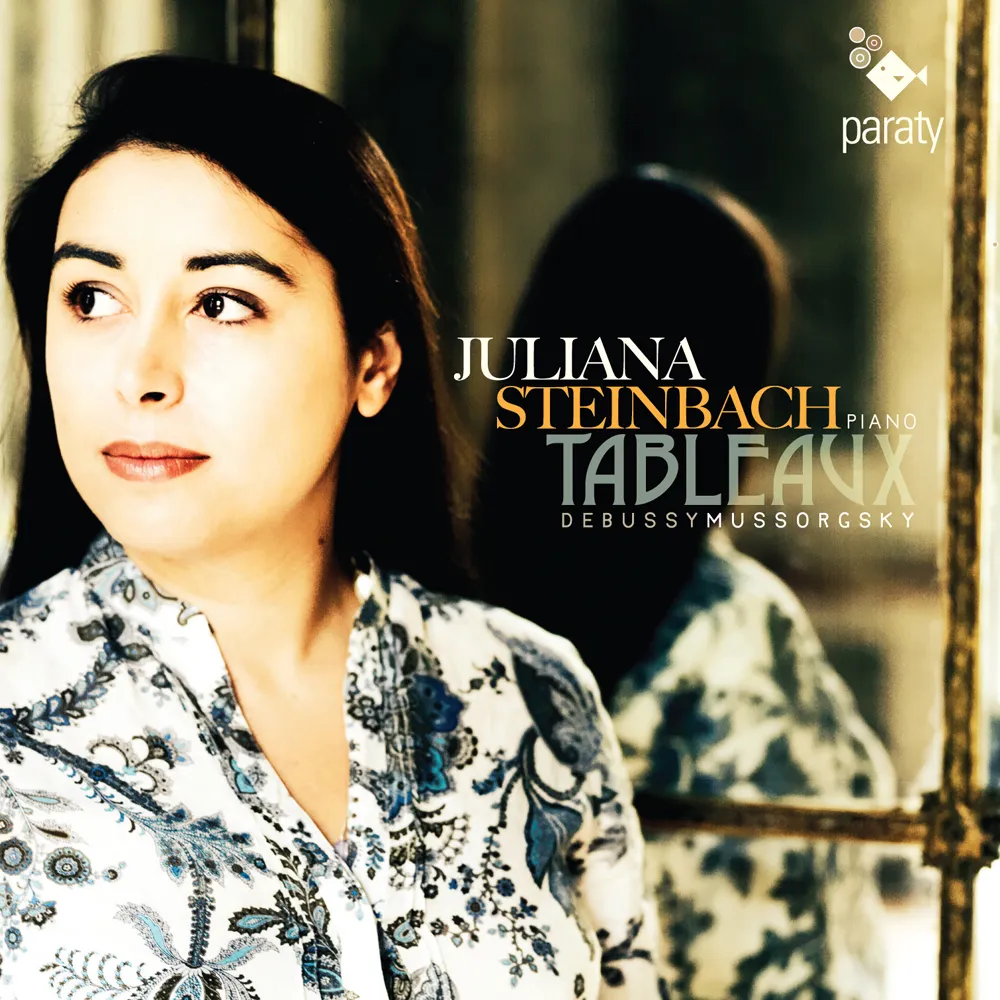
Juliana Steinbach, Piano Paintings, Debussy Prints, Debussy Prints, L'Isle Joyeuse, Mussorgsky Paintings from an Exhibition piano, Romantic piano, modern piano, piano repertoire, French piano, Russian music piano, Russian music piano, Russian music piano, Russian piano, musical impressionism, musical impressionism, musical impressionism, musical impressionism, musical impressionism, musical impressionism, musical descriptive music, descriptive music, descriptive music, musical, descriptive music, Mussorgsky piano, Mussorgsky piano, Viktor Hartmann, Promenade Mussorgsky, Blüthner piano, Blüthner piano, Russian music piano, Russian music piano, Russian music piano, musical impressionism, musical impressionism, musical impressionism, musical impressionism, musical impressionism, musical descriptive music, descriptive music, musical, Paraty label, Paraty Productions
Paintings — Debussy & Mussorgsky
With Tableaux, Juliana Steinbach offers a fascinating dialogue between two major worlds of piano repertoire: the poetic impression of Claude Debussy and the visionary strength of Modeste Mussorgski. By combining Estampes and L'Isle Joyeuse by Debussy with Paintings from an exhibition by Mussorgski, this program brings together two deeply different but complementary conceptions of the relationship between music and image. For both, painting becomes a pretext for an exploration of sound, color and movement, not as a simple illustration, but as an inner projection of the imaginary.
Composed in 1874, Mussorgsky's Paintings at an Exhibition were born from the emotion aroused by the death of his friend, the painter and architect Viktor Hartmann. The famous Promenade connects ten contrasting pieces, so many sonic visions where grotesque, lyricism, humor, fantasy and monumental grandeur intersect. In it, Mussorgsky goes beyond pictorial description to convey the sensitive journey of the visitor, giving each painting its own life, sometimes harsh and dissonant, sometimes deeply singing or solemn.
Written at the beginning of the 20th century, Debussy's pages — Estampes and L'Isle Joyeuse — open up another horizon. Nourished by oriental resonances, memories of dreamed Spain and an unprecedented sensuality of sound, they illustrate Debussyst art in all its modernity: flexible rhythms, refined tones, the free use of resonance and the power of evocation. Juliana Steinbach approaches this vast journey with a keen sense of narration and color, revealing the secret continuity between these two worlds. His interpretation reveals a piano fresco where image, memory and sound come together in the same expressive intensity.
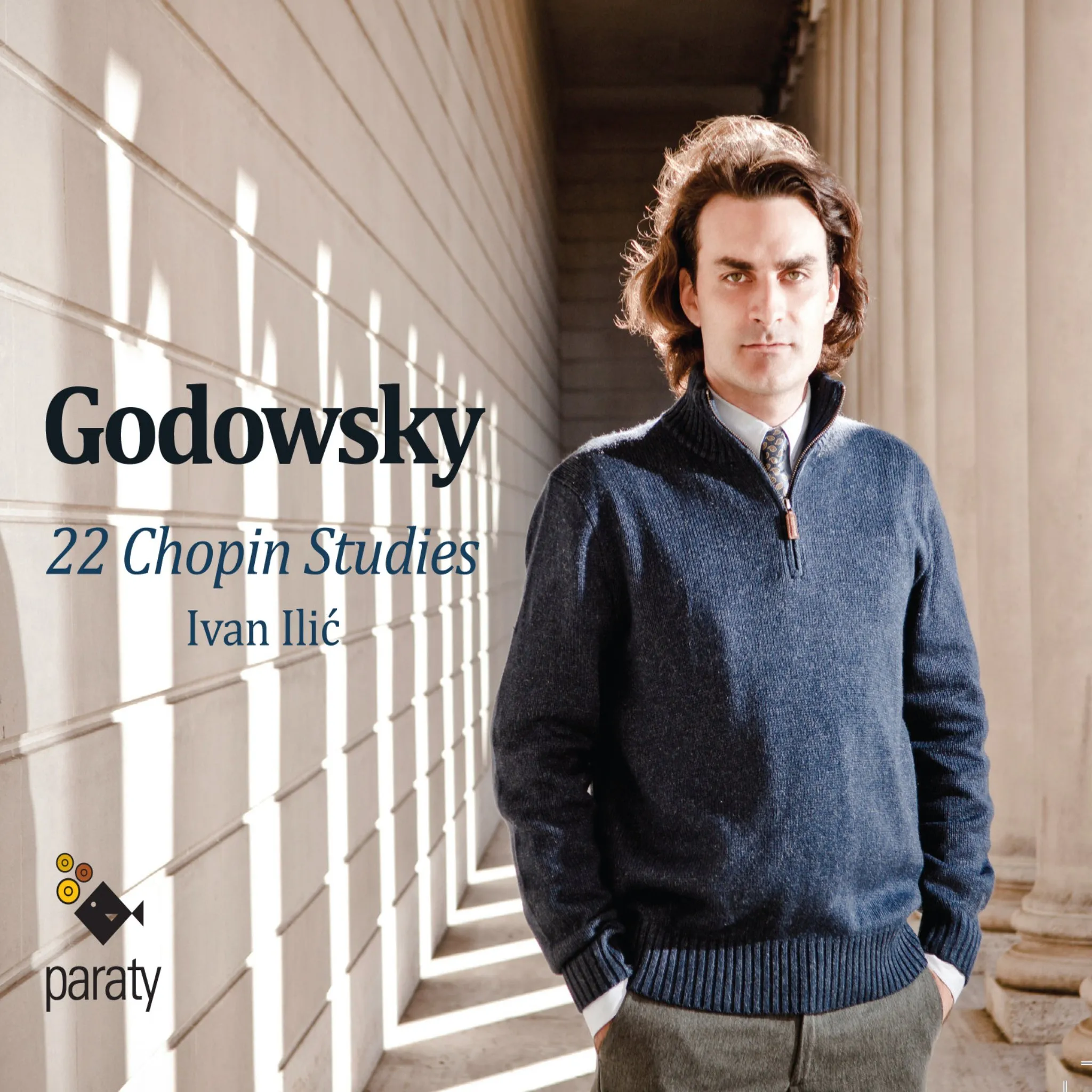
Leopold Godowsky, Godowsky studies, studies for the left hand, Chopin studies transcription, 22 studies after Chopin, piano left hand alone, piano virtuoso, piano 20th century, Ivan Ilic piano, piano, piano, piano, contemporary pianist, contemporary pianist, pianist, contemporary pianist, pianist, contemporary pianist, pianist, contemporary pianist, pianist, contemporary pianist, contemporary pianist, pianist, contemporary, piano, contemporary pianist, piano technique, piano technique, piano technique, piano technique, piano polyphony, piano piano, piano transcription, piano piano, Steinway piano, Marcel Landowski Auditorium, classical music, Paraty label, Paraty Productions
Godowsky 22 Chopin Studies, Ivan Ilić, piano
A singular and long unknown figure at the turn of the 20th century, Leopold Godowsky was one of the most admired pianist-composers of his time. A contemporary of Rachmaninov, Busoni, Rubinstein or Paderewski, he was hailed by his peers as a genius of piano technique and invention, to the point of being nicknamed “the Buddha of the piano”. Among his nearly four hundred works, the 22 Études after Les Études de Chopin pour les Mains Gauche Alone occupy a special place, both in terms of their audacity and in their aesthetic and technical scope.
Far from being simple exercises in virtuosity, these studies constitute a genuine creative commentary on Chopin's work. In it, Godowsky explores new possibilities of polyphony, legato, texture, and sound projection with one hand, pushing the limits of the instrument with an unprecedented imagination. Written well before Ravel's Concerto for the Left Hand, they represent a major contribution to the history of piano technique and open up new perspectives on the relationship between tradition and invention.
Ivan Ilić approaches this monumental cycle as a mosaic, where each study maintains its identity while participating in a global narration. The result of a long process, this interpretation highlights the expressive richness, structural subtlety, and visionary modernity of Godowsky's writing. Through this recording, Ivan Ilić invites the listener to rediscover a work that is as demanding as it is enchanting, and to measure the extent of a heritage that is only beginning to regain the place it deserves in the grand piano repertoire.

Joaquín Turina, Turina guitar, works for guitar, Spanish music, 20th century, 20th century, Spanish music, Spanish, Spanish, Albéniz, Manuel de Falla, Spanish, Spanish music, Albéniz, Manuel de Falla, Spanish national music, 20th century, Spanish music, classical music, 20th century, classical Spanish music, classical Spanish music, Spanish classical music, Spanish national music, Spanish music, Spanish national music, Spanish music, Spanish music, Spanish classical music, Spanish music, Spanish national music, Spanish music, Spanish music, Spanish national music, Spanish music, Spanish national music, Spanish music, Spanish music, Spanish national music, Spanish music, Spanish national music, Spanish music, Spanish national music, Spanish music, Spanish national music, Spanish music, Spanish national music, Spanish music, Spanish national music, Spanish music, Spanish national music, Spanish music, Spanish music, Spanish
Joaquín Turina — Guitar works
Joaquín Turina occupies a unique place in the history of the guitar in the 20th century. Unlike many composers of his generation, he didn't just write for the instrument: he deeply understood its sonic nature, empty strings, breathing, and balance. Heir to a solid European background, nourished by German and French music, Turina forges a personal language where formal clarity and expressive richness are combined with a deeply internalized Spanish identity, far from any surface folklore.
The decisive encounter with Isaac Albéniz and Manuel de Falla in Paris in 1907 marked a major aesthetic turning point. From then on, Turina fully assumed a national style, rooted in Andalusia, but structured by a rigorous musical approach inherited from the Schola Cantorum. His guitar music is distinguished by a rare balance between lyricism, religious fervour, harmonic refinement and a sense of instrumental singing. It reveals a composer who is faithful to his beliefs, refusing the brutal ruptures of the avant-garde in favor of a slow, sincere and controlled evolution.
Sébastien Llinares approaches this repertoire with a keen awareness of this double filiation, historical and expressive. A guitarist with broad horizons, also familiar with ancient instruments and contemporary creation, he recreates the poetic density, rhythmic flexibility and sonic depth of these works with natural evidence. His interpretation highlights the discreet modernity of Turina and the essential place he occupies in the construction of a true classical guitar repertoire.
Roland de Lassus, Orlando di Lasso, Renaissance music, 16th century polyphony, 16th century polyphony, Renaissance motets, Renaissance motets, vocal duets, sacred music, Counter-Reformation, Munich court, Wittelsbach, Ensemble l'Échelle, Ensemble l'Échelle, Ensemble l'Échelle, Véronique Bourin, 16th century polyphony, 16th century polyphony, Renaissance motets, Renaissance motets, Renaissance motets, Renaissance motets, Renaissance motets, vocal trios, sacred music, Counter-Reformation, Munich court, Wittelsbach, Ensemble l'Échelle, Ensemble l'Échelle, Véronique Bourin, 16th century polyphony, 16th century polyphony, Renaissance motets, Renaissance motets, Renaissance motets, Renaissance motets, musical trios, sacred music, Counter-Reformation, Munich court, Wittelsbach, Ensemble, historically informed interpretation, ancient music, vocal polyphony, vocal polyphony, a cappella vocal music, Flemish Renaissance, Italian Renaissance, German Renaissance, German Renaissance, Paraty label, Paraty Productions
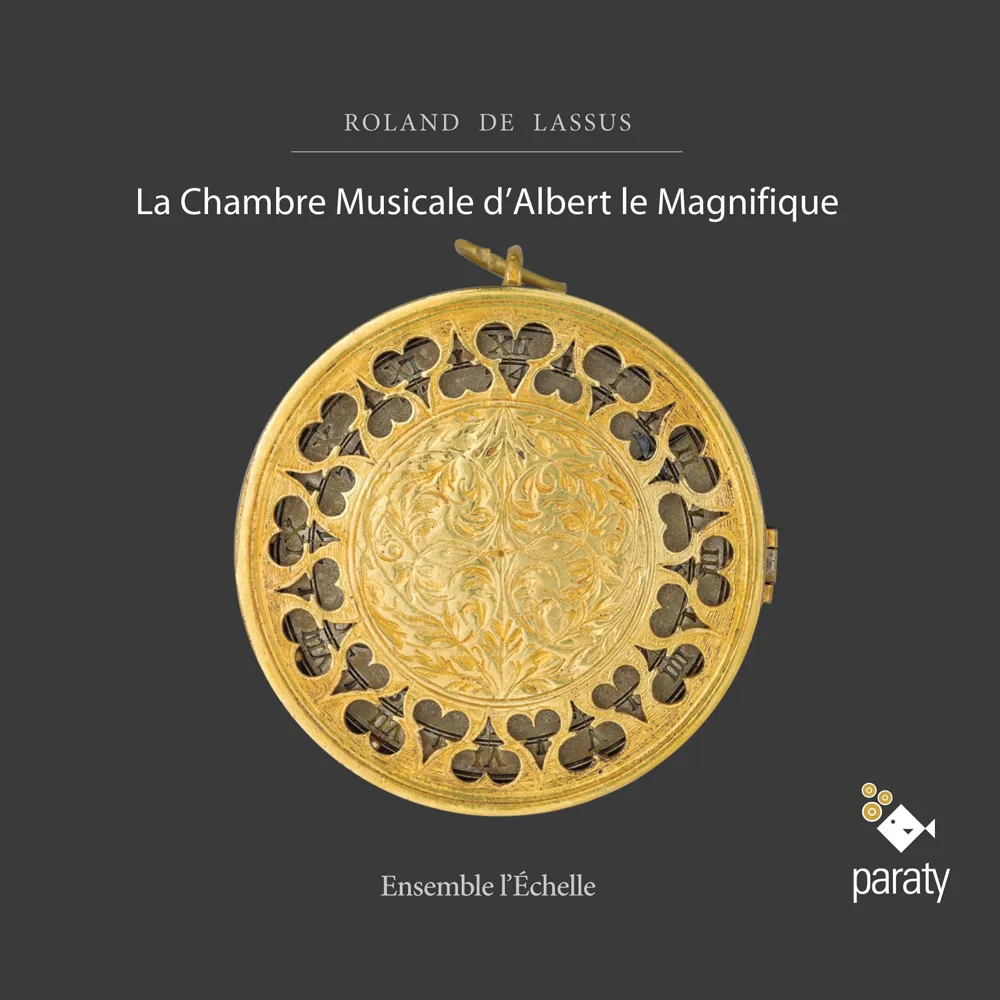
Roland de Lassus — Duos & Trios, Ensemble L'Échelle
This program is devoted to motets, duets and trios by Roland de Lassus, a major figure in European polyphony in the 16th century and choirmaster at the Wittelsbach court in Munich. Composed between 1565 and 1604, these works bear witness to Lassus's prodigious ability to embrace Flemish, Italian, and Germanic traditions in a language of exceptional expressive richness. Far from vast polyphonic frescoes, this corpus explores more intimate forms, where conciseness reinforces the rhetorical and spiritual force of musical discourse.
The twenty-four duets published in 1577, supplemented here by numerous trios and a few pieces with larger numbers, form a veritable writing laboratory. Lassus deploys a remarkable contrapuntal science, based on imitation, the clarity of prosody and a constant attention to the text. Some pieces are spiritual meditation, others moral exhortation or praise, while the duets without text pave the way for free instrumental writing, heralding the first sonatas of the early 17th century. The variety of affects, rhythmic vivacity and formal inventiveness give this set a profound coherence, despite the diversity of liturgical sources and contexts.
This complete is performed by Ensemble l'Échelle, with Véronique Bourin (cantus), Caroline Marçot (altus and artistic direction), Charles Barbier (tenor and artistic direction), Lambert Colson (cornet à bouquin and cornet muet), Sandie Griot (tenor sackcloth), Sandie Griot (tenor sack) and Emmanuel Vigneron (dulciane alto and bass). True to a historically informed approach, the ensemble highlights the balance of lines, the precision of the counterpoint and the deeply human dimension of this music. This reading reveals an intimate and visionary Lassus, master of an art where rigor, expressiveness and freedom come together with rare evidence.
Johann Sebastian Bach, Bach organ, organ works Bach, Wim Winters, organ for organ Bach, Wim Winters, organ du Bouclier Strasbourg, Dominique Thomas, German baroque music, toccata and fugue BWV 540, concerto BWV 596, Orgelbüchlein, Orgelbüchlein, Orgelbüchlein, Bach chorals, chorals by Bach, Bach chorals, organ du Bouclier Strasbourg, organ Dominique Thomas, organ Dominique, organ Dominique, organ Dominique, German, Baroque, BWV 540, Toccata and Fugue, BWV 540, BWV 540, Concerto, Orgelbüchlein, Orgelbüchlein, Orgelbüchlein, Bach chorals, Bach chorals, Bach chorals, trio sonatas, BWV 530, Prelude and Fugue, historically informed interpretation, baroque sacred music, organ repertoire, organ repertoire, organ repertoire, organist Wim Winters, Bach organ works, baroque organ music, Paraty label, Paraty Productions
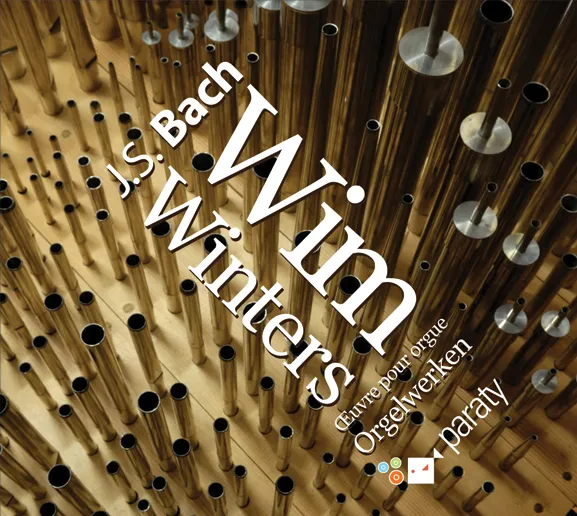
Bach - Organ work, Wim Winters
An absolute summit of the organ repertoire, Johann Sebastian Bach's work dedicated to the king instrument is a masterful synthesis of the major European schools. True to his roots while speaking a universal language, Bach extends and transcends the heritage of German, French and Italian masters, from Pachelbel to Buxtehude, from Nicolas de Grigny to Frescobaldi. Through toccatas, fugues, chorals and trio sonatas, he brings organ art to a level of achievement where formal rigor and poetic freedom never cease to dialogue.
This program brings together some of the most emblematic pages of this monumental corpus: the Toccata and Fugue in F major BWV 540, the Concerto in D minor BWV 596 after Vivaldi, several chorals from Orgelbüchlein and the major collections of Leipzig, the Sixth Trio Sonata BWV 530, and the Prelude and Fugue in B minor BWV 544. Bach deploys an exceptionally rich composition, combining contrapuntal science, the expressiveness of the Lutheran chorale, concerting inspiration and a keen sense of instrumental color. The organ becomes in turn orchestra, meditative voice, liturgical space and field for formal experimentation.
This interpretation was given to the Belgian organist Wim Winters, on the organ of the Reformed Church of the Shield in Strasbourg, built in 2007 by Dominique Thomas based on 18th century Thuringian instruments. Thanks to its balance between gravity and flexibility, this modern organ of historical inspiration is particularly suited to the world of Bach. Wim Winters deploys a reading that is both architectural and lively, highlighting the clarity of the lines, the rhythmic vitality and the spiritual depth of this music, in a constant dialogue between tradition and interpretative freedom.

Marcos Portugal, Matinas do Natal, Christmas Matinas, Christmas Matinas, Rio de Janeiro 1811, Rio de Janeiro 1811, Portuguese sacred music, Brazilian sacred music, late Baroque, liturgical music, stile concertato, Ensemble Turicum, Luiz Alves da Silva, Luiz Alves da Silva, Luiz Alves da Silva, Mathias Alves da Silva, Mathias Weibel, Rio de Janeiro 1811, Rio de Janeiro 1811, Rio de Janeiro 1811,, Portuguese sacred music, Brazilian sacred music, late baroque, liturgical music, stile concertato, Ensemble Turicum, Luiz Alves da Silva, Luiz Alves da Silva,, Mathias Alves da Silva,, Mathias Weibel, Rio de Janeiro 1811, Mathias Weibel Jan Thomer, Frederic Gindraux, Reto Hofstetter, Marcus Niedermeyr, Marcus Niedermeyr, Grzegorz Rozycki, Denis Kovalenko, Pierre-André Taillard, Tomoko Ferraino, Rogério Gonçalves, Rogério Gonçalves, Marcus Niedermeyr, Marcus Niedermeyr, Marcus Niedermeyr, Grzegorz Rozycki, Denis Kovalenko, Pierre-Andre Taillard, Tomoko Ferraino, Rogério Gonçalves, Rogério Gonçalves, Miho Gonçalves Eichenberger, Mario Marchisella, Iberian baroque music, Iberian baroque music, Brazilian colonial music, historical instruments, baroque choir and orchestra, Christmas music, Paraty label, Paraty Productions
Matinas do Natal by Marcos Portugal
This interpretation brings together the Turicum Ensemble, directed by Luiz Alves da Silva and Mathias Weibel.
Composed for the Royal Chapel in Rio de Janeiro and sung on Christmas night 1811, the Matinas do Natal by Marcos Portugal occupy a unique place in the musical history of Portugal and Brazil. A major figure in Portuguese-Brazilian musical life, Portugal was both a composer of internationally successful operas and a prolific creator of sacred music. These Matins, written shortly after the establishment of the Portuguese court in Rio, bear witness to a sumptuous, festive and deeply theatrical liturgical art, designed to magnify the celebration of the mystery of the Nativity.
Built in three nocturnal events, each composed of responsoires, the Matinas do Natal are part of an elaborate concerto style, in which soloists, chorus and orchestra alternate. The instrumentation, remarkable for the absence of violins, highlights clarinets, bassoons, cellos and organ, creating a pastoral and luminous palette. Marcos Portugal deploys a constant invention, reconciling structural unity and expressive variety, in order to maintain the listener's attention during a ceremony that can last several hours. The music combines religious fervour, contemplative impulses, dance rhythms and passages of assumed humor, a reflection of a liturgical practice open to secular influences.
François Couperin, Portrait of Iris, suites for viola da gamba, harpsichord pieces, harpsichord pieces, French baroque music, viola da gamba, harpsichord, Emmanuelle Guigues, Sylvia Abramowicz, Bruno Procopio, Rémi Cassaigne, Rémi Cassaigne, Baroque chamber music, Rémi Cassaigne, Baroque chamber music, pieces for harpsichord French, baroque viola, theorbo, baroque guitar, baroque guitar, label Paraty, Paraty Productions, baroque chamber music, French baroque music, harpsichord, viola da Ganbe, lute, baroque guitar
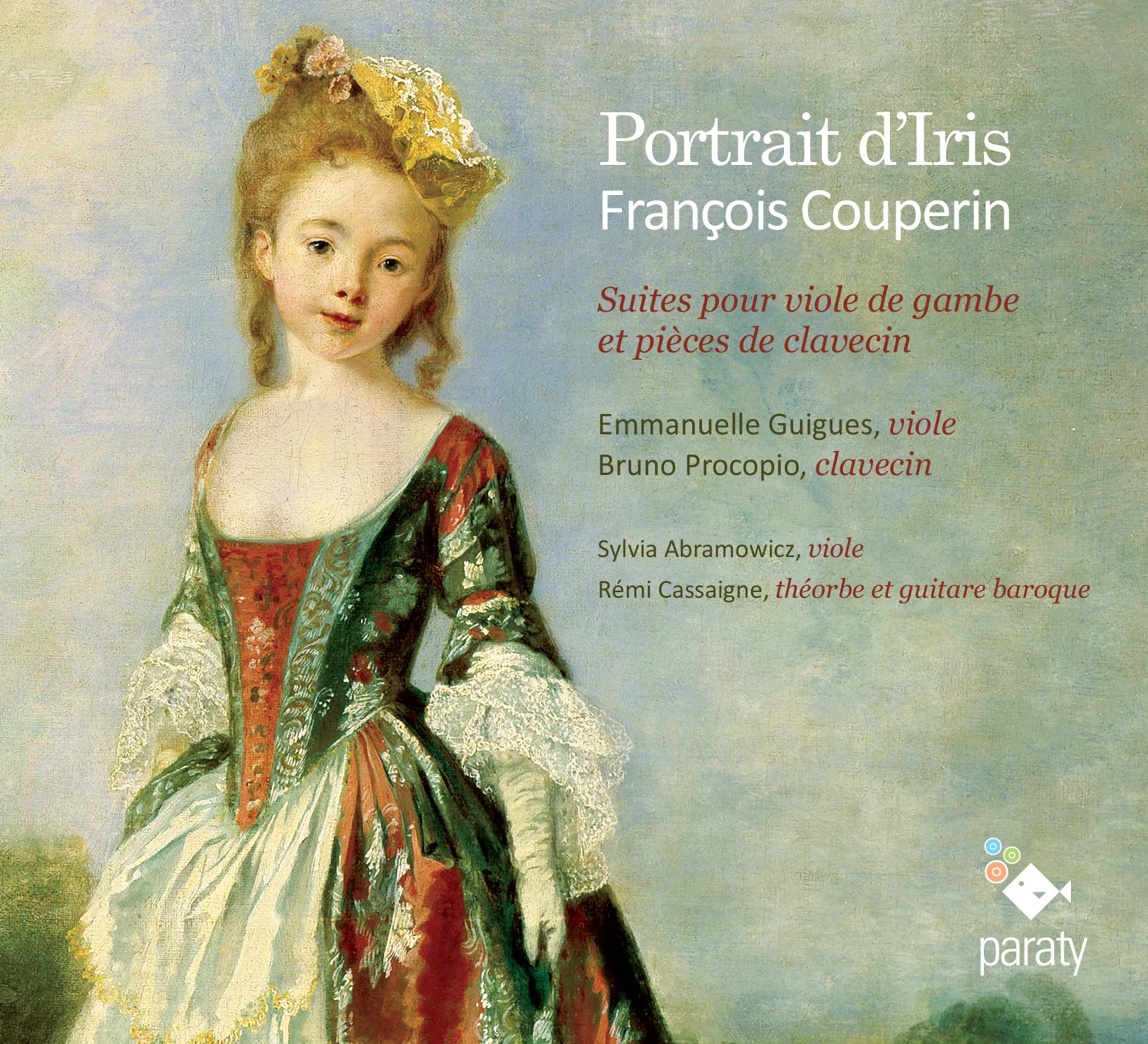
Portrait of Iris, François Couperin
This program is devoted to Viola da Gamba Suites and harpsichord pieces by François Couperin, brought together under the evocative title of Portrait of Iris. At the end of his life, withdrawn from the world and marked by illness, Couperin delivered music of singular intensity, where dance, character and meditation mingle in a deeply personal language. Long considered lost, Violin pieces with cipherical bass published in 1728 reveal a discreet tribute to the viola da gamba and, perhaps, a farewell to the golden age of the instrument.
The two Viola Suites, one built on traditional French dances, the other composed of characterful pieces, interact here with a vast choice of harpsichord pieces and with the Fourteenth Concert of Tastes combined. Couperin's writing, less idiomatic than that of Marin Marais but with remarkable expressive freedom, is distinguished by its sense of story, its singular decorations and an interior poetry that transcends form. Through these works, Couperin does not so much paint an instrument as an inner world, where music becomes language, gesture and imagination.
This sound portrait brings together Emmanuelle Guigues and Sylvia Abramowicz on viola da gamba, Bruno Procopio on harpsichord and Rémi Cassaigne on theorbo and baroque guitar. Together, they breathe new life into this refined universe using historical instruments, creating a dialogue between tones and styles in a spirit of freedom and depth. This interpretation offers a sensitive journey through Couperin's art, where dance, gravity and reverie are balanced in a vision that is both intimate and theatrical.
Natalia Valentin, fortepiano, historic fortepiano, Beethoven fortepiano, Beethoven pianoforte, Ludwig van Beethoven, Beethoven piano works, Beethoven bagatelles op. 51, Andante WoO 57, Bagatelles op. 33, Bagatelles op. 33, Viennese piano, op. 33, Viennese piano, Op. 33, Viennese piano, Viennese piano, Vienna around 1800, Viennese piano, Vienna circa 1800, Viennese piano, Vienna around 1800, classical piano, Vienna around 1800, classical piano, Vienna circa 1800, classical piano, Vienna around 1800, classical piano, Vienna around 1800, classical piano, Vienna around 1800, classical piano, Vienna around 1800, classical piano, Vienna around 1800, classical piano, Vienna around 1800, classical piano, Vienna around 1800, classical piano, Vienna around 1800, classical piano, 18th century, late 18th century fortepiano, classical music, Beethovenian repertoire, fortepiano recital, fortepiano recording, Beethoven early piano works, classical piano recording, historical piano recording,
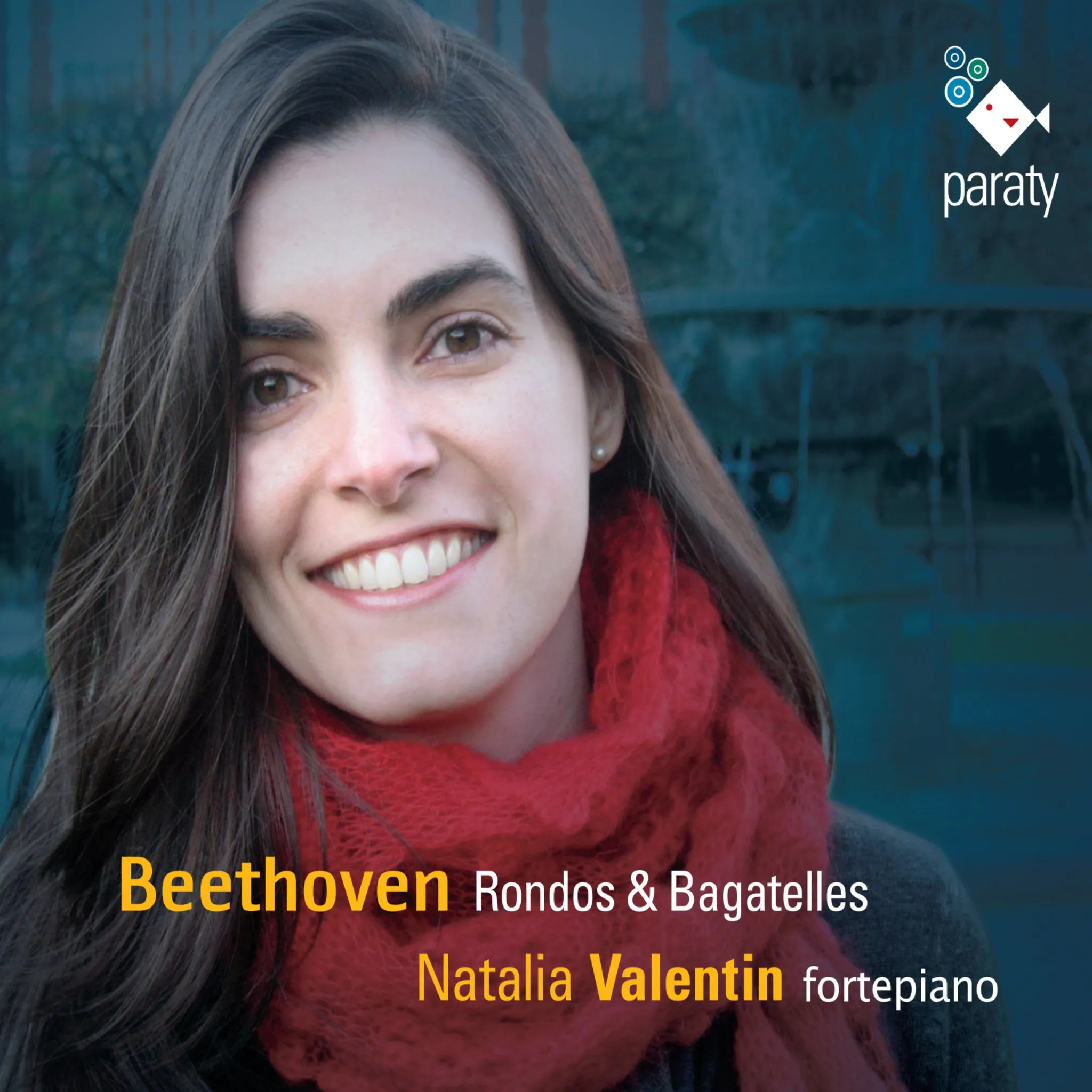
Beethoven, Natalia Valentin, fortepiano
In addition to his great sonatas and his vast piano cycles, Ludwig van Beethoven left a set of shorter pieces, sometimes without opus numbers, which remained in the shadows for a long time. Far from the heroic vehemence with which his name is often associated, these works bear witness to spontaneous, inventive and deeply melodic writing. Above all, they reveal Beethoven's genius as an improvisator, unanimously praised by his contemporaries, for whom musical invention sprang up with unparalleled freedom and intensity.
From Rondo op. 51 to Bagatelles, from Andante WoO 57 to the rarer pieces composed on the eve of his departure from Bonn or during his first years in Vienna, this repertoire reflects the hustle and bustle of musical Vienna around 1800. The fortepiano occupies a central place, an instrument of sociability as well as of creation, at the heart of the aristocratic salons where Beethoven forged his reputation as a virtuoso and an independent spirit. These pages, which are in turn elegant, poetic, humorous or frantic, allow an imagination that is always in motion, where the form meets the requirements of expression.
Performed by Natalia Valentin on a historic fortepiano from the end of the 18th century, these works find a sound similar to that which Beethoven knew. The transparency of the tone, the richness of the resonances and the flexibility of the attack highlight the rhythmic subtlety, the harmonic inventiveness and the almost improvised dimension of this music. This program thus offers an intimate and lively listening to Beethoven, revealing a face that is both familiar and deeply renewed in his piano universe.
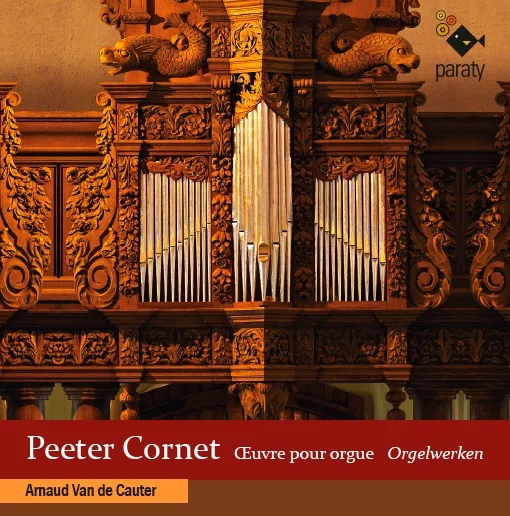
Peeter Cornet, Pieter Cornet, Brussels organist, organ music, keyboard music, organ music, music for organ, ancient organ, baroque organ, Brussels school, music of the 17th century, late Renaissance, early Baroque, Arnaud Van de Cauter, Arnaud Van de Cauter, first album Arnaud Van de Cauter, first album Arnaud Van de Cauter, first album Arnaud Van de Cauter, first album Arnaud Van de Cauter, first album Arnaud Van de Cauter, first album Arnaud Van de Cauter, first album Arnaud Van de Cauter, historic organ, historic organ, ancient organ, baroque organ, baroque school, Peeter Cornet elinck, toccata, fantasia, tiento, polythematism, polythematism, counterpoint, improvisation, virtuosity, ancient manuscripts, rare music, musical rediscovery, musical rediscovery, Paraty label, Paraty Productions, early keyboard music, early organ music, Renaissance keyboard, Baroque keyboard
Peeter Cornet - Work for organ, Arnaud Van de Cauter, organ
Organist at the Chapel of the Archdukes Albert and Isabelle at the Spanish court in Brussels, Peeter Cornet occupied a singular place in European musical life at the beginning of the 17th century. A contemporary of Peter Philips, John Bull or Jan Pieterszoon Sweelinck, he evolves in an exceptionally rich artistic environment, where Brussels is already establishing itself as a true cultural crossroads. Although his biography remains incomplete — none of his works were printed during his lifetime — Cornet appears to be a central figure in the Brussels keyboard school.
His work, exclusively devoted to keyboard instruments and preserved in a very limited number of manuscripts, testifies to multiple influences: Italian, Iberian and Nordic. Alongside toccatas and fantasies directly linked to the Italian model, some pieces reveal a striking relationship with the Spanish Tiento, while the great fancies are part of the contrapuntal tradition inherited from Sweelinck. Cornet's writing is distinguished by an inventive polythematism, a free use of decrease and increase, and a constant rhythmic transformation of subjects.
But beyond formal mastery, it is the improvised, virtuoso and unpredictable nature of this music that strikes the listener. With Cornet, the rigor of his writing always serves a free expression, where fantasy and instrumental momentum take precedence over any demonstrative construction. In this first recording for Paraty, Arnaud Van de Cauter brings a rare and fascinating work back to life, revealing the personality of a composer for whom invention and freedom remain the essential drivers of musical discourse.
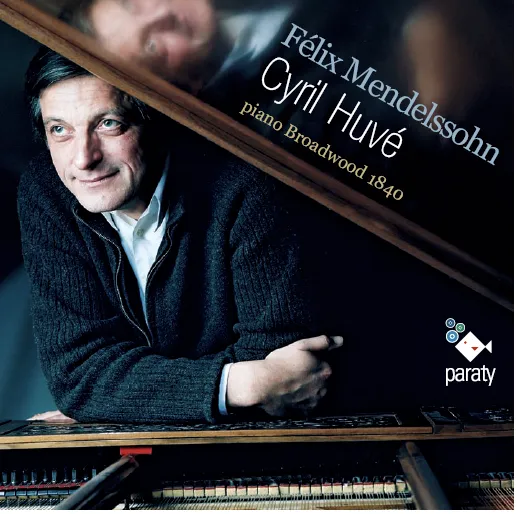
Felix Mendelssohn, Mendelssohn piano, piano music, piano music, romantic piano, Cyril Huvé, Broadwood 1840, romantic piano, romantic music, German romanticism, Romances without words, Rondo capriccioso, Rondo capriccioso, Serious Variations, Romantic Piano, Rondo Capriccioso, Serious Variations, Romantic Piano, Romantic Piano, Rondo Capriccioso, Serious Variations, Romantic Piano, Romantic Piano polyphonic, Schumann and Mendelssohn, 19th century music, 19th century piano, piano recital, piano recording, classical music, Paraty label, Paraty Productions, classical piano recording, historical piano, Mendelssohn piano works
Mendelssohn, Cyril Huvé, piano Broadwood 1840
Born a few years apart, Mendelssohn, Chopin, Chopin, Schumann and Liszt invented, at the beginning of the 19th century, a new way of playing the piano and a new repertoire for an instrument that was then in full mutation: the romantic piano. While the piano music of Chopin, Schumann or Liszt has established itself over the years, that of Felix Mendelssohn deserves to be rediscovered well beyond Romances without words, as it is an essential link between classicism and emerging romanticism.
His piano work reveals a world of great richness, nourished both by the heritage of Bach, of whom he was one of the great rediscoverers, and by the technical innovations of his time. Of Preludes and Fugues aux Serious variations, going through the Rondo Capriccioso Or the Etudes op. 104, Mendelssohn asserts a polyphonic and expressive writing that paves the way for Schumann, Franck, Reger or Busoni. A great traveller, he also transposes his impressions into evocative pages, of Scottish fantasy aux Venetian gondolas And at Duetto.
Performed by Cyril Huvé on a Broadwood piano from the 1840s, this music finds a sound similar to that which Mendelssohn knew and loved, especially during his stays in England. The warmth of the tone, the depth of the resonances and the variety of colors of this instrument accurately reproduce the specific characteristics of its musical aesthetic, offering a piano portrait that is at once intimate, lyrical and visionary.
.webp)
.svg)

.svg)