
.png)
Albums

Concert for Debussy, Trio Antara, Benoît Sitzia, Claude Debussy, sonata for alto flute harp, French chamber music, Six Debussy sonatas, 20th century French music, Debussy transcriptions, Six ancient epigraphs, Six ancient epigraphs, Six ancient epigraphs, Paul Dukas, Des Pas sur la Neige, Des Pas sur la Neige, contemporary creation, tribute to Debussy, Paraty


Concert for Debussy
Concert pour Debussy is the result of a collaboration of several years between the Antara Trio, composed of Emmanuelle Ophèle on flute, Audile Auboin on viola and Ghislaine Petit-Volta on harp, and the composer and artistic director Benoît Sitzia. The project takes as its anchor the Sonata for Flute, Viola and Harp by Claude Debussy, the central work of the unfinished cycle of the Six Sonatas for various instruments, composed between 1915 and 1917. This work is part of an in-depth reflection on Debussy's musical thought, which began with the trio's first research on this sonata.
A true laboratory of Debussyste poetics, the Sonata for Flute, Viola and Harp has profoundly marked the history of chamber music and inspired numerous subsequent creations. Its structure, its relationship with French musical tradition and its perspective on modernist trends served as a crucible for the development of the program for this recording. The album is thus constructed as a concert in the Baroque sense of the term, combining explicit tributes, poetic evocations and imaginary resonances, in order to question what Debussy still represents today.
The program brings together transcripts by Debussy, including the Six Ancient Epigraphs and La Plainte au loin du Faun by Paul Dukas, as well as an original work by Benoît Sitzia,... to a big bird eager for the light..., composed for the Antara Trio. This creation, designed as a series of images and paintings, dialogues with the heritage of Debussy and its extensions in Messiaen and Boulez. Complemented by the transcription of Des Pas sur la Neige, this recording offers a musical journey that sheds less light on the historical figure of Debussy than on the permanence and fruitfulness of his influence.
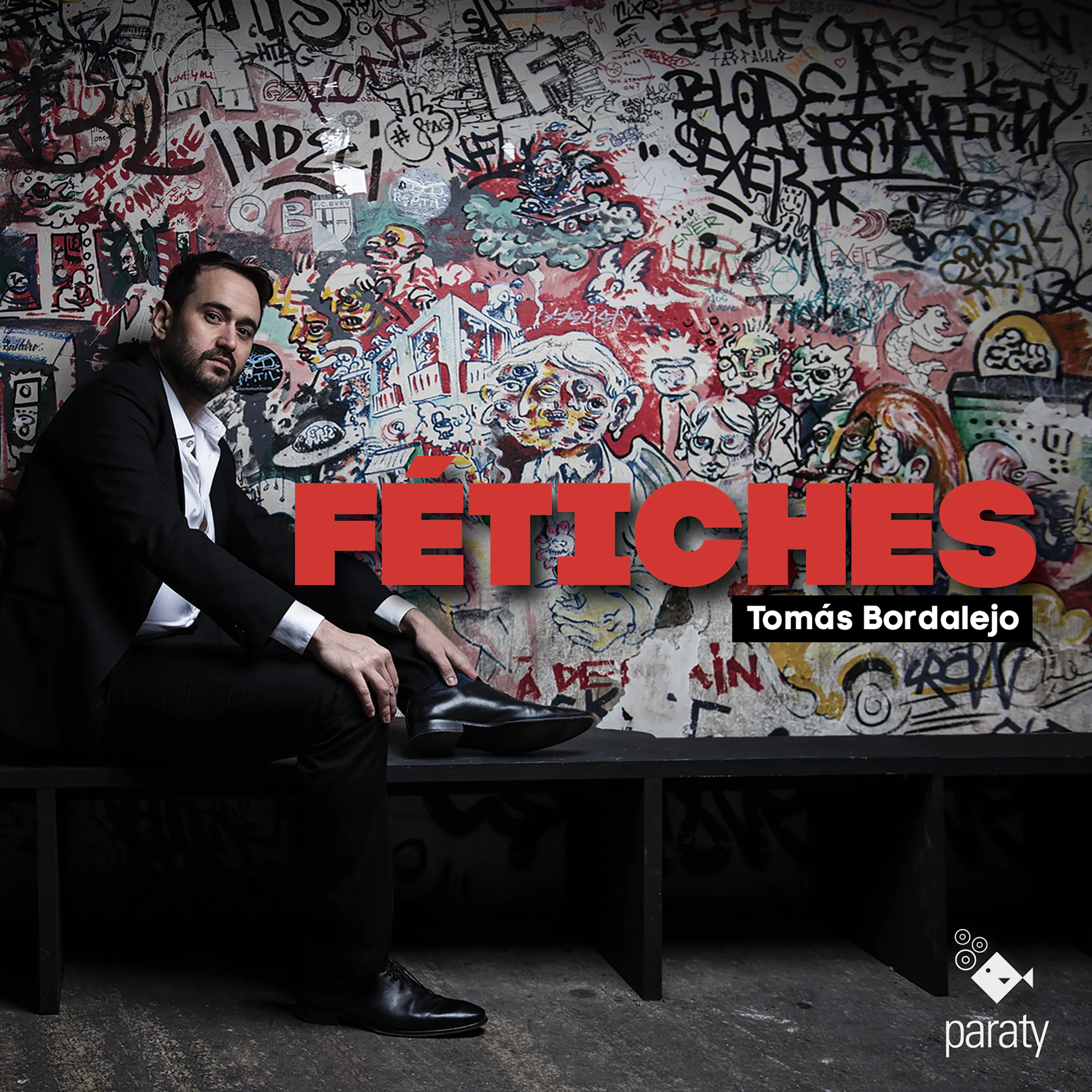
Fétiches, Tomás Bordalejo, contemporary music, contemporary creation, contemporary creation, musical gesture, musical gesture, sound material, Ensemble Court Circuit, Alphonse Cemin, Noëmi Schindler, percussion, piano, violin, Schindler, percussion, percussion, piano, violin, accordion, accordion, accordion, accordion, accordion, contemporary chamber music, contemporary chamber music, first recordings, Paraty
Fetishes
Fétiches brings together a set of works by the composer Tomás Bordalejo, written between 2013 and 2019, and constitutes the culmination of a cycle of research devoted to musical gesture, sound material and their transformation over time. The program brings together solo and chamber music pieces, including several first recordings, designed in close collaboration with the performers and resulting from institutional commissions or long-term artistic partnerships.
At the heart of this project is a reflection on sound as a physical and perceptual experience. Tomás Bordalejo's work explores the intermediate zones between height and noise, continuity and rupture, stability and imbalance. Each piece develops its own dramaturgy, based on the circulation of energies, the density of textures and the evolution of instrumental gestures, in a constant relationship with space and time. The musician's gesture, immediate and singular, thus becomes the driving force behind the musical form.
Performed by a collective of artists closely linked to the composer's career, Fétiches highlights an artisanal approach to contemporary creation, based on listening, experimentation and transmission. Like ritual objects, these works bear witness to the sound materials, instruments and performers that marked Tomás Bordalejo's career, while opening up new perspectives in his writing.
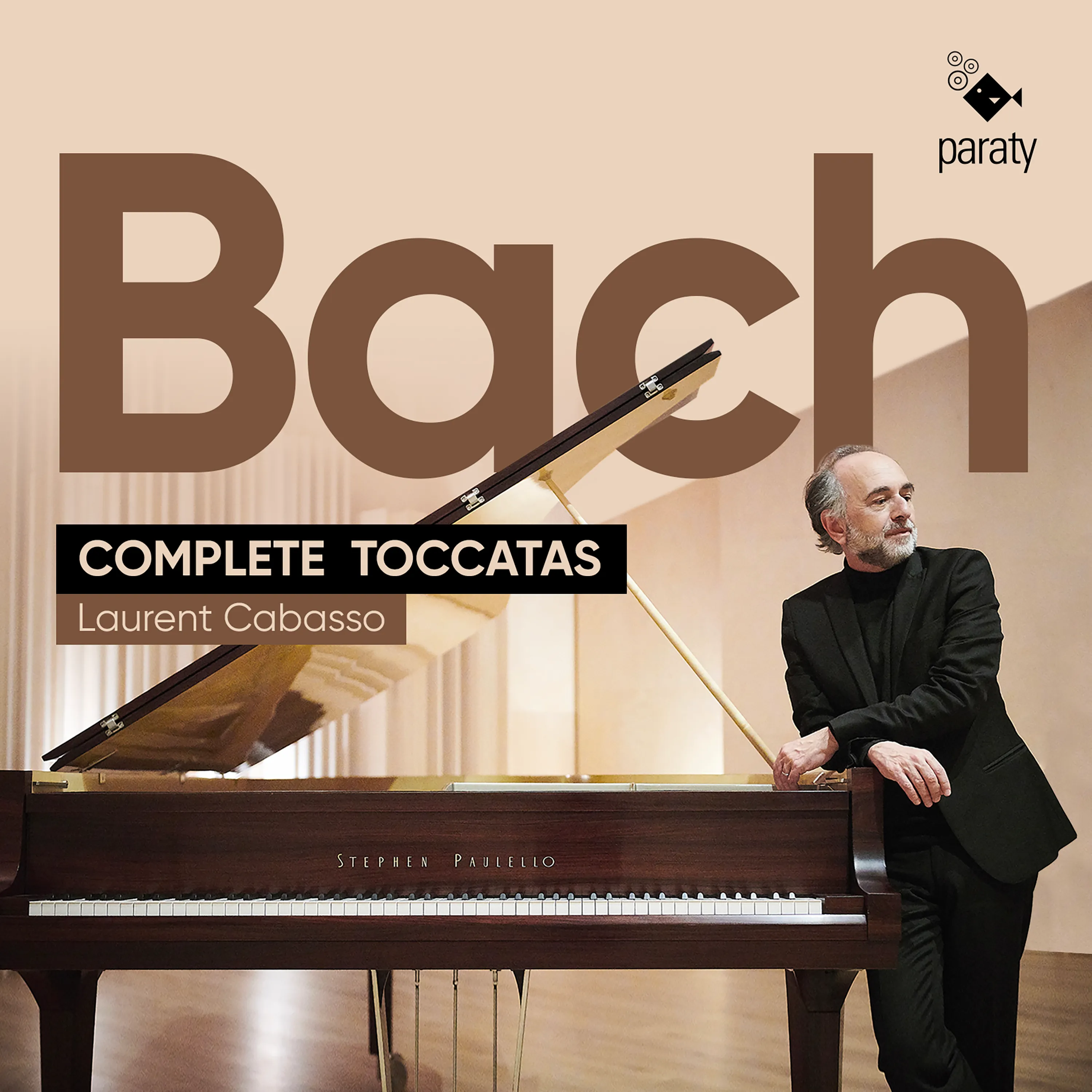
Johann Sebastian Bach, seven toccatas for keyboard, toccatas BWV, Toccatas BWV, Laurent Cabasso, piano, Stephen Paulello opus 102, baroque music, keyboard, stylus phantasticus, Buxtehude, Buxtehude, fugue, fugue, prelude, German baroque music, Paraty
Bach Complete Toccatas
This recording brings together the seven Toccatas for keyboard by Johann Sebastian Bach, composed when the composer was not yet twenty-five years old. Young works but already of great maturity, these toccatas constitute a formal laboratory in which Bach freely explores the prelude, the improvised fantasy, the fugato and the structures inspired by the Italian concerto. Each of them appears as an autonomous research on sound, gesture and form, in no other order than that of their publication.
Interpreted by Laurent Cabasso, these pages bear witness to the spirit of the stylus phantasticus inherited from the North German tradition and nourished by the decisive influence of Buxtehude. The music alternates free recitatives, virtuoso episodes, meditative movements and structured fugues, in a constant game of contrasts between apparent freedom and contrapuntal rigor. Through these works, young Bach's progression towards a unified formal thought, based on the Baroque ideal of unity in diversity, is outlined.
The recording was made on the Stephen Paulello piano opus 102, whose clarity of registers, the length of the sound and the polyphonic legibility offer a particular insight into Bach's writing. This instrumental choice makes it possible to highlight the vitality and inventiveness of these toccatas, while respecting their rhetorical and expressive requirements.
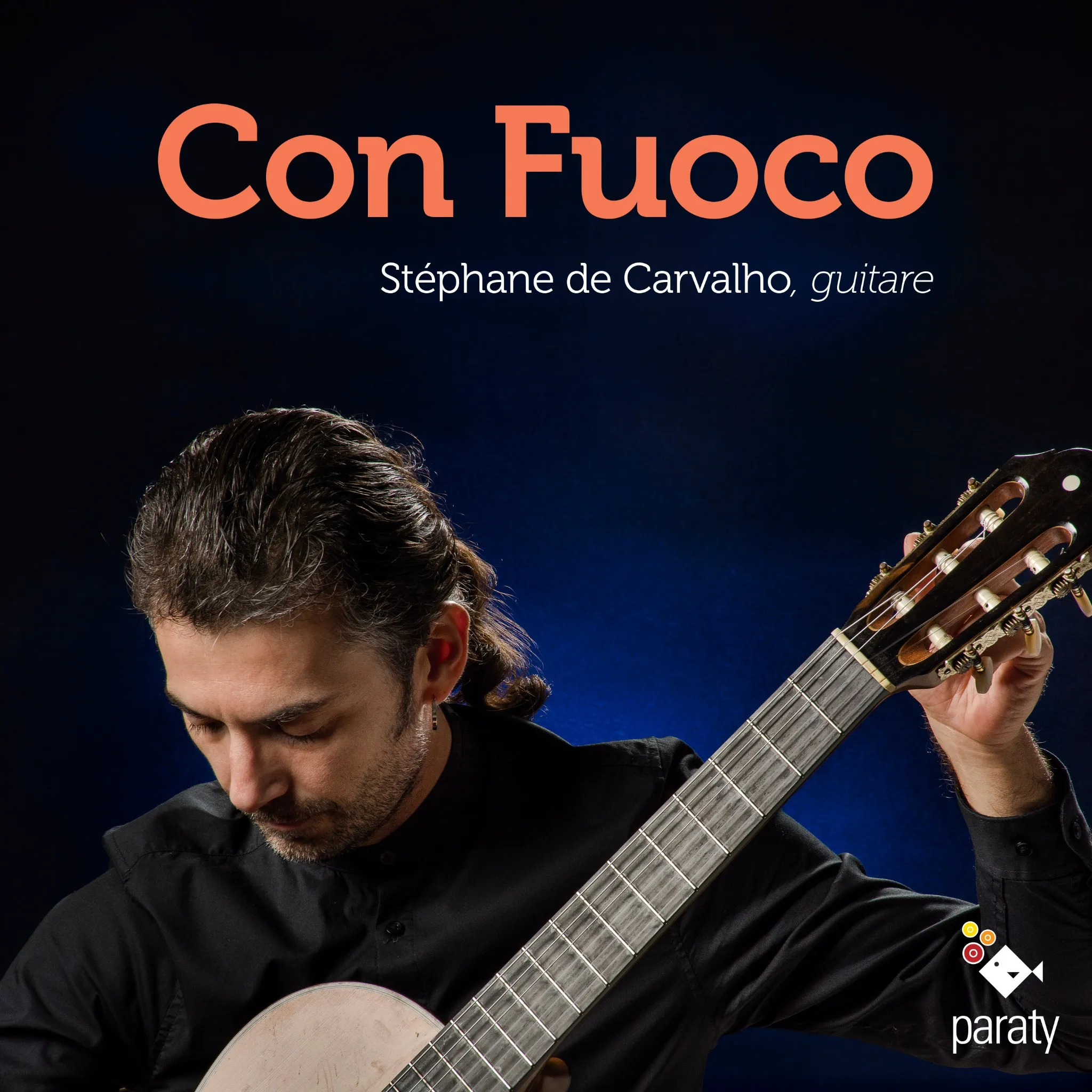
Stéphane de Carvalho, guitar, guitarist, Con Fuoco, Joaquín Turina, Sonata Opus 61, Napoleon Coste, Memories of Jura Opus 44, Johann Kaspar Mertz, Hungarian Fantasy Opus 65 no. 1, Manuel María Ponce, Manuel María Ponce, Manuel María Ponce, Sonata Ponce, Sonata Ponce, Sonata Méridional, Roland Dyens, Roland Dyens, Libra Sonatine, Domenico Scarlatti, Sonata K13, Sonata K1, transcription by Stéphane de Carvalho, Alberto Ginastera, Sonata Opus 47, classical guitar, romantic repertoire, Spanish repertoire, Latin American repertoire, Paraty
Con Fuoco
Con Fuoco reveals right away the universe of Stéphane de Carvalho: that of a guitarist inhabited by color, contrast and narrative momentum. The program crosses several guitar traditions, from Turina to Ginastera, including Mertz, Ponce, Roland Dyens, Napoleon Coste and two Scarlatti sonatas transcribed by the artist himself. The ensemble draws a coherent journey, where lyricism, dance, rhythmic energy and virtuosity flow together with great fluidity.
Trained with major guitar figures such as Pedro Ibañez, Alexandre Lagoya and Roberto Aussel, Stéphane de Carvalho has developed a deeply personal game, nourished both by the exigency of the classical repertoire and by a very marked sensitivity for climates, tones and the breathing of speech. His career has led him to explore a vast musical territory, from the 19th century to 20th century composers, with a particular affinity for Hispanic and Latin American repertoires.
With Con Fuoco, it offers much more than a simple recital: an inner journey, tense between elegance, intensity and freedom. From the Andalusian light of Turina to the brilliance of Ginastera, through the poetry of Ponce and the rhythmic invention of Roland Dyens, this record affirms a strong artistic identity, that of a musician who makes the guitar a real storytelling instrument.
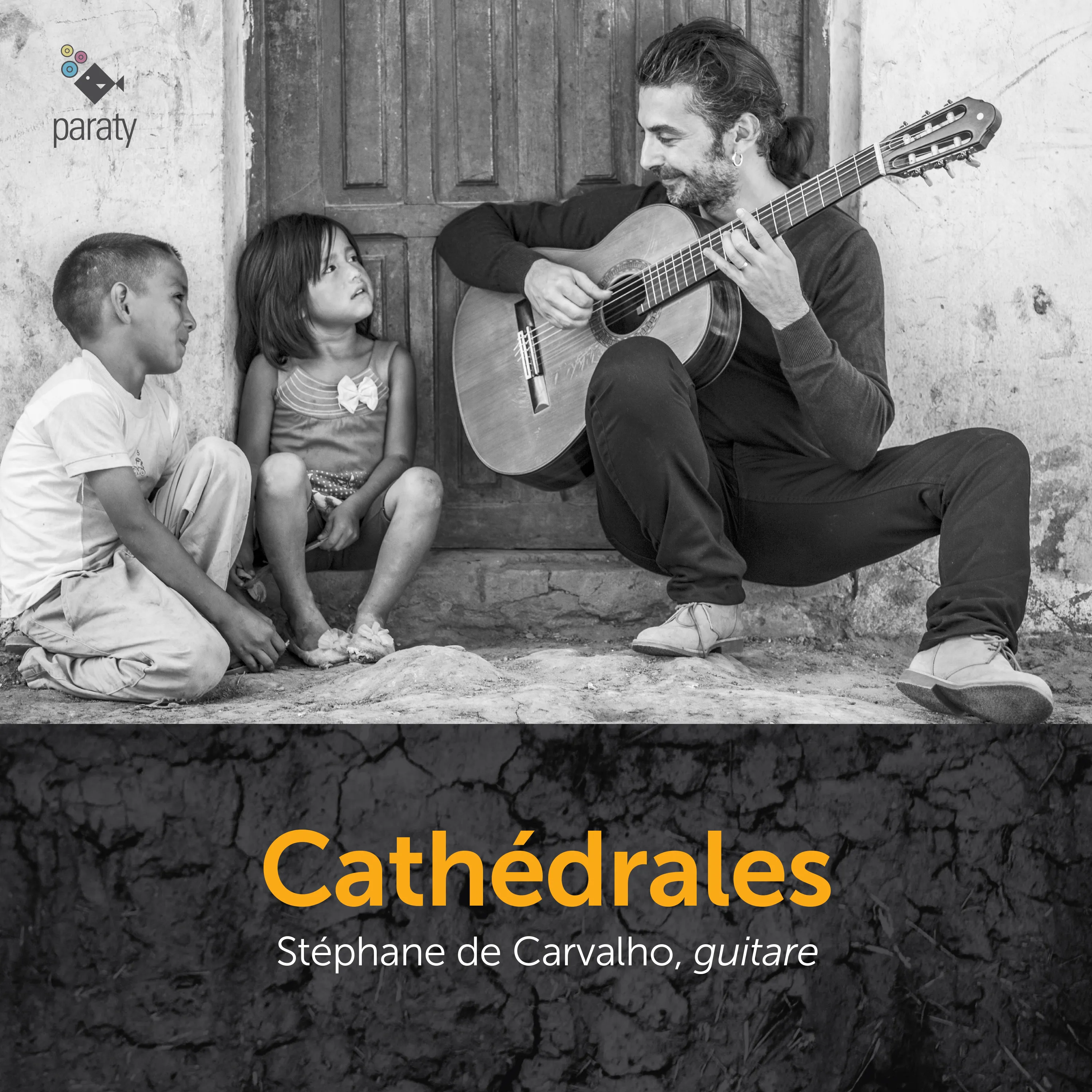
Cathedrals, Stéphane de Carvalho, guitar, South American music, classical guitar, Heitor Villa-Lobos, Five Preludes, Léo Brouwer, Astor Piazzolla, Cuatro Estaciones Porteñas, Cuatro Estaciones Porteñas, Gentil Montaña, Gentil Montaña, Gentil Montaña, Ignacio Figueredo, Ignacio Figueredo, Agustín Barrios, La Catedral, Latin American music, Paraty
Cathedrals
Cathedrals offers a journey for solo guitar through the great figures of South American music of the 20th and 21st centuries, where scholarly language is rooted in popular traditions. Performed by Stéphane de Carvalho, the album brings together works by Heitor Villa-Lobos, Léo Brouwer, Astor Piazzolla, Gentil Montaña, Ignacio Figueredo and Agustín Barrios-Mangoré, drawing a vast panorama of the styles, forms and aesthetics of the continent.
The Five Preludes by Villa-Lobos open the program and illustrate the fusion between Brazilian rhythms and European heritage, from Choro to Bachian memories. The works of Léo Brouwer, in particular Fandangos y Boleros, dialogue with multiple references, between Cuban folklore, modern writing and winks to Scriabine, Pasquini or Beethoven. Les Cuatro Estaciones Porteñas by Piazzolla, arranged by Sérgio Assad, extend this dialogue by combining the spirit of tango nuevo with contrapuntal writing inspired by Vivaldi.
The program is also enriched with emblematic pages of the Latin American repertoire, such as the Colombiana Suite No. 2 from Gentil Montaña or Los Caujaritos by Ignacio Figueredo, before ending with La Catedral by Agustín Barrios-Mangoré. Inspired by the Cathedral of Montevideo, this work concludes the album like a meditation, giving its title to this musical journey where the guitar becomes a place of passage between dance, spirituality and contemplation.
It's raining women's voices, Sophie Lacaze, Mora Vocis, female voices, female voices, contemporary music, vocal music, sacred and profane, Jean-Pierre Rosnay, Guillaume Apollinaire, Hildegarde de Bingen, Hildegarde de Bingen, saxophone, piano, saxophone, piano, narrator, contemporary creation, Paraty
It's raining women's voices
It's raining women's voices brings together several works by the composerIce Sophie LacazeHeyWritten between 1996 and 2021, around the female voice, the verb and the relationship between music and meaning. The program combines vocal and mixed pieces, some from specific commissions, others reworked for this recording, and includes several world premieres. The voice plays a central role, in turn sung, spoken or recited, in close dialogue with the saxophone, the piano and the narrator.
The works presented explore the border between sacred and profane, ritual and daily speech. Inspired by texts by Jean-Pierre Rosnay, Guillaume Apollinaire or even Hildegarde de Bingen, they question the way in which the word becomes sound, then silence, and how music can extend its poetic, symbolic or spiritual charge. Sophie Lacaze's writing, attentive to tone and resonance, develops forms where repetition, incantation and the circulation of breath structure musical discourse.
Worn by the set Mora Vocis — female solo voices, with the participation of Els Janssens Vanmunster, Michel Supéra, Marie Vermeulin and Alain Carré, this recording highlights a unique approach to contemporary music, based on transmission, collective listening and the presence of text. It's raining women's voices thus testifies to a work where the voice becomes a space for meeting between poetry, theater and music.
Alexandre de Villeneuve, Tenebris, Lessons of Darkness, French sacred music, French Baroque, French Baroque, French Baroque, Holy Week, Office of Darkness, 1719 Church Music, Chelles Abbey, 18th century religious music, Lamentations of Jeremiah, Lamentations of Jeremiah, Ensemble Vedado, Ensemble Vedado, Ensemble Vedado, Ronald Martin Alonso, French Baroque, French Baroque, French Baroque Music, French Baroque Music, French Baroque Music, French Baroque Music, French Baroque Music Sonata manner
Tenebris
Published in 1719 in Paris, the Church music book by Alexandre de Villeneuve (1677—1756) brings together a rare set of sacred pages including nine Lessons of Darkness for the Sacred Triduum, psalms intended for various liturgical uses, as well as a Miserere. Long unpublished and never republished since their publication, these works bear witness to the vitality of the French religious repertoire of the early 18th century and to the essential place that music occupied in women's congregations, in particular at the Royal Abbey of Chelles, in particular at the Royal Abbey of Chelles, to which the book is dedicated.
Les Dark Lessons from the Third Day are part of the tradition of Holy Week Offices, based on Lamentations of the Prophet Jeremiah. Vocal writing, intended for an upper accompanied by basso continuo, combines syllabic declamation close to recitative and ornamentation inherited from the air of court. The alternation of tempi, the frequent use of dissonances and rich chords, as well as the brevity of the verses give this music great dramatic intensity, while maintaining a profound expressive sobriety.
This recording combines Lessons of Darkness to instrumental pieces taken from Sonata-style conversations published by Villeneuve in 1733, as well as answers from Procession for the Royal Abbey of Chelles by Jean-Baptiste Morin. Led by the Vedado Ensemble under the direction of Ronald Martin Alonso, with the mezzo-soprano Dagmar Šašková, this program restores the balance between liturgical fervor, musical refinement and dramaturgy specific to the Offices of Darkness, while respecting the sources and practices of the time.
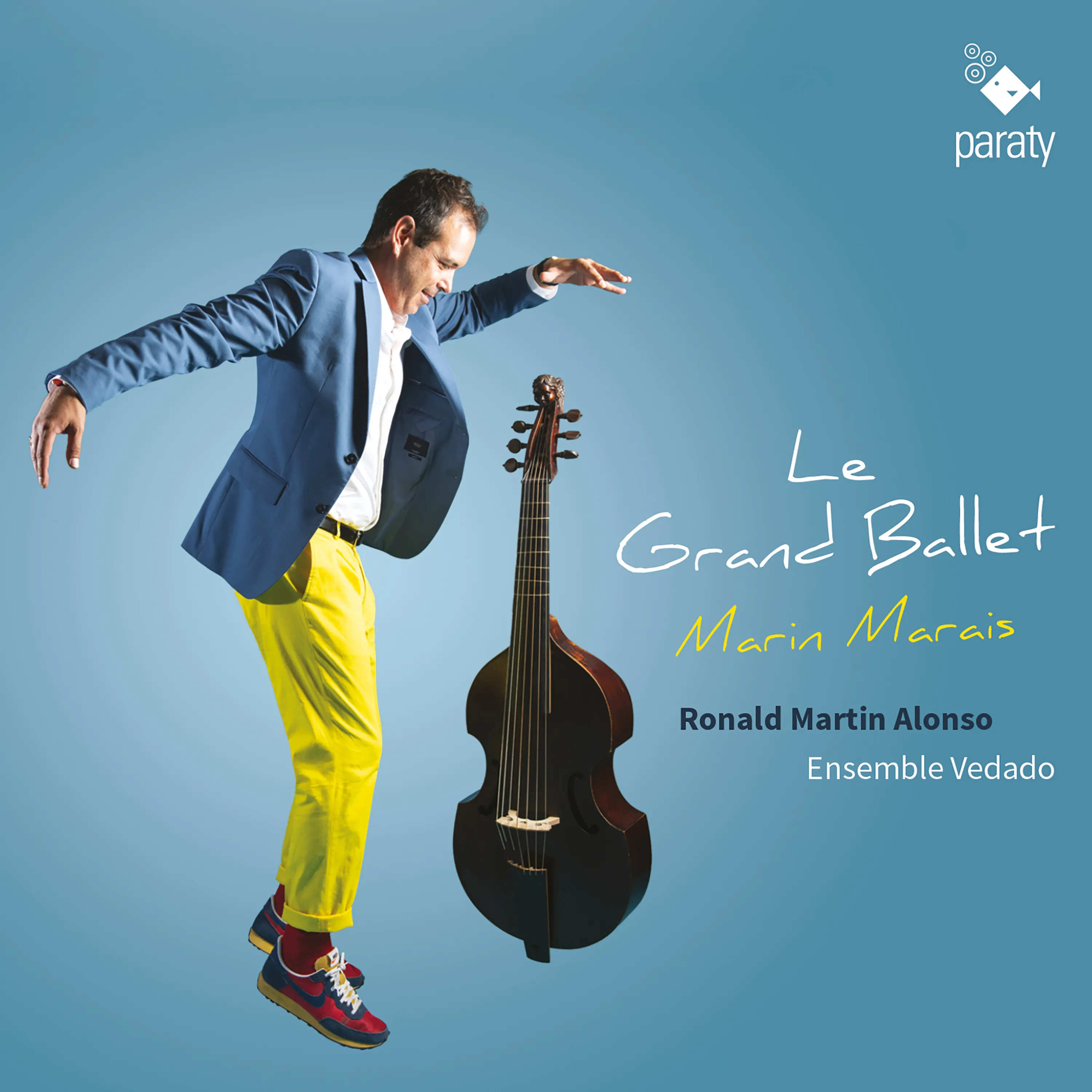
Le Grand Ballet Marin Marais Ensemble Vedado Ronald Martin Alonso Viola Pieces Book III 1711 Viola da gamba music French baroque dance harpsichord dance harpsichord theorbo baroque guitar Paraty
Le Grand Ballet Marin Marais Ensemble Vedado Ronald Martin Alonso Ronald Martin Alonso Viola da gamba Viola pieces Book III French Baroque music Paraty
The Grand Ballet
The Grand Ballet presents the Viola Pieces, Book III by Marin Marais, published in Paris in 1711, in a program devoted to one of the major collections of the French repertoire for the viola da gamba. Performed by Ensemble Vedado under the direction of Ronald Martin Alonso, this record highlights the expressive richness, diversity of dance forms and the stylistic requirements of this third book, which marks an important step in the evolution of Marais' writing.
Book III combines characterful pieces, traditional dances and works of great virtuosity, including Le Grand Ballet, which gives the album its title. Marais developed a particularly precise style of writing, particularly in the care given to the indications of bow, ornamentation and fingerings, offering performers a detailed framework for musical expression. This program also brings the viola into dialogue with the theorbo, the baroque guitar and the harpsichord, underlining the choreographic and instrumental roots of this repertoire.
Through this recording, Ensemble Vedado offers an attentive and informed reading of the aesthetics of Marais, between formal rigor and expressive freedom. The Grand Ballet is thus part of the continuity of the ensemble's projects devoted to the viola da gamba, and affirms its commitment to the transmission of the French Baroque repertoire.
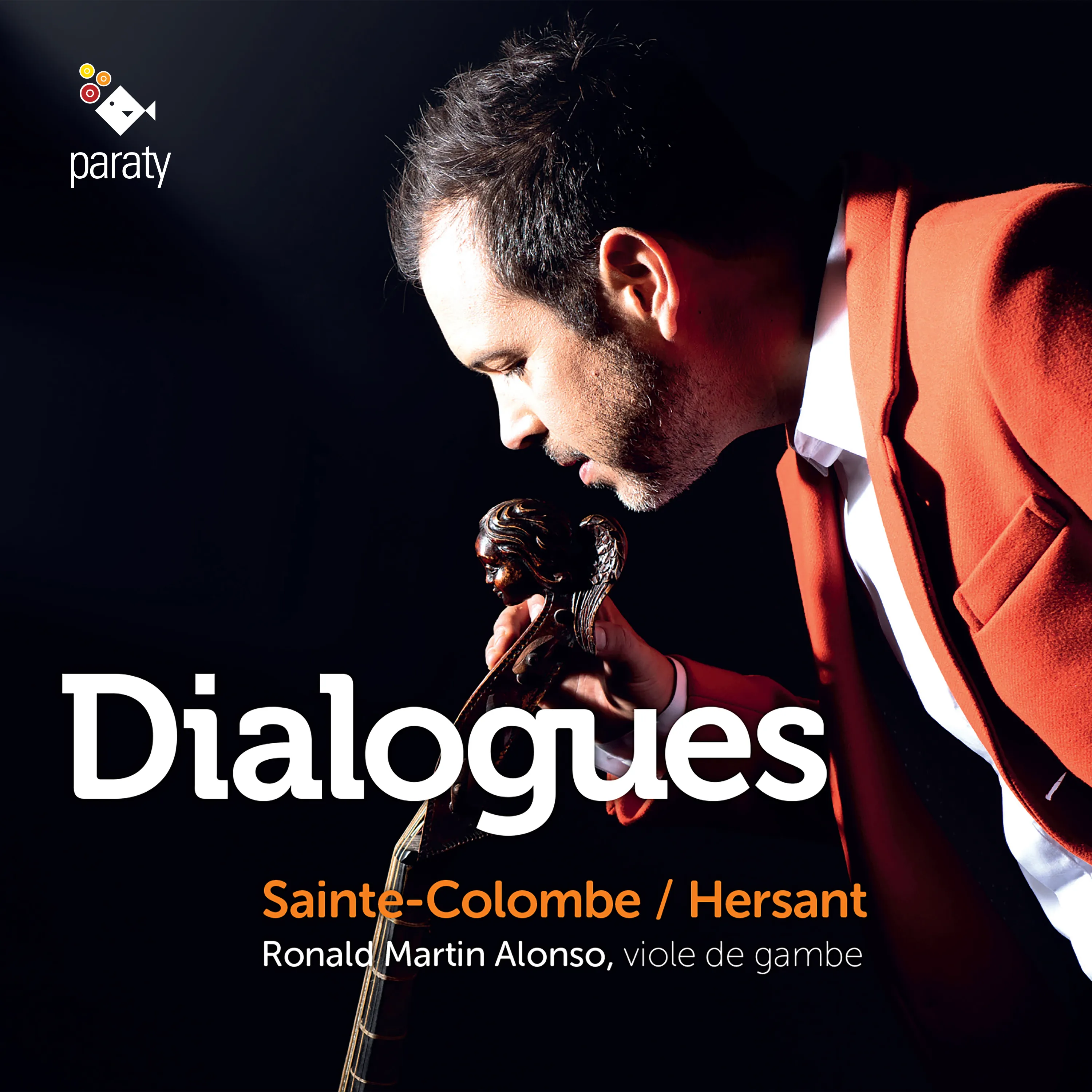
Dialogues Ronald Martin Alonso viola da gamba Sainte-Colombe Sainte-Colombe Manuscript of Tournus Philippe Hersant baroque music baroque music contemporary music viola solo improvisation baroque improvisation baroque musical heritage Paraty
Dialogues Ronald Martin Alonso viola da gamba Sainte-Colombe Sainte-Colombe Philippe Hersant Manuscript of Tournus contemporary baroque music Paraty
Dialogues
Dialogues brings together, around the viola da gamba, two worlds separated by more than three centuries, those of Monsieur de Sainte-Colombe and Philippe Hersant. Based on the pieces for solo viola preserved in the Tournus Manuscript, written around 1690, Ronald Martin Alonso proposes a journey where the freest Baroque writing resonates with contemporary works inspired by this heritage.
Sainte-Colombe's music, marked by improvisation, rhythmic freedom and expressiveness close to the voice, constitutes the core of the program. In contrast, Philippe Hersant's works continue this tradition and reinvest the viola da gamba as a solo instrument of today, capable of conveying a personal musical discourse while interacting with the past.
Conceived as an exchange without a break in time, Dialogues explores the continuity of a musical gesture and the ability of the viola da gamba to cross the centuries. The record highlights the instrument as a meeting place between memory, invention and contemporary sensitivity, in a wordless dialogue where affects, stories and resonances are mixed.
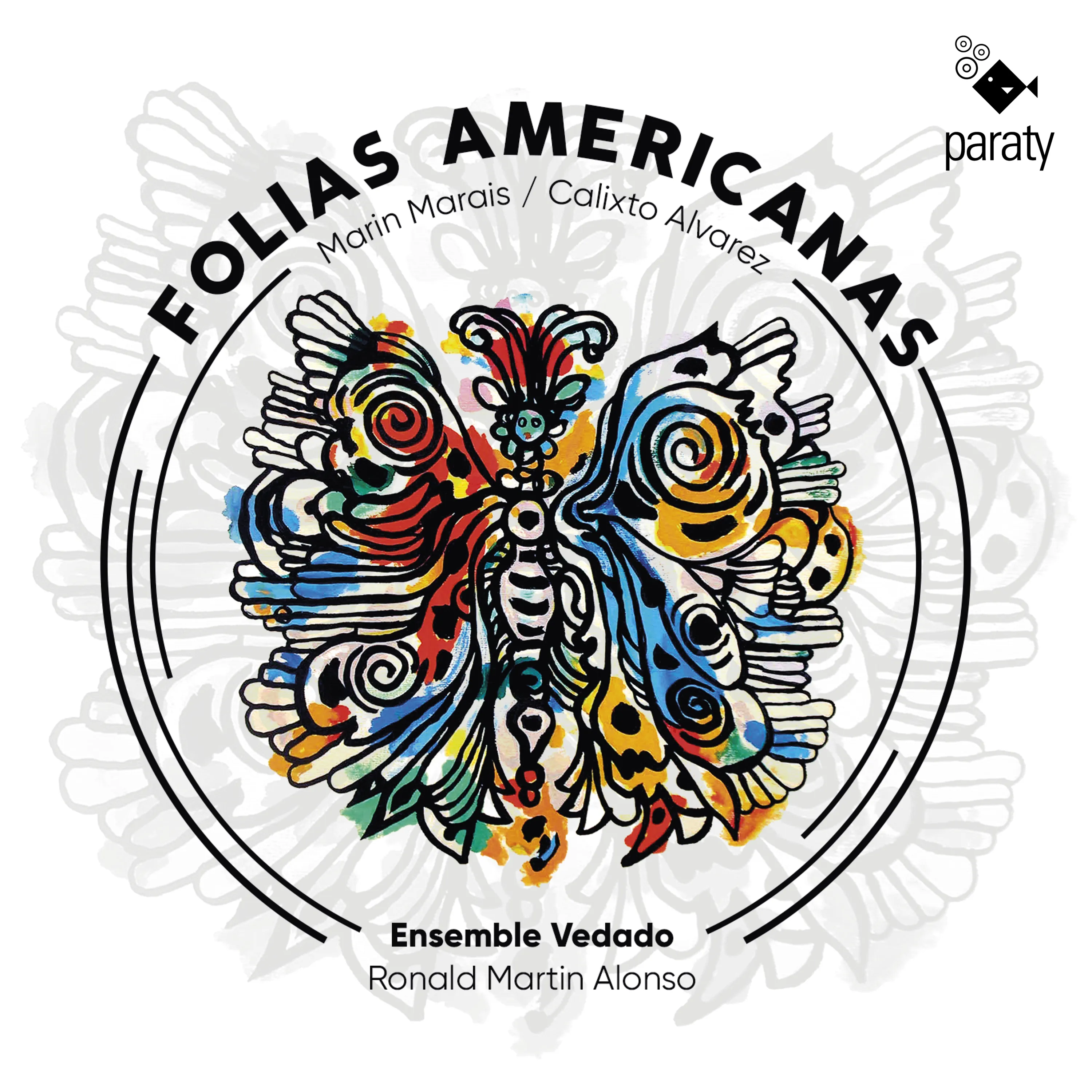
Folias Americanas Ensemble Vedado Ronald Martin Alonso Marin Marais Three Viola Suites Calixto Álvarez Folias Americanas Viola da gamba Baroque music contemporary music dance Folia Baroque French dance Folia Baroque French music from the Americas Paraty
Folias Americanas
Folias Americanas brings together the Ensemble Vedado around a program that brings together French music from the Grand Siècle and the musical traditions of the Americas. At the heart of the disc are the Three Viola Suites by Marin Marais, from the Fourth Book published in Paris in 1717, and the Folias Americanas by the Cuban composer Calixto Álvarez, a contemporary work inspired by the famous Folia theme.
This project was born from a long partnership between Ronald Martin Alonso and the Cuban violists Calia Álvarez and Lixsania Fernández, initiated in Cuba in the early 2000s and continued in Europe. The rediscovery of the Three Viola Suites by Marais served as an anchor for the construction of the program, to which Calixto Álvarez brought an enriched and original version of his Folias Americanas, developed for three viols, harpsichord and baroque guitar, with the addition of percussion in some variations.
Through the alternation of dances from the court of Versailles and rhythms from the Americas, Folias Americanas offers a path where dance is the common link between repertoires. The record thus affirms the identity of the Vedado Ensemble, a group dedicated to baroque and contemporary music, attentive to the circulations between Europe and the Americas, and to the transmission of a musical heritage without borders.
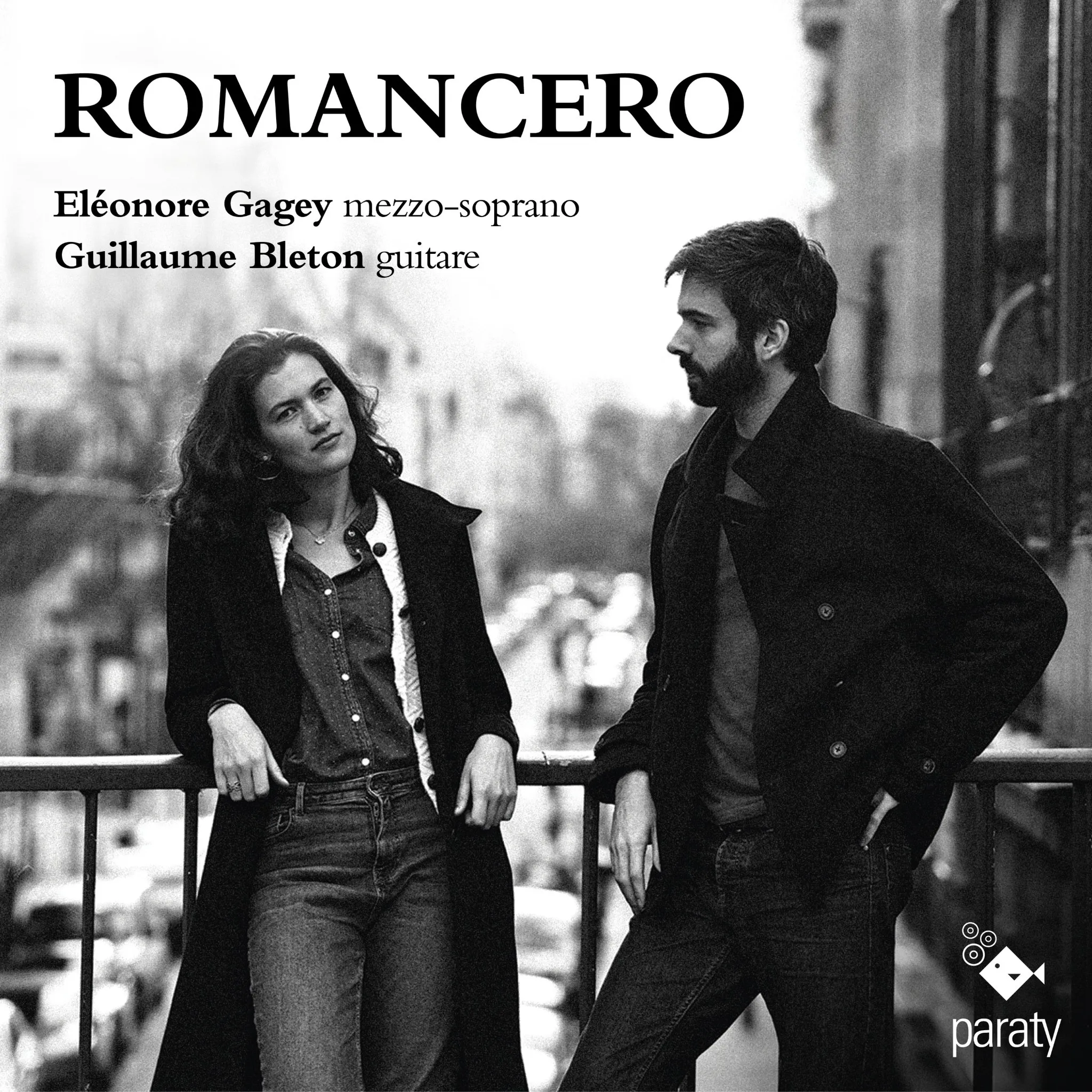
Romancero is an album for mezzo-soprano and guitar performed by Éleonore Gagey and Guillaume Bleton. Inspired by the tradition of Spanish romance, the program explores 20th-century vocal works from the Hispanic and Latin American repertoire. The album highlights the dialogue between poetry and music, the clarity of the sung text and the expressive richness of the guitar. Designed as a narrative journey, Romancero is part of an intimate chamber music approach, where the voice becomes a carrier of stories and memory. Romancero, Éleonore Gagey, Guillaume Bleton, mezzo-soprano and guitar, mezzo-soprano and guitar, Spanish music, Latin American music, Spanish romances, 20th century vocal music, poetry and music, poetry and music, guitar voice recital, guitar voice recital, guitar voice, guitar voice, guitar voice, guitar voice, guitar chamber music, Paraty Productions
Romanero
Romancero is part of the tradition of romance, a poetic and narrative form from the Hispanic world, combining intimate stories and collective stories. This program brings together romances and songs where voices, poetry and guitar intersect, in a refined style that highlights the strength of the text and the expressive richness of the vocal line.
Mezzo-soprano Éleonore Gagey and guitarist Guillaume Bleton explore a repertoire mainly centered on 20th century Spanish and Latin American music. The selected works weave a journey between popular traditions and scholarly writing, bringing together poetry, the tone of the voice and the colors of the guitar in an intimate chamber music setting.
Conceived as a continuous musical story, Romancero proposes a journey through the recurring themes of the genre: love, absence, memory, death and transmission. The album highlights the close relationship between text and music, and seeks to restore the narrative and expressive dimension of these romances, in a sober and direct interpretation.
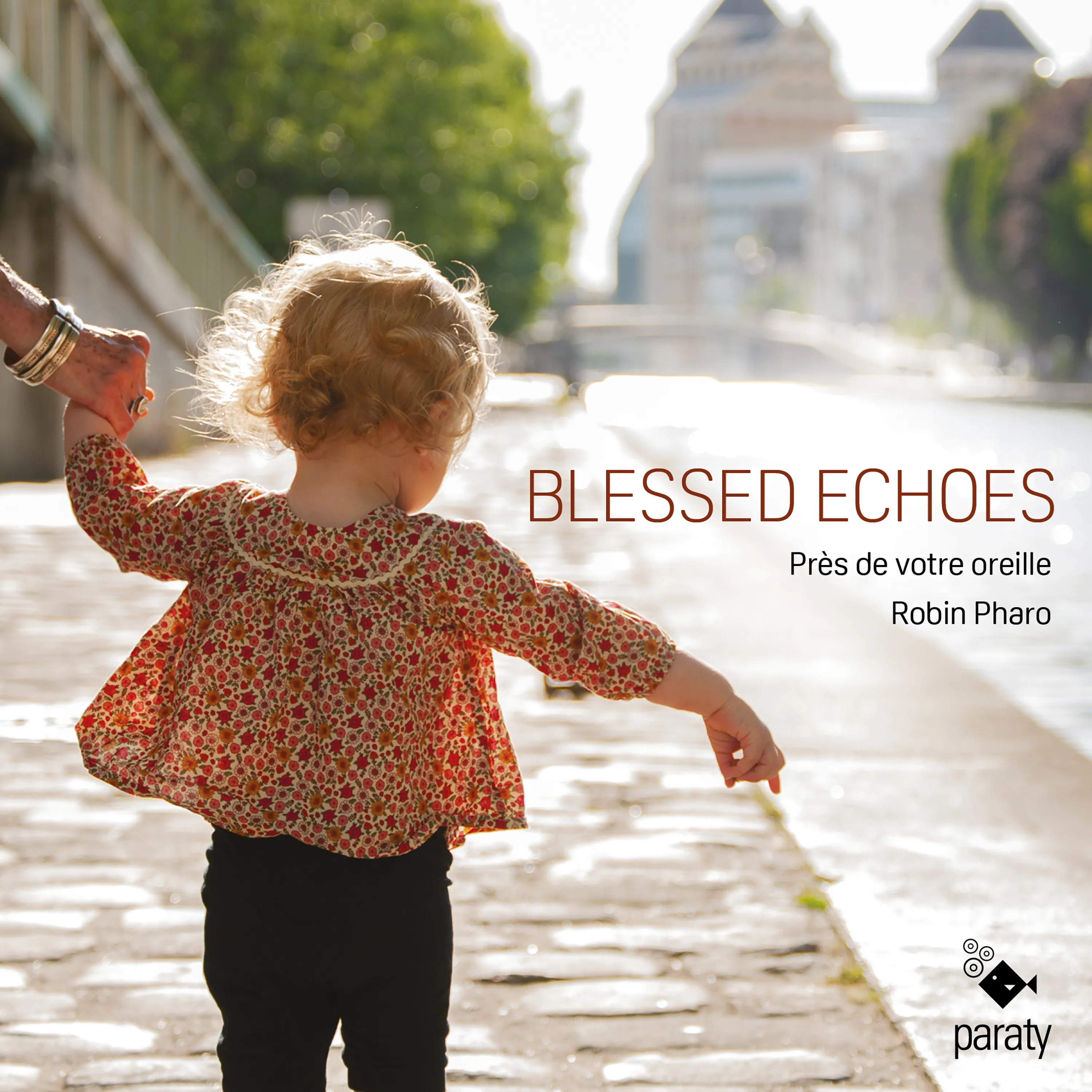
Blessed Echoes offers an immersion in the world of English Renaissance lute songs, through a program devoted to Elizabethan and Jacobean repertoires. Performed by the Ensemble Près de Votre Oreille under the direction of Robin Pharo, the album brings together works by John Dowland, Robert Jones, Thomas Campion, Thomas Ford and Alfonso Ferrabosco II, combining solo voices, Renaissance lute, Renaissance lute, viola da gamba, viola da gamba, lyra-vol, virginal and cistre. The project highlights the practices of accompanying the voice with plucked and bowed strings, enriched by a work of composition and transcription that respects historical sources. Recorded in Saint-Sauvant in 2021, this album explores the transmission, memory and resonance of ancient musical heritage in a contemporary interpretation.
Blessed Echoes, lute songs, Elizabeth I, James I, James I, Elizabethan music, James I, Elizabethan music, James I, I, I, I, I, I, I, I, I, I, I, I, I, I, I, I, Elizabethan I, I, music, Elizabethan, I, I, I, Jacobean music, John Dowland, Robert Jones, Thomas Jones, Thomas Campion, Thomas Ford, Philip Rosseter, Michael Cavendish, Alfonso Ferrabosco II, Alfonso Ferrabosco II, Alfonso Ferrabosco II, Lyra-Viola II, Lyra-Viola, Viola da Gamba, Lyra-Viola, Viola da Gamba, Lyra-Viola da Gamba, Lyra-Viola da Gamba, Lyra-Viola da Gamba,
Blessed Echoes
Blessed Echoes — Lute Songs from the Time of Elizabeth I and James I is a program designed by the Ensemble Près de Votre Oreille around the tradition of English lute songs between the end of the 16th and the beginning of the 17th centuries. The project is part of the continuity of the research carried out during the disc Come Sorrow and is based on an extensive work of collecting, selecting and deciphering more than a hundred Elizabethan and Jacobean songs, from printed and handwritten sources.
The program includes works by John Dowland, Robert Jones, Thomas Jones, Thomas Jones, Thomas Campion, Thomas Ford, Philip Rosseter, Michael Cavendish, and Alfonso Ferrabosco II. The songs, originally written for voice and lute, are here enriched with lyra-violet parts specially composed by Robin Pharo, in accordance with historical practices attested at the time. The instrumentarium includes solo voices, Renaissance lute, viola da gamba, lyra-violet, virginal and cistre, making it possible to explore the expressive diversity of this vocal and instrumental repertoire.
The title Blessed Echoes is borrowed from a poem by Robert Jones and refers to the notion of resonance and memory, which is central to this project. The program combines ancient songs with contemporary creations, Reversibility, composed by Robin Pharo based on a poem by Charles Baudelaire, establishing a link between Renaissance musical practices and current writing. The recording was made in September 2021 at the Saint-Sylvain church in Saint-Sauvant, as part of a residency in co-production with the Abbaye aux Dames and the Saintes Festival.
.webp)
First album by the Puccini Quartet, this recording brings together female musicians from the Orchestre de l'Opéra national de Lyon around a program dedicated to Claude Debussy and André Caplet. Debussy's String Quartet op. 10, an emblematic work from the end of the 19th century, dialogue with Caplet's Fantastic Tale for harp and string quartet, inspired by Edgar Allan Poe. The participation of the harpist Sophie Bellanger and the narrator Laura Ketels underlines the transversal dimension of the project, between chamber music, text and narration. Recorded at the Hiéron Museum in Paray-le-Monial, this Paraty album highlights French repertoire from the turn of the 20th century in a collective and concerted approach.
Puccini Quartet, Claude Debussy, André Caplet, String Quartet op. 10, String Quartet op. 10, Fantastic Tale, Harp and String Quartet, Edgar Allan Poe, The Mask of the Red Death, French chamber music, French chamber music, 20th century, 20th century, 20th century, Sophie Bellanger harp, Sophie Bellanger harp, harp, Laura Ketels, reciter, Laura Ketels, reciter, Orchestre de l'Opéra national de Lyon, Paraty Productions, PARATY 189186
Puccini Quartet
Quatuor Puccini was born from the meeting of four musicians from the Orchestre de l'Opéra national de Lyon. Open to transversality, the ensemble explores collaborations with other arts and instruments, as in this first album bringing together harpist Sophie Bellanger and actress Laura Ketels. String quartet training allows them to approach a wide range of repertoire, from Haydn to 20th century composers.
The collaboration with Sophie Bellanger is a natural extension of the work carried out at the Opéra national de Lyon. A member of the Agora Ensemble, she has recorded several albums for young audiences and is developing an activity marked by contemporary music. Laura Ketels, a graduate in drama, leads a career as a stage manager, assistant director and performer, particularly in major opera and theater houses.
The program combines Claude Debussy's String Quartet op. 10, composed in 1893, a seminal work through its cyclic writing and search for stamps, with André Caplet's Fantastic Tale, written in 1923 for harp and string quartet. Inspired by the short story The Mask of the Red Death by Edgar Allan Poe, this work highlights the instrumental contrast and the role of the text, entrusted to the narrator, in a close dialogue between music and narration.
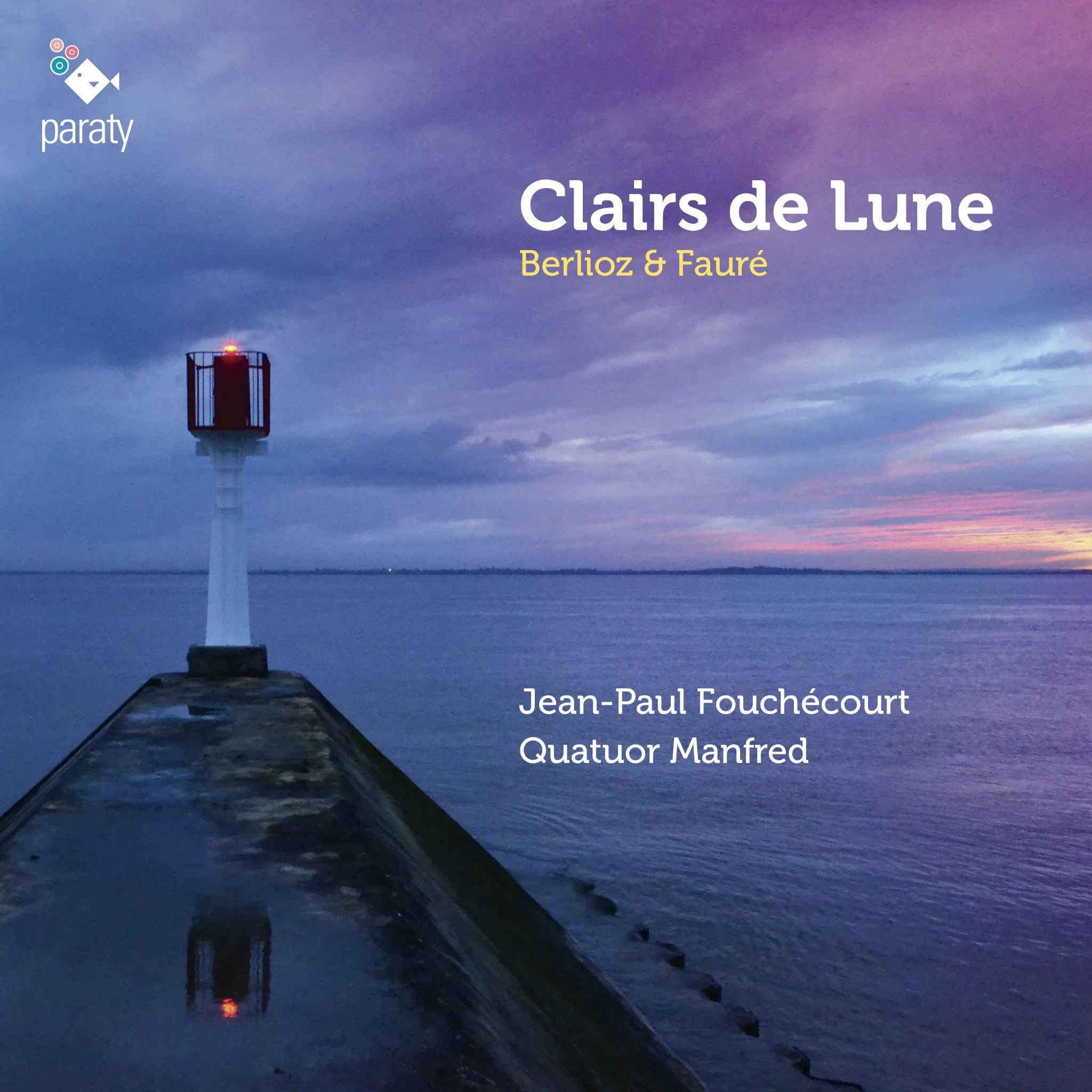
Clairs de Lune, Berlioz, Fauré, Hector Berlioz, Hector Berlioz, Gabriel Fauré, Gabriel Fauré, Les Nuits d'été, string quartet, French melody, voice and quartet, Jean-Paul Fouchécourt, Quatuor Manfred, Quartet Manfred, French, French, French chamber music, French chamber music, Emmanuel Haratyk, Emmanuel Haratyk, Opus 7, Opus 121, French poetry, Gautier, Verlaine, Paraty
Clairs de Lune Berlioz Fauré, Les Nuits d'été string quartet, string quartet, Fauré quartet Op.121, Jean-Paul Fouchécourt tenor, Manfred Quartet record, French melodies voice and quartet, French vocal chamber music
Clairs de Lune, Manfred Quartet
Clairs de Lune brought together Hector Berlioz (1803—1869) and Gabriel Fauré (1845—1924) around a program for voice and string quartet, combining Les Nuits d'été, Op. 7 by Berlioz in a transcription for tenor and string quartet made by Emmanuel Haratyk, and a set of Fauré melodies transcribed for the same group. The album also includes Fauré's String Quartet in E Minor, Op. 121, composed in 1924. The project is a continuation of the Manfred Quartet's work on chamber vocal repertoire and on the confrontation between melodic writing and string quartet texture.
The recording brings together two contrasting aesthetics of French music. With Berlioz, the dramatic expressiveness and irregular prosody of Théophile Gautier's poems find a new dimension in writing that is intermediate between piano and orchestra. For Fauré, the harmonic intimacy and the sobriety of the discourse are expressed through his melodies — in particular La Chanson du Pêcheur, Les Berceaux, Les Roses d'Isfahan, Clair de Lune, La Rose and Après un Rêve — compared to the string quartet, a late and central work in his chamber music catalog.
Tenor Jean-Paul Fouchécourt is accompanied by the Manfred Quartet, composed of Marie Béreau and Luigi Vecchioni, violins, Emmanuel Haratyk, viola, and Christian Wolff, cello. The album highlights the close relationship between poetic text and musical writing, based on poems by Théophile Gautier, Sully Prudhomme, Leconte de Lisle, Paul Verlaine and Romain Bussine, and offers a coherent reading of the repertoire for voices and string quartets in French music of the 19th and early 20th centuries.
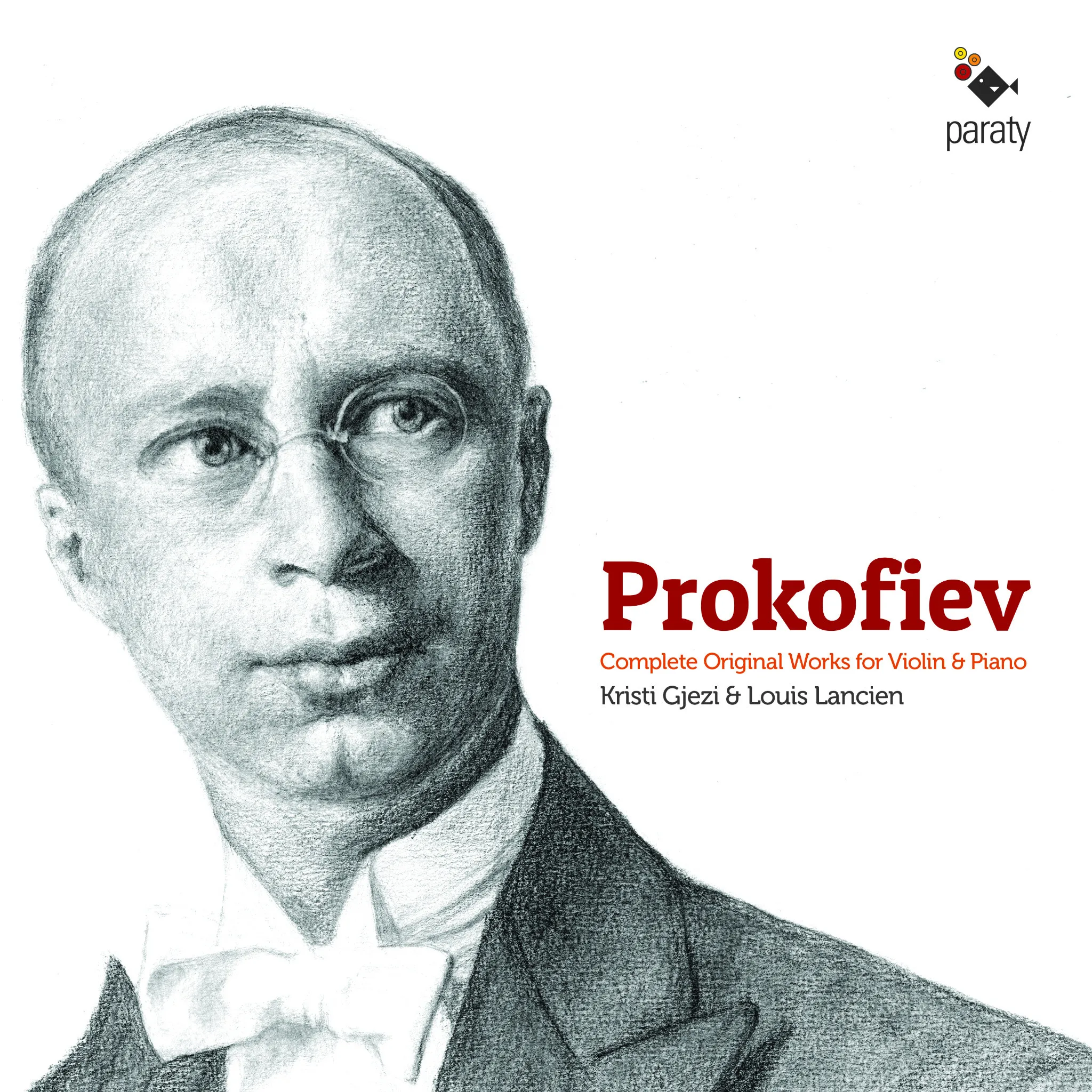
Prokofiev Complete Original Works for Violin and Piano, Prokofiev violin piano, Prokofiev violin piano, Prokofiev violin piano piano, Prokofiev, five melodies, Op 35bis, Kristi Gjezi violin, violin, piano Louis, Louis Lancio piano, Louis Lancio piano, Prokofiev piano
Prokofiev, Complete Original Works for Violin & Piano
This disc brings together all of Sergei Prokofiev's original works for violin and piano, performed by violinist Kristi Gjezi and pianist Louis Lancic. Conceived as a monographic project, the album explores a central period in Sergei Prokofiev's production, marked by a return to classical forms, incisive rhythmic writing and strong expressive tension.
The two major Sonatas for violin and piano, Op. 80 and Op. 94bis, occupy a central place in this program. Composed during the composer's Soviet period, they bear witness to two contrasting faces of his language: one dark, tense and almost harsh, the other more luminous, lyrical and directly inherited from the original flute version. The Five Melodies Op. 35bis complete this set, offering a more intimate and melodic counterpoint, based on folklore and wordless singing.
The interpretation by Kristi Gjezi and Louis Lancien is part of a sober and structured approach, attentive to the balance between voices and formal clarity. Inspired by their experience with chamber music and orchestra, this reading highlights the rhythmic richness, harmonic density and melodic meaning that make Prokofiev one of the great composers of the 20th century.
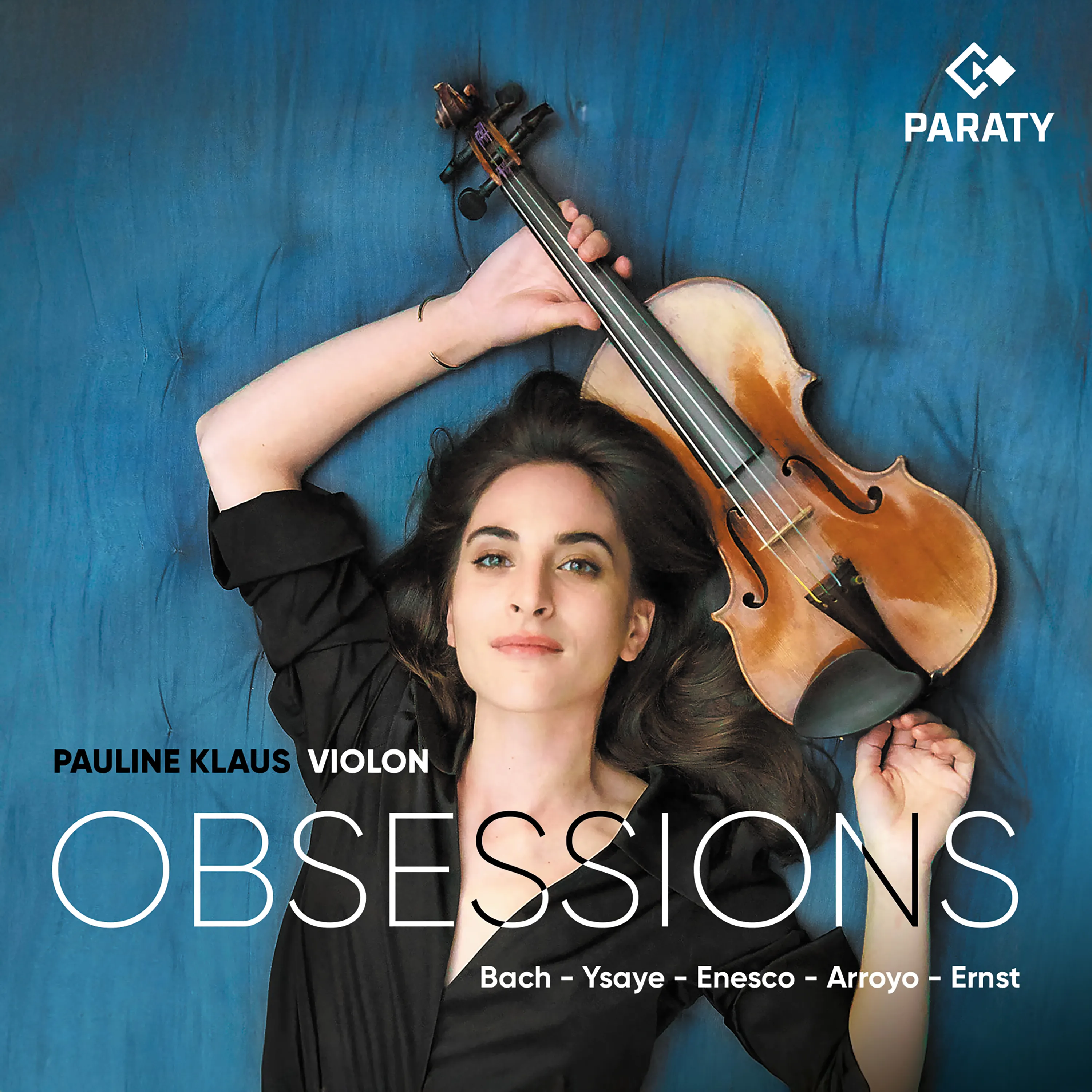
Pauline Klaus violin, Obsessions album, solo violin, violin solo, Johann Sebastian Bach BWV 542, Fantasia and Fugue G minor, Tedi Papavrami transcription, Eugène Ysaÿe Sonata for solo violin op. 27 no.2, Sonata op. 27 no.2, Sonata op. 27 no.3, Sonata op. 27 no.3, Sonata op. 27 no.3, Sonata op. 27 no.3, Sonata op. 27 no.3, Sonata op. 27 no.3, Sonata op. 27 no.3, Sonata op. 27 no.3, Sonata op. 27 no.3, Sonata op. 27 no.3, Sonata op. 27 no.3, Sonata op. 27 no.3, Sonata op. 27 no.3, Sonata op. 27 no.3, Sonata op. 27 no.3, Sonata op. Grand Caprice op. 26 D 328, Juan Arroyo Dormiveglia, Juan Arroyo Paralelo, contemporary music violin, repertoire for solo violin, Paraty Records
Obsessions, Pauline Klaus
Obsessions brings together a program for solo violin built around founding figures and assumed filiations, from Johann Sebastian Bach to Eugène Ysaÿe, via Franz Schubert, Heinrich Wilhelm Ernst, George Enescu and contemporary creation. This journey brings together transcription, virtuosity and heritage, in a constant dialogue between polyphonic writing, instrumental gesture and musical memory.
The disc opens with Bach's Fantasy and Fugue in G minor BWV 542 in transcription by Tedi Papavrami, before deploying several sonatas by Ysaÿe, including the Second, Third and Sixth Sonata for solo violin, emblematic works of the 20th century that explicitly question the notion of obsession, quotation and stylistic overcoming. The program continues with Impressions of Childhood by George Enescu and Le Grand Caprice sur Le Roi des Alders by Schubert arranged by Ernst, the pinnacle of virtuoso literature.
The presence of Juan Arroyo with Dormiveglia and Paralelo places this project in a living continuity, where contemporary creation dialogues with Bach and tradition. Obsessions is thus presented as an interior itinerary for solo violin, crossed by polyphony, memory and the transformation of forms, carried by a demanding approach to sound, structure and musical discourse.
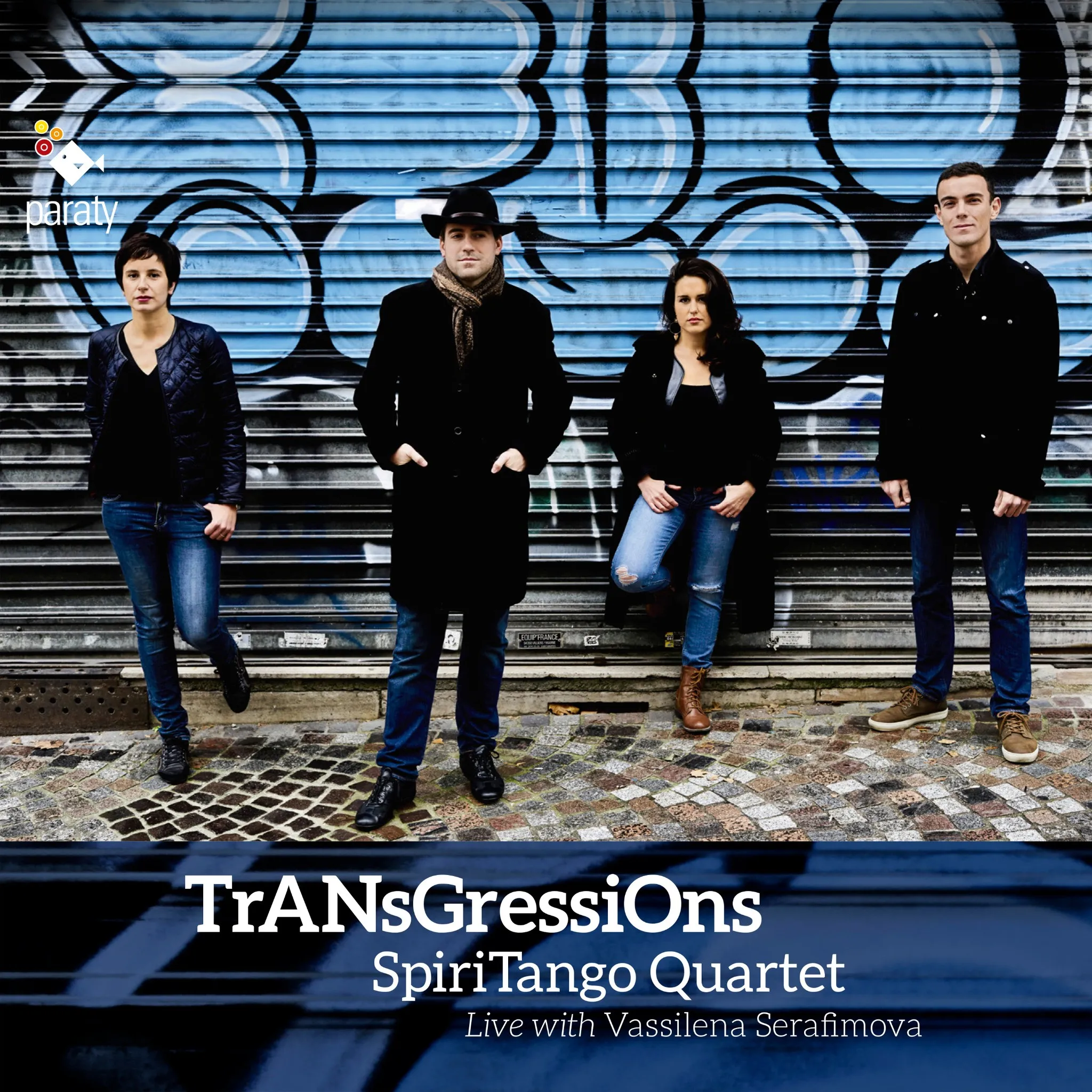
SpiTango Quartet, Transgressions, contemporary tango, tango nuevo, Astor Piazzolla, Camorra III, Romance del Diablo, Richard Galliano, Opale Concerto, Matthieu Stefanelli, Cabeceo, Alexandre Fontaines, Cabeceo, Alexandre Fontaines, Para Descansar, Alexandre Fontaines, Para Descansar, Graciane Finzi, Para Descansar, Graciane Finzi, Impression Tango, Luis Caruana, Luis Caruana, Odeon Nazareth, Tico-Tico, Accordion, Tango Chamber Music, Alexandre Fontaines, Cabeceo, Alexandre Fontaines, Para Descansar, Alexandre Fontaines, Para Descansar, Graciane Finzi, Para Descansar, Graciane Finzi, Impression Tango Vasilena Serafimova, tango percussion, live tango album, Paraty Records
Transgressions, Spiritango Quartet
After eight years on stage together, the SpiriTango Quartet offers with Transgressions a project that is at the crossroads of tango, contemporary music and chamber music. The ensemble affirms a singular identity, based on original arrangements and instrumental writing that goes beyond the traditional frameworks of tango, while maintaining its rhythmic and expressive energy.
The program brings together emblematic works from the repertoire, such as Camorra III and Romance del Diablo by Astor Piazzolla, with creations and pieces by contemporary French composers, including Matthieu Stefanelli (Cabeceo), Alexandre Fontaines (Para Descansar) and Graciane Finzi (Tango print). The assumed choice of the accordion instead of the bandoneon gives the ensemble a specific sound palette, central to the aesthetics of the project.
Highlight of the album, theOpale Concerto by Richard Galliano is presented in a new version for chamber music. The program also opens up to Latin America with the works of Luis Caruana, as well as Brazilian plays Odeon and Tico-Tico, entirely arranged by the Spiritango Quartet. The participation of percussionist Vassilena Serafimova reinforces the rhythmic dimension and further broadens the sound spectrum of this live recording.

Volts, Quatuor Tana, contemporary music, string quartet and electronics, mixed music, Fausto Romitelli Natura Morte con Fiamme, Gilbert Nouno Deejay, Juan Arroyo Smaqra, Remmy Canedo Clusterfuck, Remmy Canedo Clusterfuck, Remmy Canedo Clusterfuck, Christophe Havel Clusterfuck, Christophe Havel Dissidence 4, mixed music, mixed music, Fausto Romitelli Natura Morte con Fiamme, Gilbert Nouno Deejay, Juan Arroyo Smaqra, Remmy Canedo Clusterfuck, Remmy Canedo Clusterfuck, Christophe Havel Clusterfuck, Christophe Havel Dissidence 4, mixed music, mixed music, mixed music, Fausto Romit
Volts, Tana Quartet
Volts offers an overview of contemporary music for string quartets and electronics, by exploring the multiple forms that mixed music can take today. From pre-recorded tape to real-time electronics and improvisation, this album brings together different aesthetics and technologies, inscribed in historical continuity but resolutely focused on current creation.
The program brings together works by Fausto Romitelli, Gilbert Nouno, Juan Arroyo, Remmy Canedo and Christophe Havel, offering a contrasting panorama of the relationships between acoustic instruments and electronic devices. The Tana Instruments, new generation hybrid instruments, here allow electronics to be broadcast directly through the sound box of the instruments, profoundly modifying the perception of sound and the listening space.
Led by the Tana Quartet, Volts is part of the tradition of modern string quartets while expanding their borders. The album affirms an uncompromising, plural and committed approach, where sound research and musical rigor interact to draw the contours of a repertoire that is already part of the history of contemporary creation.
.webp)
.svg)

.svg)