
.png)
Albums
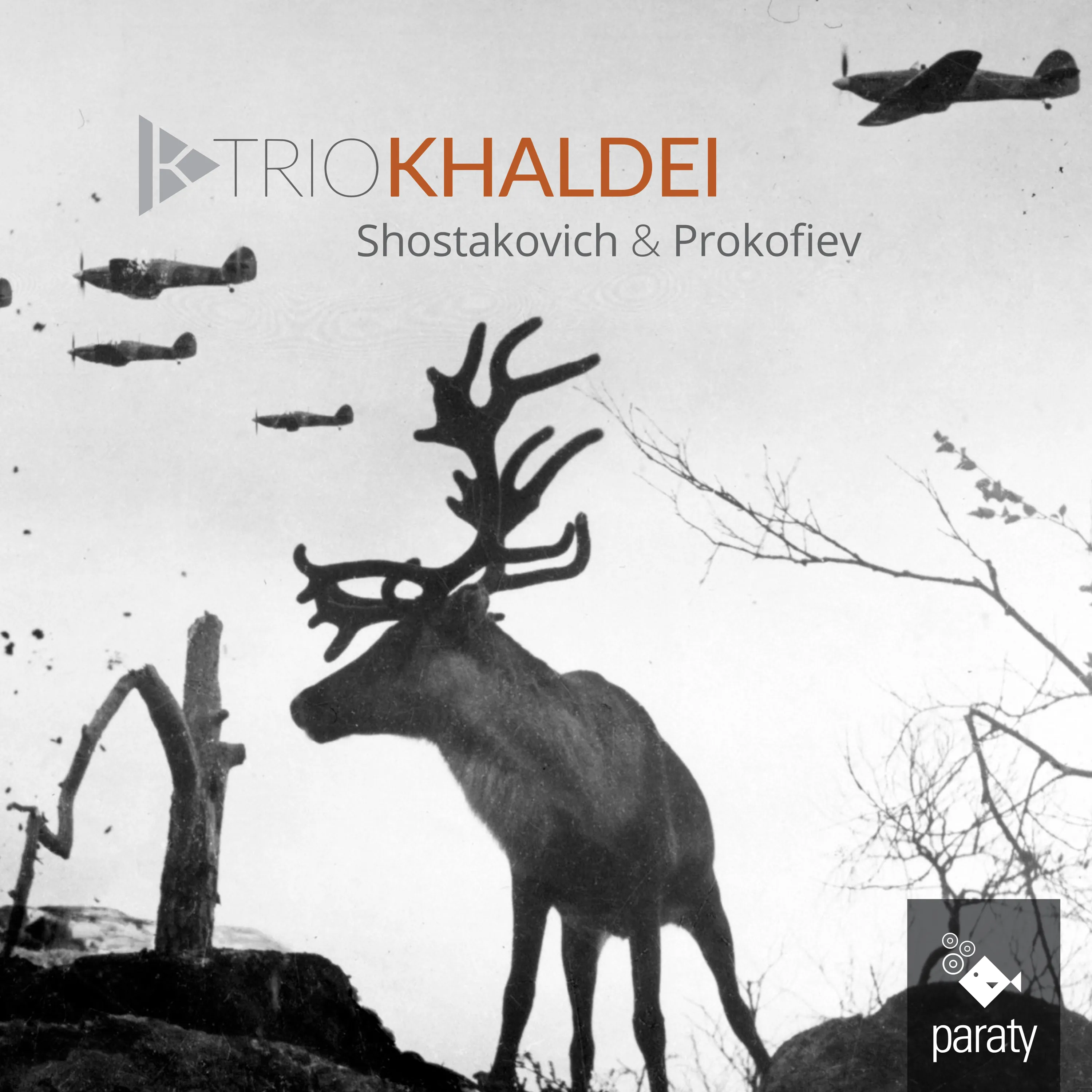

Shostakovich piano trio, Prokofiev chamber music, piano trio 20th century, 20th century, classical Russian music, Trio Khaldei, piano trio Shostakovich, Prokofiev Ballad op 15, Prokofiev Ballad op 15, Prokofiev Five Melodies op 35, Russian chamber music, Paraty classical
Shostakovich Piano Trio op 8, Shostakovich Piano Trio op 67, Prokofiev Ballad cello piano, Prokofiev Five Melodies violin piano, Trio Khaldei recording, Russian chamber music 20th century, Russian chamber music 20th century, Shostakovich Prokofiev album, Paraty label


Trio Khaldei, Shostakovich & Prokofiev
This recording brings together two major works by Dmitri Shostakovich — Piano Trios op. 8 and op. 67 — compared with two scores by Sergei Prokofiev, the Ballad for Cello and Piano op. 15 and the Five Melodies op. 35 in their version for violin. Composed between youth and maturity, love and war, these works illustrate two contrasting trajectories of 20th-century Russian music, between tense lyricism, dark irony and extreme dramaturgy. Shostakovich's Second Trio, dedicated to Ivan Sollertinsky, stands out as a pivotal work, with requiem accents and an intense emotional charge.
The Khaldei Trio approaches this repertoire with particular attention paid to timbral contrasts, rhythmic density, and the clarity of formal discourse. The dialogue between piano, violin and cello highlights the internal tensions of these works, from the romantic writing of the first trio to the harsher and fragmented textures of the second. Prokofiev's pages extend this exploration with a narrative and nocturnal writing, where the piano structures the sound space while the strings develop a continuous expressive line.
This album is part of the artistic approach of the Khaldei Trio, which explores the links between music, history and memory, in particular in the Russian repertoire of the first half of the 20th century. By comparing works of youth and scores of maturity, this program offers a coherent and committed reading of these emblematic pages, underlining their expressive force and their human scope, beyond any strictly stylistic approach.
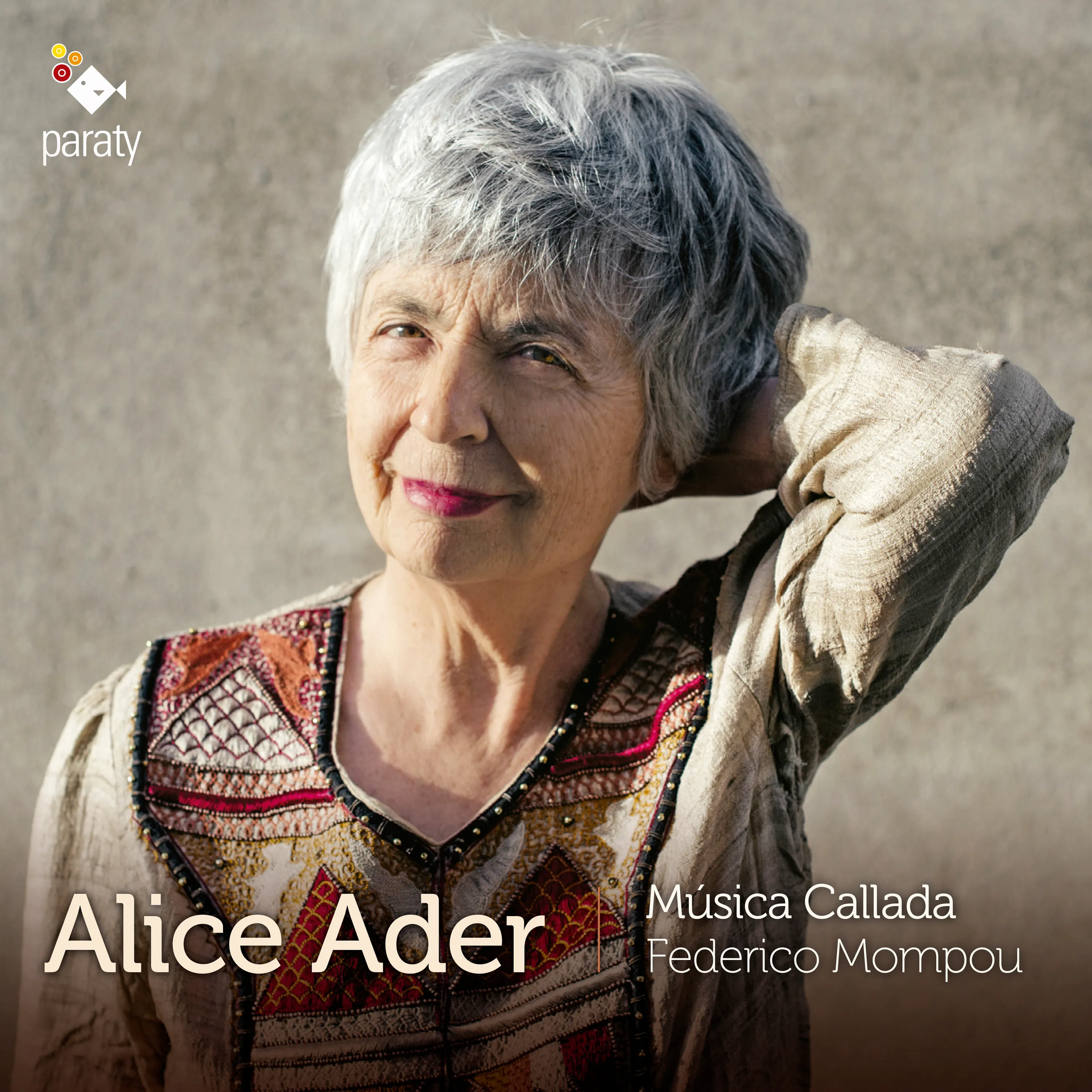
Federico Mompou, Music Callada I, Music Callada I, Music Callada I, Music Callada II, Music Callada III, Angelico, Paisajes, La Fuente y la Campana, El Lago, Carros de Galicia, El Lago, Carros de Galicia, Carros de Galicia, solo piano, Carros de Galicia,, music, solo, Carros de Galicia,, music, 2nd century, III, Angelico, Paisajes, La Fuente y la Campana, El Lago, Carros de Galicia, El Lago, Carros de Galicia,, Galicia, Carros de Galicia, piano solo, Carros de Galicia,, Galicia, Carros de Galicia,, piano solo, Carros de Galicia,, Italian, Italian, Italian, Italian, Italian, Italian, Italian, Italian Ader
Alice Ader, Musica Callada
When Alice Ader approaches the work of Federico Mompou, she enters a universe of memory, silence and interiority. Mompou's music, deeply marked by the unspeakable and the elsewhere, finds its most stripped-down expression in the Música Callada cycle, composed between 1959 and 1967. Inspired by the mystical poetry of Saint John of the Cross, this cycle of twenty-eight pieces explores writing that is reduced to the essentials, where the piano becomes resonance, light and complaint, and where each piece, although distinct, contributes to a unity of color and atmosphere.
The formal structure of Música Callada is most often based on a simple A—B—A scheme, opposing refined harmonies to breaks in tension and dissonance. Alice Ader highlights the expressive diversity of the cycle: slow wanderings, haunting bells, memories of Catalan folk melodies, desperate wanderings or luminous meditations. This music, which Vladimir Jankélévitch described as a “distant presence”, remains veiled by an ancient memory and by a spirituality that runs through the whole work.
The program is completed by Paisajes, a triptych composed between 1942 and 1960, bringing together La Fuente y la Campana, El Lago and Carros de Galicia. These descriptive pieces extend the poetic universe of Mompou through evocative and sensory writing. Recorded in concert on a Steinway & Sons piano from 1897, restored and tuned for the occasion, this album testifies to an intimate relationship with sound, suspended time and inner listening, at the heart of the Catalan composer's aesthetic.

Beethoven, Hersant, Quartet Girard, chamber music, string quartet, Ludwig van Beethoven, Philippe Hersant, Quartet op. 59 n°2, Razoumovski, The Starry Sky, contemporary quartet, modern classical music, modern classical music, modern classical music, modern classical music, starry sky, starry sky, string quartet, string quartet, string quartet, Beethoven quartets, Hersant quartet, Paraty, Queen Elizabeth Music Chapel, classical music, modern classical music, modern classical music, modern classical music, starry sky, starry sky, string quartet, string quartet, Beethoven quartets, Hersant quartet, Paraty, Queen Elizabeth Music Chapel, classical music, modern classical music, modern classical music, modern classical music
The Starry Sky, Girard Quartet
This recording brings together two works under the sign of the starry sky: the Quartet in E minor op. 59 no. 2 by Ludwig van Beethoven, a pillar of the so-called “heroic” style, and the Quartet no. 4 The Starry Sky by Philippe Hersant, composed in direct resonance with this seminal work. Through this comparison, the Girard Quartet explores the tensions between light and shade, lyricism and drama, meditation and momentum, which cross these two scores and link them across the centuries.
The Quartet op. 59 no. 2, dedicated to Count Razumovsky, marks a decisive stage in the history of string quartet because of the breadth of its form, the intensity of its discourse and the depth of its musical thought. Son Molto Adagio, often described as a “meditation under the starry sky”, is the spiritual heart of the work. Philippe Hersant is freely inspired by it in The Starry Sky, integrating Beethovenian thematic and rhythmic elements while adding his own writing, nourished by references to the Russian soul and to the universe of Shostakovich.
The result of a long attendance with all of Beethoven's quartets, this album reflects a significant stage in the career of the Girard Quartet, enriched by their residence at the Queen Elizabeth Music Chapel and by their collaboration with the luthier Charles Coquet. The recording does not seek to freeze an interpretation, but to bear witness to a living moment of research, transmission and dialogue between tradition and contemporary creation.
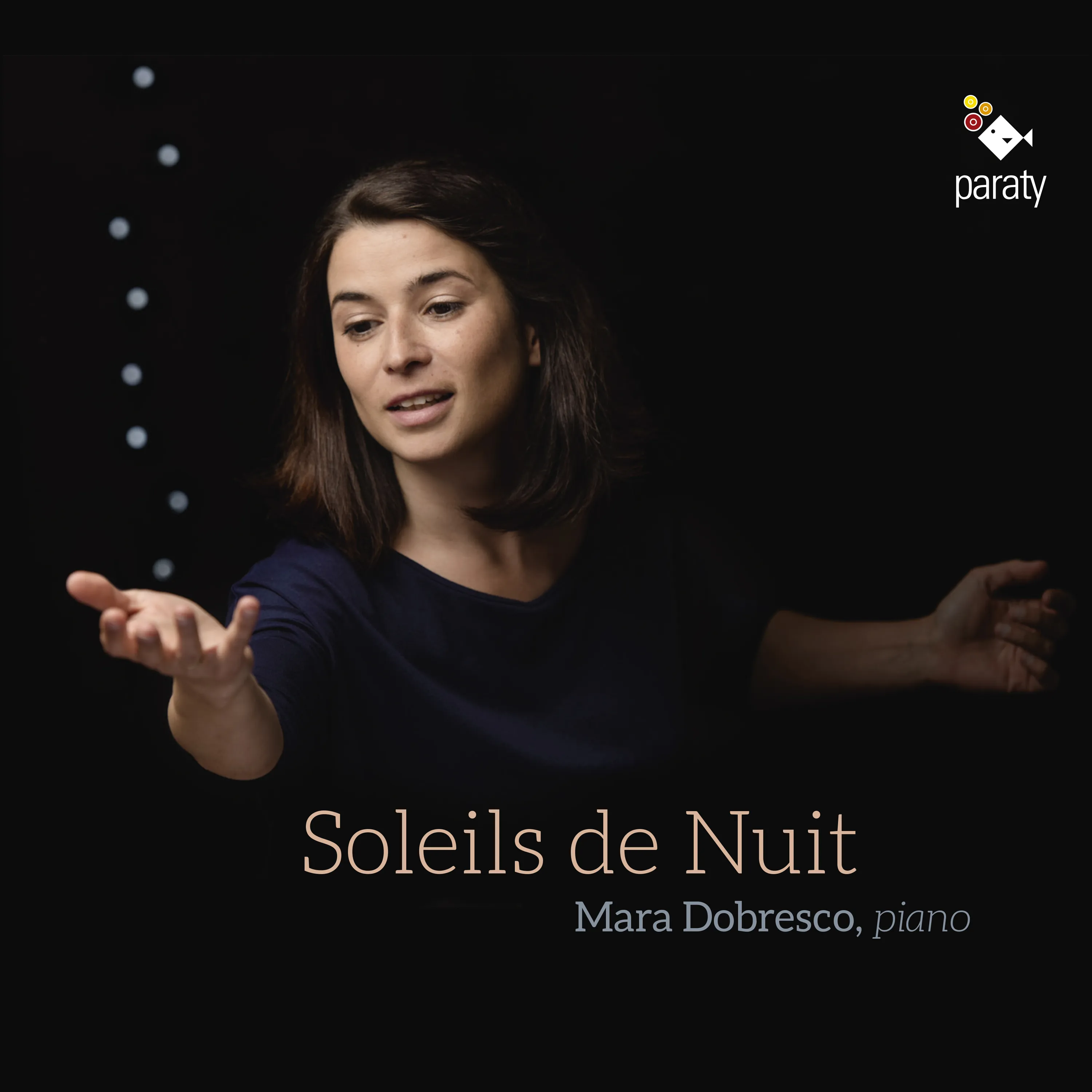
Night Suns, Mara Dobresco piano, Nocturnes piano, Nocturnes piano, Chopin Nocturno, Chopin Nocturno, Grieg Notturno, Clara Schumann Nocturno, Anatol Vieru Nuit, Respighi Notturno, Britten Notturno, Britten Notturno, Britten Notturno, Philippe Hersant Notturno, Philippe Hersant Notturno, Philippe Hersant Notturno, Philippe Hersant Notturno, Philippe Hersant Nocturno, Philippe Hersant Nocturno, Philippe Hersant Nocturno, Philippe Hersant Nocturno, Philippe Hersant Nocturno, Philippe Hersant Nocturno, Philippe Hersant Nocturno, Philippe Hersant Nocturno, Philippe Berceuse, Chopin Nocturne op. posth. c-sharp minor, Debussy Nocturne, Debussy Nocturne, Debussy Clair de Lune, Poulenc Nocturne, Satie Hollow Songe, Enesco Carillon nocturnal, Enesco Carillon nocturnal, piano solo, piano solo, music nocturnal, nocturnal music, Paraty Productions, recording Salle Colonne
Night Suns, Mara Dobresco
Soleils de Nuit is an album for solo piano performed by Mara Dobresco, built as a nocturnal stroll around the theme of night, shadow and light. The program brings together works from different periods, from romanticism to contemporary creation, structured around the form of the nocturnal and pieces associated with the nocturnal universe. The album combines composers from the established repertoire and composers of the 20th and 21st centuries.
Alongside nocturnal works by Frédéric Chopin, Edward Grieg, Edward Grieg, Claude Debussy, and Piotr Ilitch Tchaikovsky, the program compares works that are more rarely recorded, such as nocturnal works by Dinu Lipatti and Benjamin Britten, the Carillon Nocturne by George Enesco, and the Carillon Nocturne by George Enesco, as well as contemporary pieces by Oscar Strasnoy, Philippe Hersant and Anatol Vieru. The choice of works was made gradually, with particular attention paid to the sequences of tones and to the continuity of the musical journey.
The album concludes with a posthumous work by George Enesco from Impromptu Pieces, evoking the bells of monasteries in northern Romania. Recorded in 2017 at Salle Colonne, Soleils de Nuit reflects Mara Dobresco's link with the nocturnal repertoire, her interest in contemporary music and her constant dialogue between piano heritage and current creation.
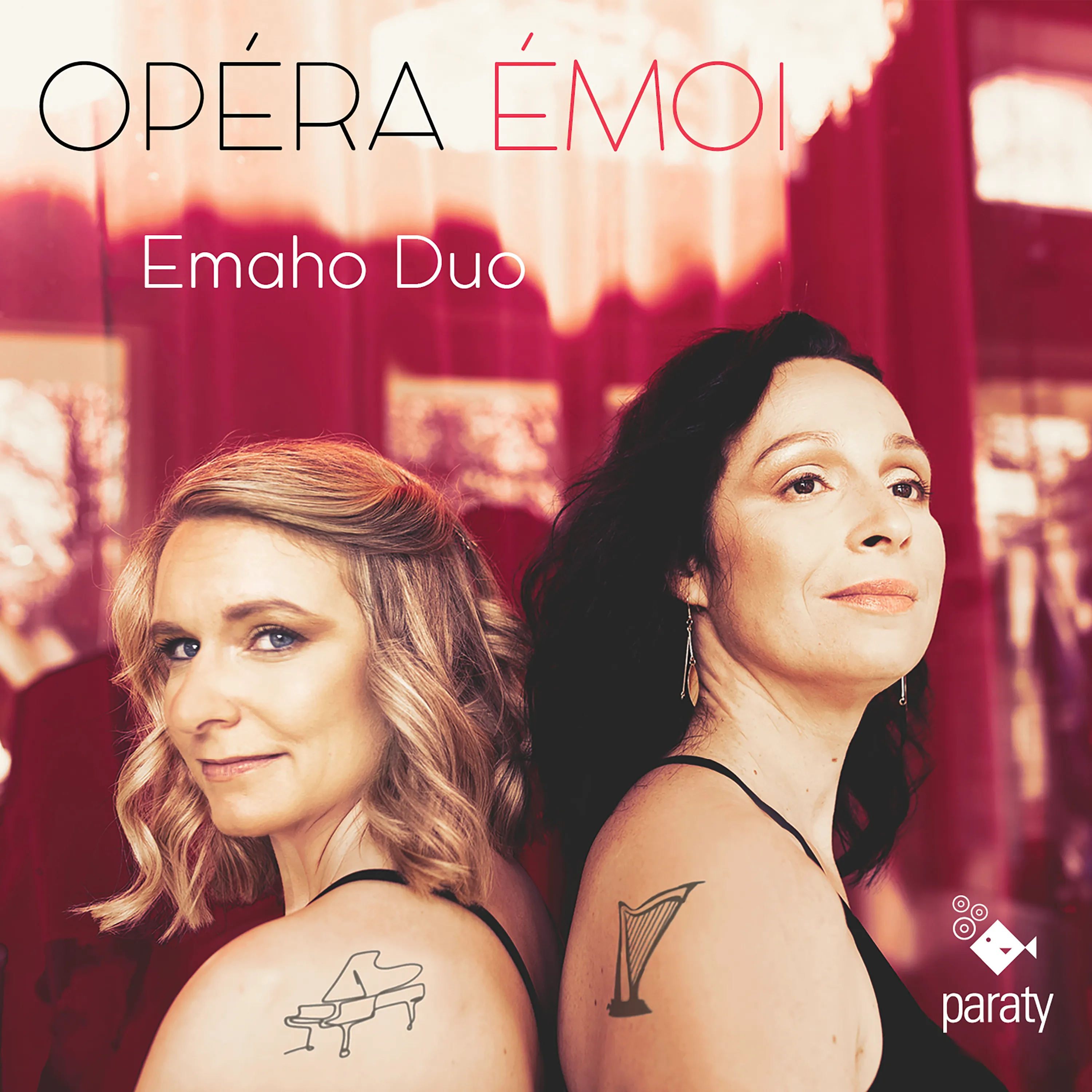
Opera émoi, Duo Emaho, Primor Sluchin, Maud Renier, harp and piano, harp and piano, harp and piano, salon music, opera paraphrases, Maud Renier, Harp and piano, Maud Renier, Primor Sluchin, Maud Renier, harp and piano, Maud Renier, Maud Renier, harp, piano, piano, Maud Renier, Maud Renier, harp, piano, piano, Maud Renier, Maud Renier, harp, piano, piano, Maud Renier, Maud Renier, harp, piano, piano, Maud Renier, Maud Renier, harp, piano, piano, Maud Renier, Maud Renier, harp, piano, piano, piano, Maud Renier, Maud Renier, piano, classical chamber music, Paraty Records
Émoi Opera, Emaho Duo
Opéra émoi revives a musical practice emblematic of the European salons of the 18th and 19th centuries: paraphrases and reminders of operas, where the most famous arias from the lyrical repertoire were reinvented in a virtuoso and intimate way of writing. Led by the Duo Emaho, formed by Primor Sluchin (harp) and Maud Renier (piano), this recording highlights a musical heritage that is now largely forgotten, designed for close listening, sonic elegance and instrumental dialogue.
The program spans nearly 150 years of music, from comic operas and bel canto to operatic overtures and major romantic paraphrases. Around composers and arrangers such as John Thomas, Jean-Baptiste Cardon, Mozart, Mozart, Félix Godefroid or Giovanni Caramiello, the album explores the major works of Bizet, Rossini, Bellini, Bellini, Verdi and Gershwin, in transcriptions that combine virtuosity, refinement and a sense of singing. The harp, a central instrument in the musical life of the salons, dialogues here with the piano in a subtle balance between brilliance and expressiveness.
Opéra émoi is part of a process of rediscovery and transmission, faithful to the research work of the Duo Emaho in European libraries. This disc offers an immersion in a sound universe where opera becomes chamber music, where major lyrical stages become material for instrumental invention, and where each piece tells a story of the circulation of works, styles and sensitivities, from European romanticism to the colors of American jazz.
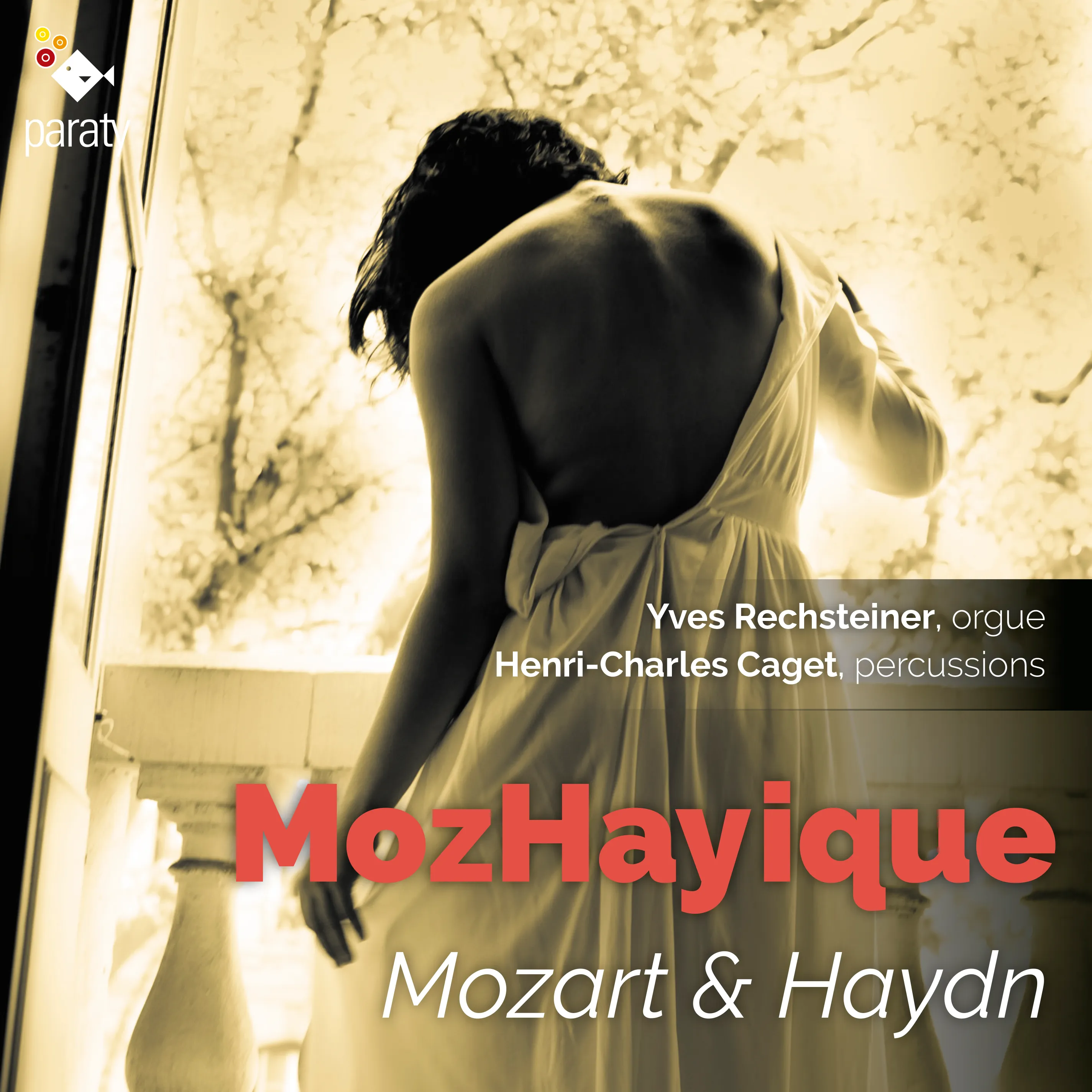
Mozart organ, Haydn organ, Mozart Haydn organ, organ classical organ 18th century, organ and percussion, Mozart organ transcriptions, Haydn organ, Mozart mechanical organ, Justin Heinrich Knecht, classical music organ, classical music organ, organ recording, organ recording Bern Cathedral, Paraty Mozart Haydn, Yves Rechsteiner, Henri-Charles Knecht, Justin Heinrich Knecht, classical music organ, organ recording Bern Cathedral, Paraty Mozart Haydn, Yves Rechsteiner, Henri-Charles Caget,
MozHayique, Mozart & Haydn
This program explores the singular relationship of Wolfgang Amadeus Mozart and Joseph Haydn with the organ, a central instrument in their sound universe, although rarely associated with their best known production. The works presented have their origins in pieces written for mechanical organ, piano or orchestra, which are now adapted for the concert organ. This approach is part of a practice that was historically attested at the end of the 18th century, where transcription was an integral part of musical language.
The approach is based on the treatises and methods of the time, in particular those by Justin Heinrich Knecht, which attest to the growing influence of the orchestra on organ writing and registration. The transcriptions highlight the connections between piano writing, orchestral forms and organ resources, while integrating sound effects inspired by the contemporary instrumental and mechanical practices of Mozart and Haydn.
The dialogue between organ and percussion extends this sound research. The percussions, built from instruments and sound effects known in the 17th and 18th centuries, participate in a poetic recreation of the orchestral aesthetics of the time. The ensemble thus offers a reading that is both historical and contemporary of this repertoire, recorded at Bern Cathedral on a German-designed Kuhn organ.
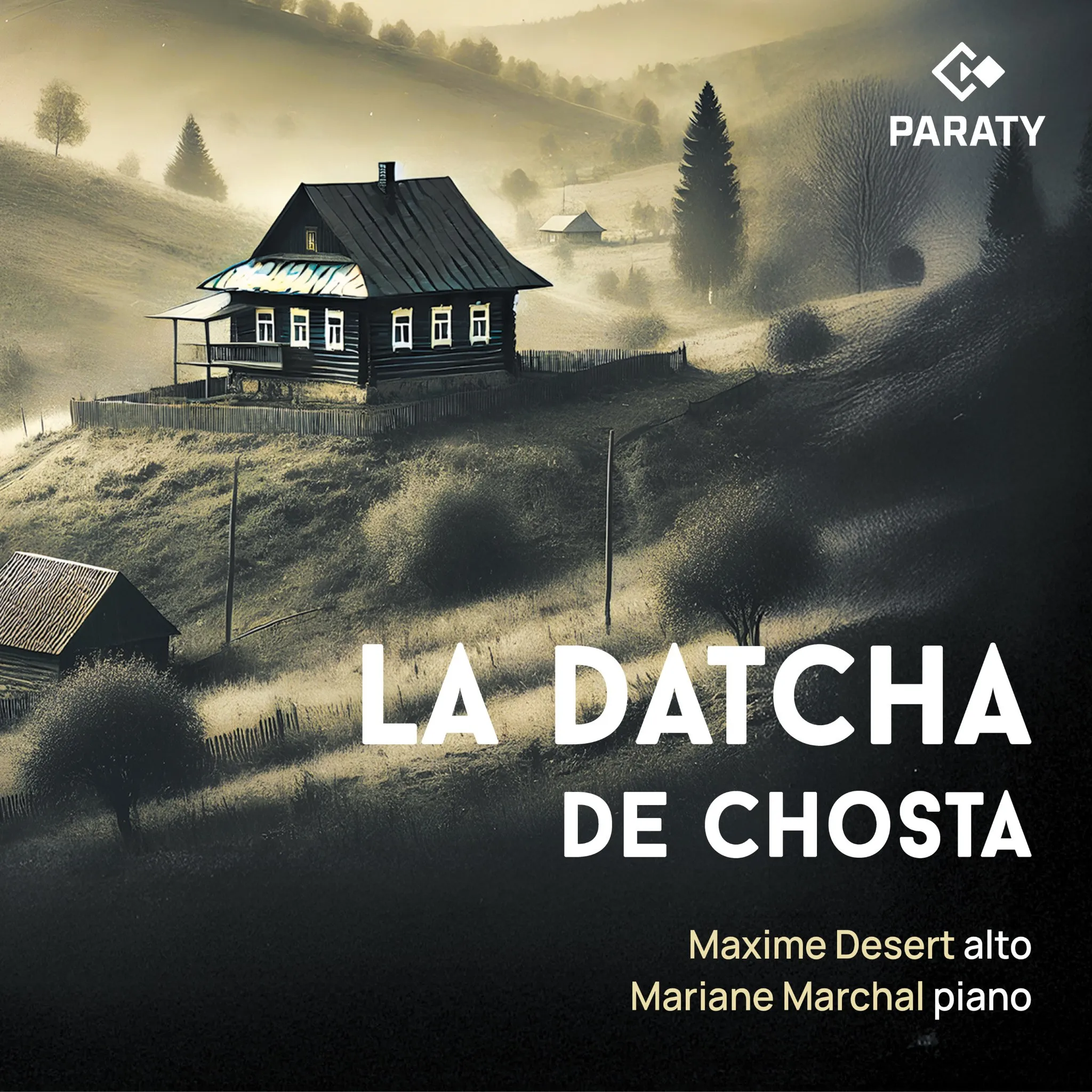
Shosta's Datcha, Dmitri Shostakovich, Shostakovich, viola and piano, viola and piano, chamber music 20th century, chamber music, Maxime Desert alto, Mariane Marchal piano, Paraty, piano, Paraty, Russian music, Paraty, Russian music, Paraty, Russian music, Russian music, modern repertoire, modern repertoire, modern repertoire, works for viola and piano, contemporary classical album, Shostakovich chamber music
La Datcha de Chosta
La Datcha de Chosta is an album for viola and piano performed by Maxime Desert (viola) and Mariane Marchal (piano). The program focuses on the universe of Dmitri Shostakovich, around works written for the alto-piano group or related to his musical aesthetics, in the spirit of chamber music.
The album compares the singular voice of the viola and the piano in a 20th-century repertoire marked by intimacy, expressive density and sobriety of discourse. Instrumental dialogue is based on tight writing, where each line maintains a strong autonomy while being part of a clear and legible architecture.
Through their interpretation, Maxime Desert and Mariane Marchal offer a direct and committed reading of this repertoire, attentive to the sound balances and the internal tension of the works. La Datcha de Chosta is thus part of a demanding chamber music approach, centered on the precision of the gesture and stylistic coherence.
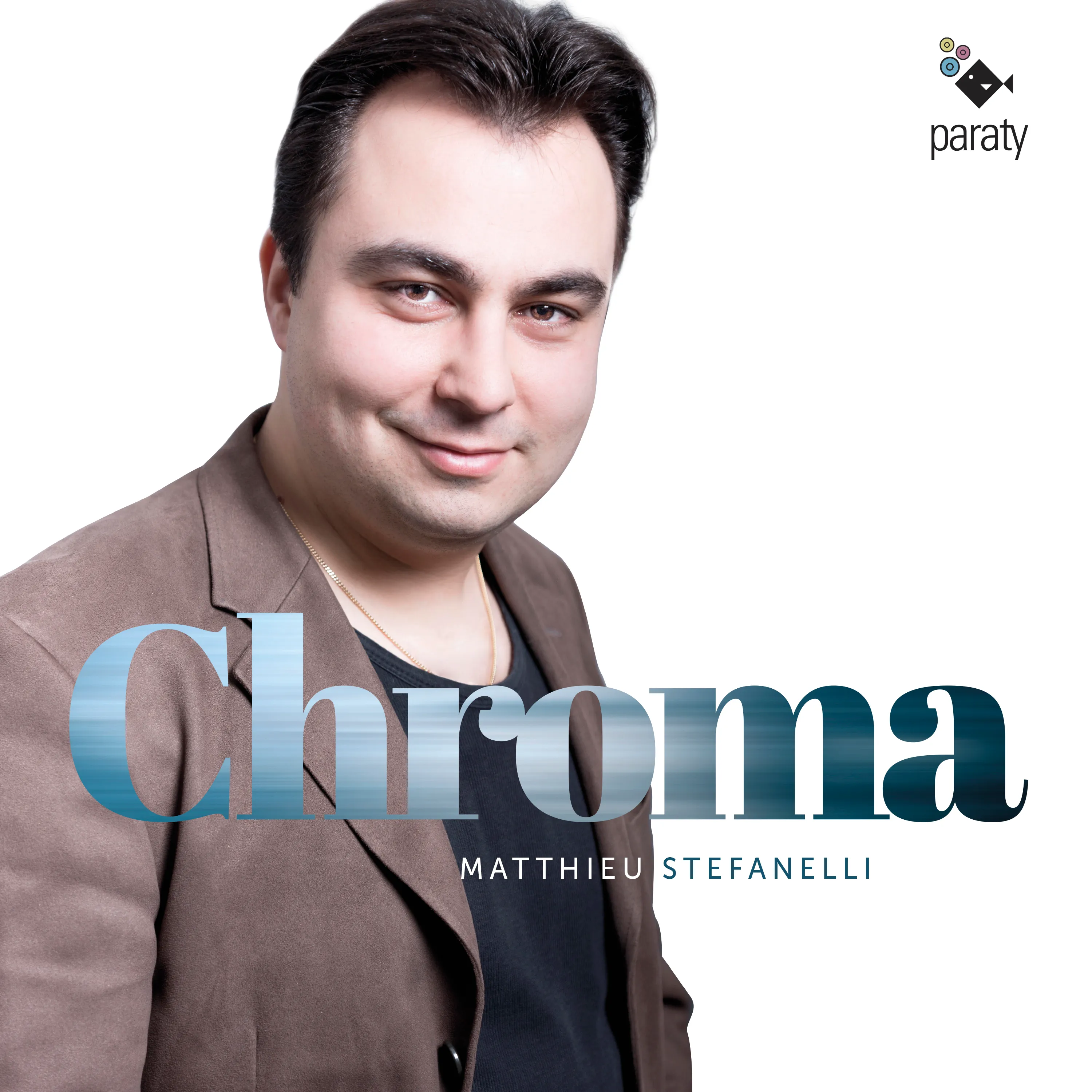
Matthieu Stefanelli, Chroma, concerto for piano and chamber orchestra, French contemporary music, contemporary piano, Syn-phone or Celestial apparitions, Exordes, Chinese shadows, Illusions, contemporary chamber music, contemporary solo piano, contemporary piano, contemporary solo piano, Paraty, contemporary musical creation, Paraty, contemporary musical creation, Paraty, contemporary musical creation, Olivier Cangelosi, Étienne Collard, 2019 Levallois-Perret recording
Chroma, Matthieu Stefanelli
This album, entitled Chroma, takes the name of the Concerto for piano and chamber orchestra in three movements composed by Matthieu Stefanelli. The term “chroma”, coming from ancient Greek, means “color” and refers to the formal principle of the work: a recurring main theme, continuously transformed. This idea permeates the entire program, designed as a journey around the phenomena of sound transformation and musical perception.
The disc brings together works for solo piano, chamber music and orchestral formations: Concerto for piano and chamber orchestra, Syn-phone or Celestial Apparitions for piano and string quartet, Exordes, Chinese shadows and Illusions for piano solo. Matthieu Stefanelli provides the piano part and chooses to be the main interpreter of this recording in order to be as close as possible to the creative gesture, with no intermediary between the composer, the performer and the listener.
The recording was made in 2019 in Levallois-Perret. It brings together an ensemble of musicians including flute and piccolo, oboe and English horn, oboe and English horn, clarinet, bassoon, horn, percussion, violins, viola, cello and double bass, under the direction of Olivier Cangelosi.
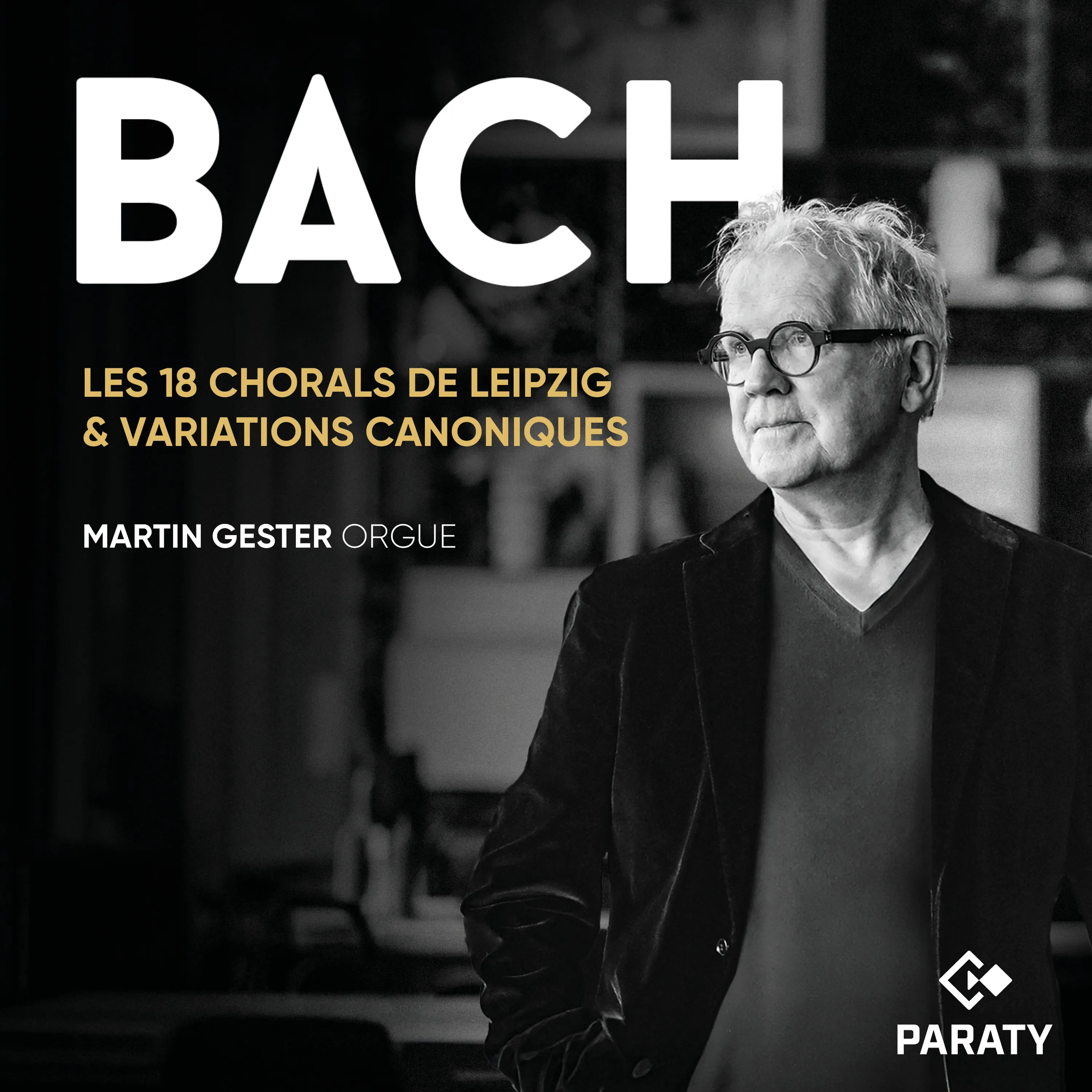
Johann Sebastian Bach, Bach organ, Eighteen Leipzig Chorals, 18 Leipzig Chorals, 18 Leipzig Chorals, 18 Chorals of Leipzig, BWV 651 652 659, 660 661 662 663, 664, 665, 665, 666, 665, 666 666 666 668, 666 666 667 668, Canonical Variations, BWV 769, 18, 18, BWV 769, Canonical Variations, BWV 769, BWV 769, 18, 653, 652, 654, 655, 656, 656, 656, 656, 657, 657, 658, 657, 658, 659, 660 661 662 663, 664, 665, 665, 666, 6
The 18 Leipzig Chorals & Canonical Variations
This album brings together the complete Eighteen Chorals of Leipzig BWV 651 to 668 as well as the Canonical Variations on “Vom Himmel Hoch” BWV 769 by Johann Sebastian Bach. These works, composed at the end of the composer's life, constitute a major set of organ repertoire, a synthesis of Lutheran choral art and Bach's late contrapuntal writing. The program is presented in its entirety, as transmitted by the sources.
Martin Gester interprets these works on the organ, highlighting the formal and expressive diversity of chorals, from large architectural frescoes to more internalized pieces. The Eighteen Chorals of Leipzig cover a wide range of cantus firmus treatments, alternating ornate lines, multi-keyboard textures and contrasting registration sets. The Canonical Variations BWV 769 complete the program by a systematic exploration of the canon applied to a Christmas chorale.
The recording was made at the organ of the Saint-Loup church in Namur, an instrument whose characteristics allow this repertoire to be approached from a stylistically coherent perspective. This disc is part of a complete and structured process of reproduction of one of the last major organ cycles of Johann Sebastian Bach, performed by Martin Gester.
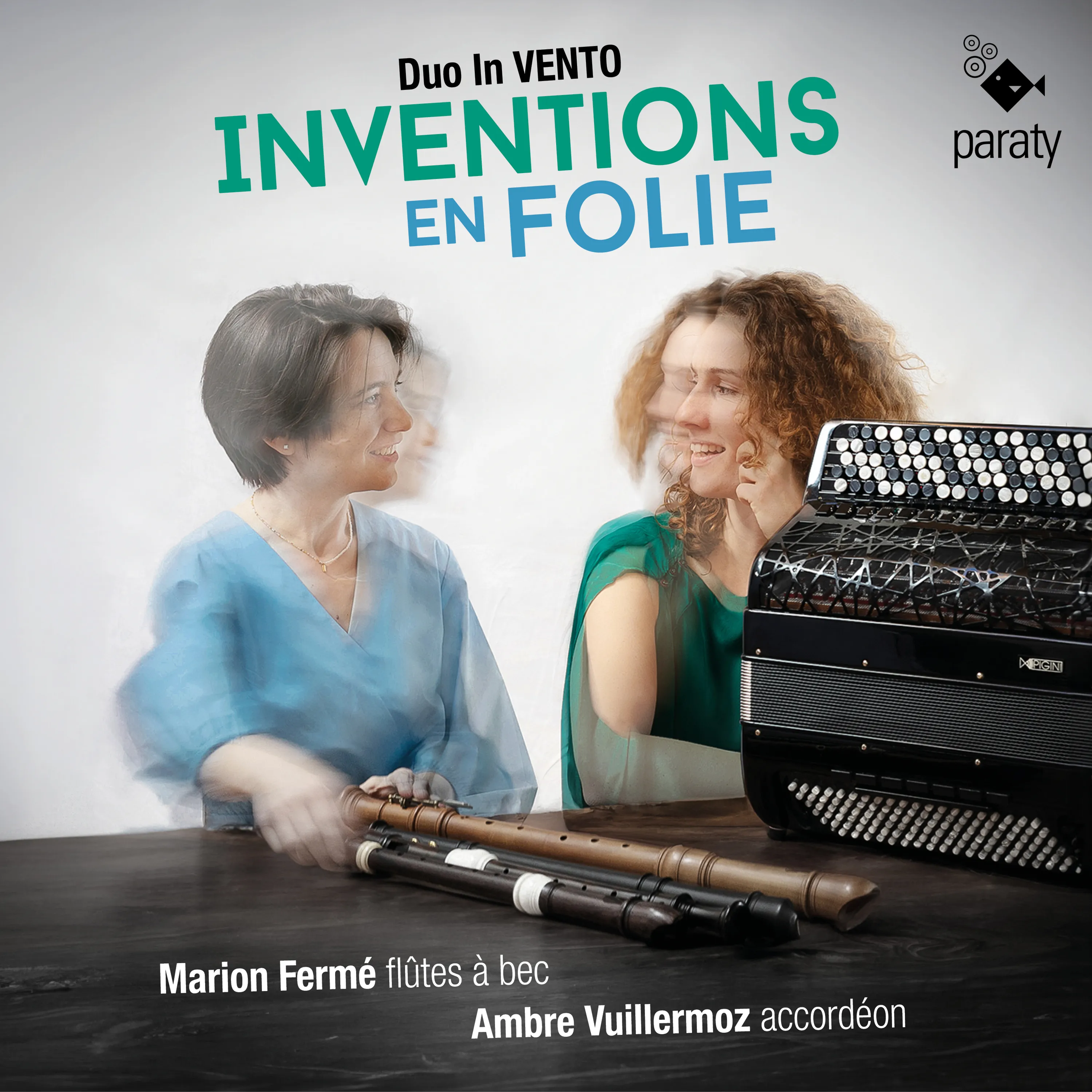
In VENTO Duo, Inventions en Folie, Marion Fermé recorder, Marion Fermé recorder, Ambre Vuillermoz accordion, Johann Sebastian Bach BWV 529 organ sonata, Antonio Soler Fandango R 146, Antonio Soler Fandango R 146, Marin Marais Folies d'Espagne, Ambre Vuillermoz accordion accordion, Ambre Vuillermoz accordion, accordion, Johann Sebastian Bach BWV 529 organ sonata, Antonio Soler Fandango R 146, R 146, R 146, Marin, Marin Marais, Folies d'Espagne, Ambre Vuillermoz accordion accordion, Ambre Vuillermoz accordion, accordion, piano, baroque music arrangements, Paraty
Inventions en Folie, Duo In Vento
The album Inventions en Folie brings together Marion Fermé on the recorder and Ambre Vuillermoz on the accordion in the Duo In VENTO. The program explores the link between breath and air, elements common to both instruments, around a European baroque repertoire adapted to this formation. This disc is the first recording of the duo, active in concert since 2018.
The core of the program is based on works by Johann Sebastian Bach, including the Sonata in B Minor BWV 1030, performed in an Urtext version using a modern alto flute in E and a baroque alto flute in F for the slow movement, as well as the BWV 529 Organ Sonata, transposed and recorded with reference to the organ. The program also includes Antonio Soler's Fandango R.146 for harpsichord, performed on solo accordion, and a choice of variations from Les Folies d'Espagne by Marin Marais, arranged by the flutist from sixteen variations from Book II of Viola Pieces.
The disc ends with Antonio Vivaldi's Concerto for Flautino RV 443, performed according to the handwritten indication “trasportati alla 4ª (bassa)”, on soprano flute. The album highlights a sound approach based on the balance of tones and instrumental adaptation, while respecting the spirit of the works. Marion Fermé and Ambre Vuillermoz combine modern instruments and historically informed practices to offer a renewed reading of this repertoire.
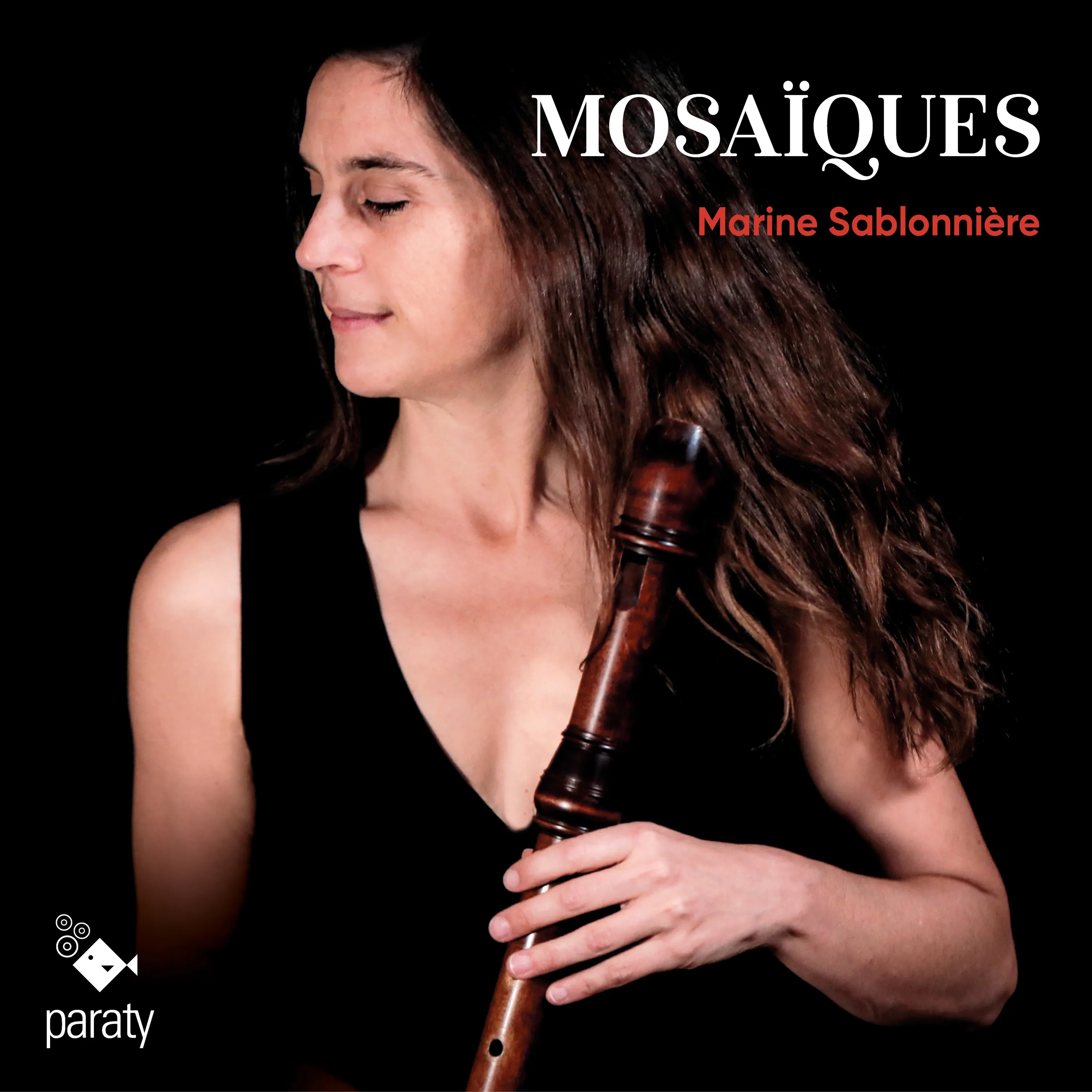
Marine Sablonnière recorder, Mosaics, solo recorder, Mosaics, solo, Sephardic song, recorder, Sephardi, flute, recorder, Jacob van Eyck, Derde doen, Daphne d'over, Peter Denovitz Behran si, Peter Denovitz Behran si, Carl Philipp Emanuel Bach, Carl Philipp Emanuel Bach, Sonata in A minor, Bach, Sonata in A minor, Wq 132 H 562, François Rossé Daphné, Jacob van Eyck Derde doen Daphne d'over, Peter Denovitz Behran si, si, Peter Denovitz Behran si, Carl Philipp Emanuel Bach, Carl Philipp Emanuel Bach, Sonata in A minor, Bach Sonata in A minor, Wq 132 H 562, François Rossé Daphné, Markus Zahnhausen Libri, Johann Sebastian Bach Partita in A minor BWV 1013 German Corrente Sarabande Bourrée Anglaise, Jacques de Cambrai Retrowange novelle, traditional Irish song, Aileán Júda, traditional Irish song, Aileán Júda, song, traditional Irish, Aileán Júda, song, traditional Irish, Aileán Júda, song, traditional, Irish, Ailean, Júda, song, traditional, Irish, Aileán Júda and contemporary recorder, Paraty
Mosaics, Marine Sandy
This album brings together a program for solo recorder performed by Marine Sablonnière, built as a journey through different eras, aesthetics and musical traditions. Entitled Mosaïcs, the disc combines traditional songs, works from the Baroque repertoire and contemporary compositions, comparing pieces from oral traditions with written works, ancient and modern. The program thus spans several centuries, from the Middle Ages to the music of the 21st century.
The repertoire includes traditional songs from various origins, including a Sephardic song, a traditional song from Israel and Bulgaria, and a traditional Irish song. These pieces dialogue with works by Jacob van Eyck, Peter Denovitz, Carl Philipp Emanuel Bach, François Rossé, Markus Zahnhausen, Johann Sebastian Bach, and Jacques de Cambrai. The entire program is designed for recorder alone, exploring the expressive, technical, and sonic possibilities of the instrument in highly contrasting stylistic contexts.
Recorded for the Paraty label, this album highlights the diversity of writing and uses of the recorder, from early music to contemporary creation. The works of Bach and C.P.E. Bach sit side by side with modern pieces and arrangements of traditional songs, offering a transversal reading of the repertoire. Marine Sablonnière offers an interpretation centered on the continuity of the musical gesture and the variety of languages, linking multiple musical worlds within the same program.
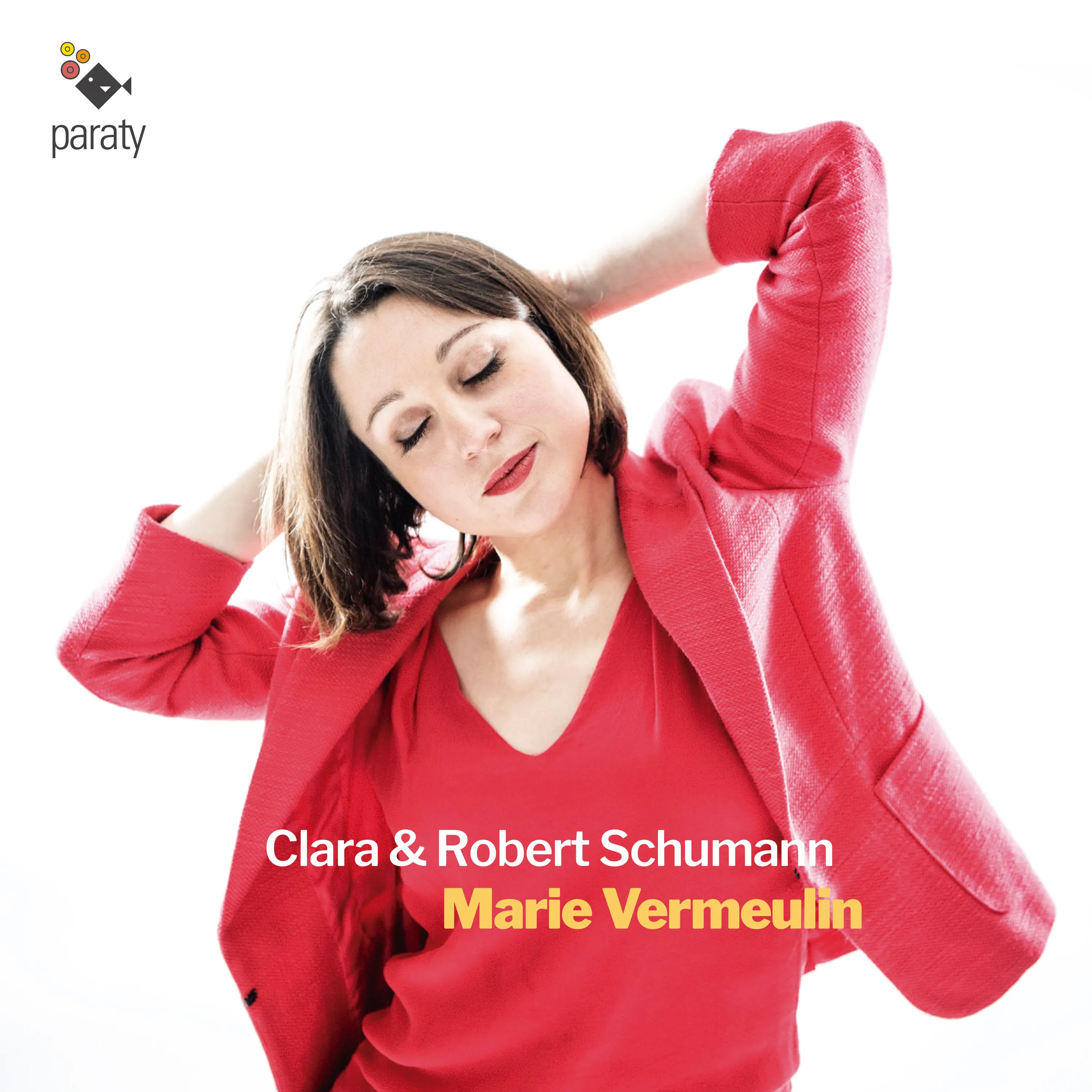
Clara Schumann Musical evenings op. 6, Robert Schumann Kinderszenen op. 15, Robert Schumann Waldszenen op. 82, Clara Schumann Romance in A minor, Marie Vermeulin piano, piano Bösendorfer Vienna Concert 280, piano Bösendorfer Vienna Concert 280, German romantic concert 280, German romantic music, romantic romantic piano, Robert Schumann piano, Marie Vermeulin piano, Marie Vermeulin piano, Paraty label, Vienna Concert 280, 280, Bösendorfer Vienna Concert 280, German romantic music, German romantic music, romantic solo piano, Op.
Clara & Robert Schumann, Marie Vermeulin
This disc brings together piano works by Clara Wieck Schumann and Robert Schumann, designed as a musical dialogue between two closely linked worlds. The program combines Musical Evenings op. 6 by Clara Wieck, Children's Scenes op. 15 and Forest Scenes op. 82 by Robert Schumann, as well as the Romance in A minor by Clara Schumann, composed in 1853 and dedicated to her husband. The ensemble offers a chronological and expressive journey from the youth to the maturity of the two composers, by comparing short forms, poetic narration and stylistic evolution.
The pianist Marie Vermeulin interprets this program on a Bösendorfer Vienna Concert 280 piano. Rather than separating the works of Clara and Robert Schumann into two distinct sets, she chose to have them interact within the same record, echoing the musical messages that the two composers addressed to each other throughout their lives. The themes from the Musical Evenings thus reappear in some of Robert Schumann's works, while Clara's Romance in A Minor concludes the journey as an expressive and personal culmination.
Recorded at the Protestant Church of Bon Secours in Paris in December 2018, this album highlights the short form as a space for poetic and expressive concentration. The Scenes of Children and the Scenes of the Forest successively explore the worlds of childhood, reverie and nature, while the works of Clara Schumann bear witness to a personal piano language, marked by clarity of gesture, intimate narration and refined polyphonic writing.
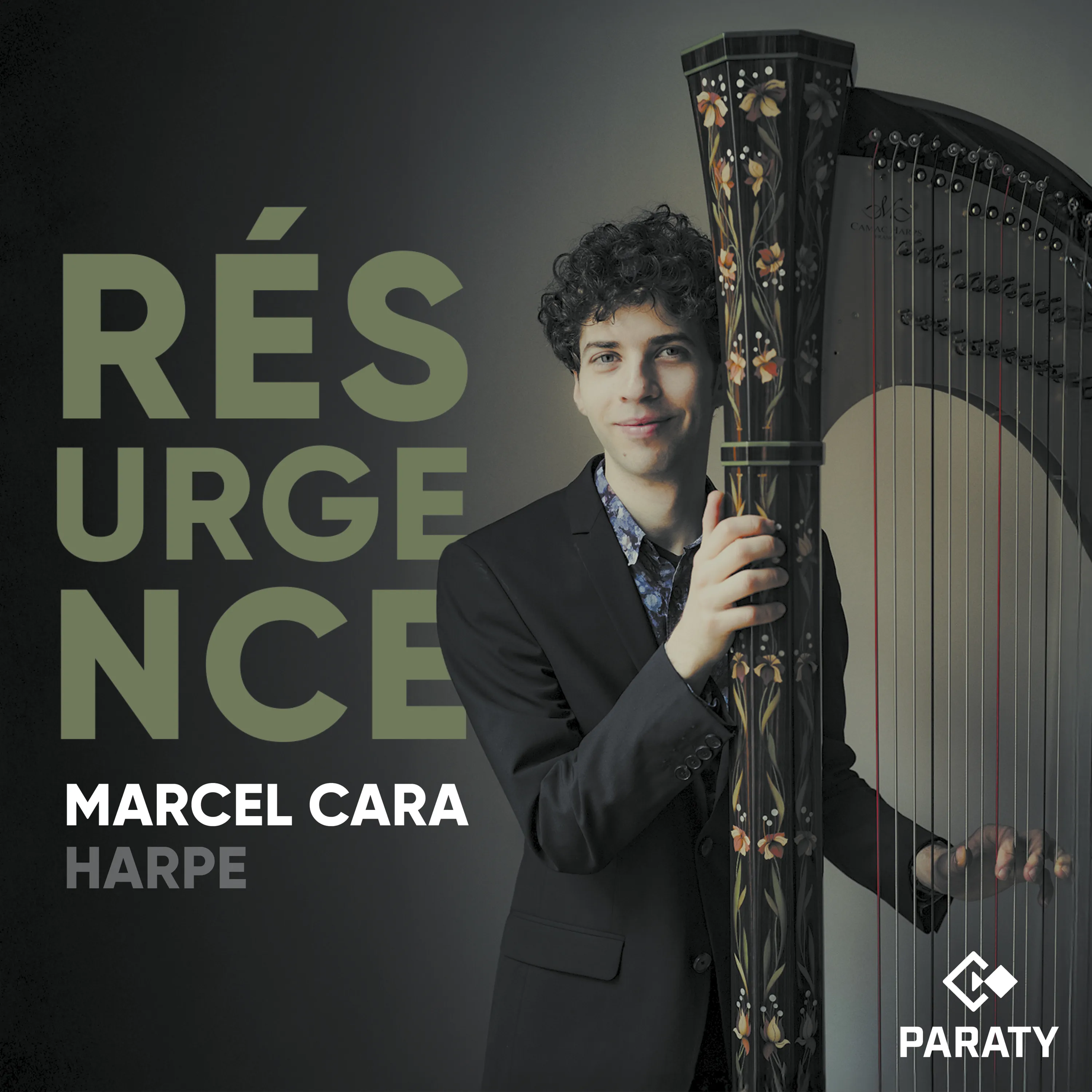
Marcel Cara, Résurgence, solo harp, music for harp, Claude Debussy harp, Claude Debussy harp, Jean Cras Deux impromptus for harp, André Jolivet Prélude for harp, Gabriel Fauré Une chatelaine en sa tour, Marcel Tournier Sonatine op. 30, Marcel Tournier Sonatine op. 30, Marcel Tournier Sonatine op. 30, Jean Cras Deux impromptus for harp, André Jolivet Prélude pour harp, Gabriel Fauré Une chatelaine en sa tour, Marcel Tournier Sonatine op. 30, Marcel Tournier Sonatine op. 30, Op. 30, Bruno Mantovani Tocar, Bruno Mantovani Tocar, Takashi Yoshimatsu Lyra Scenes op. 99, Debussy Evening in Grenade Debussy Hommage à Rameau harp arrangement, Debussy La plus que harp arrangement, French music 20th century, harp repertoire, French harp school, Paraty
Résurgence, Marcel Cara, harp
This album, entitled Résurgence, brings together a harp program centered on French music and its extensions in the 20th and 21st centuries. Marcel Cara proposes a journey linking Claude Debussy to some of his contemporaries and heirs, around the evolution of harp writing after the invention of the double-movement mechanism by Sébastien Érard in 1811. The disc juxtaposes original works for harp with arrangements made by the interpreter based on piano pieces by Debussy.
The program includes works by Claude Debussy, Jean Cras, André Jolivet, André Jolivet, Gabriel Fauré, Marcel Tournier, Bruno Mantovani and Takashi Yoshimatsu. Debussy's arrangements are based on Marcel Cara's concert experience and extend a reflection on transcription and instrumental color. The album addresses a variety of aesthetics, ranging from impressionist heritage to more percussive and contemporary writing, including references to ancient polyphony and extra-European influences.
Trained at the Conservatoire National Supérieur de Musique et de Danse de Paris under Isabelle Moretti and Germaine Lorenzini, Marcel Cara is part of the tradition of the French harp school. Résurgence testifies to its commitment to expanding the instrument's repertoire, through works spanning more than a century of creation and an approach combining solo recital, transcription and contemporary music.
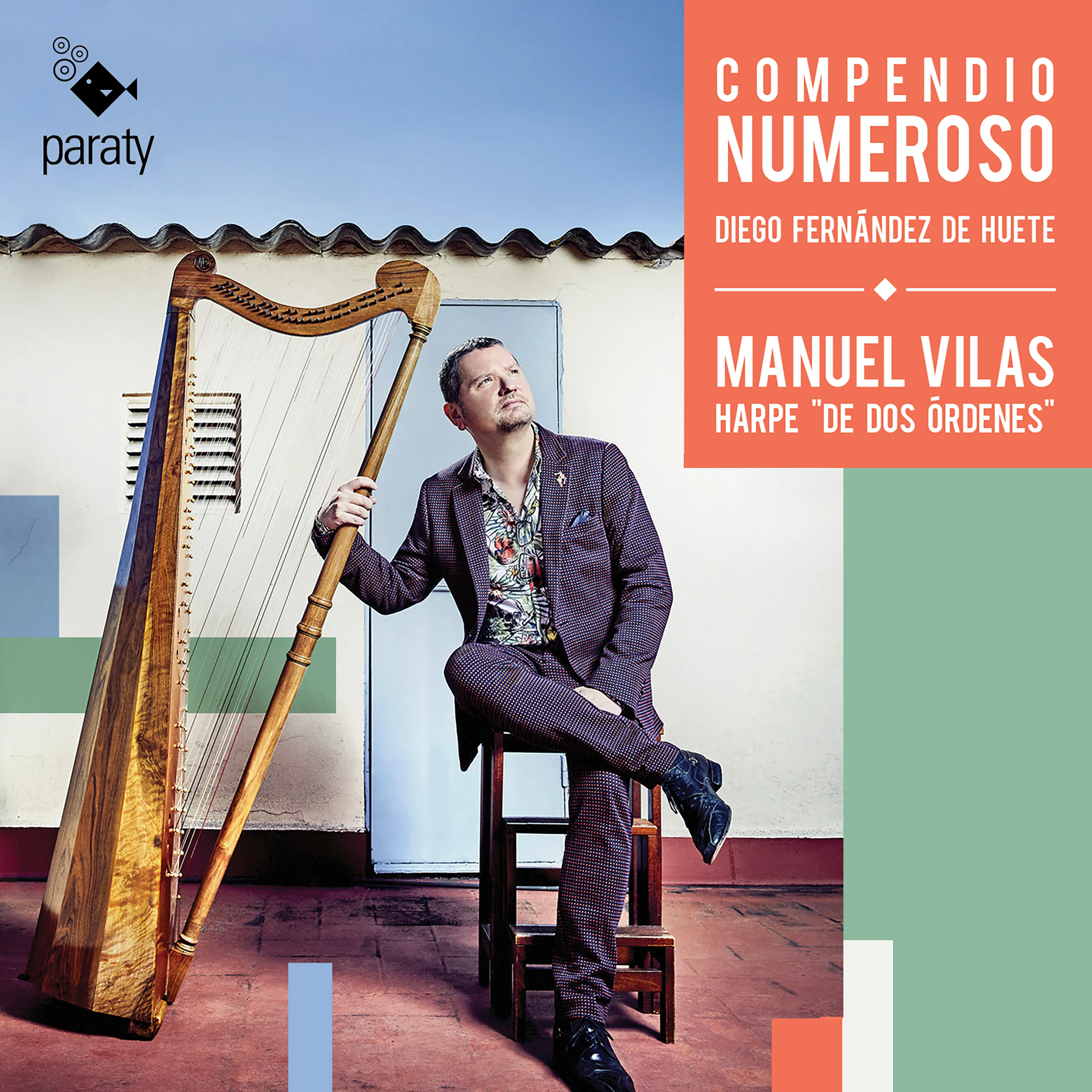
Diego Fernández de Huete, Compendio Numeroso, Manuel Vilas, Harp de dos Órdenes, Harp de dos Órdenes, Harp de dos Órdenes, Harp Tabs, Arpa de dos Órdenes, Ancient Harp, Ancient Harp, Spanish Instrumental Music, Spanish instrumental music, Spanish instrumental music, Spanish instrumental music, Toledo Cathedral, Passacaglia, Spanish, Spanish, Baroque, Baroque, Harp and Organ, Iberian Baroque, Paraty Productions
Compendio Numeroso, Manuel Vilas, harp
This album offers a selection of harp works by Diego Fernández de Huete (c.1635—1710/13), taken from his treatise Compendio numeroso de cifras armónicas para arpa de una orden, de dos órdenes y de organo, published in Madrid between 1702 and 1704. Interpreted by Manuel Vilas On an Iberian harp “from dos Órdenes”, these pieces cover popular tunes, dances, songs of Hispanic and European inspiration, as well as works intended to accompany worship.
The Compendio numeroso constitutes the entirety of Huete's known work and a central testimony to the Iberian instrumental practice of the 17th century. The works are noted in numerical tablature specific to the harp and the organ, with precise indications of fingerings and registers, reflecting a pedagogical tradition intended for professionals as well as amateurs.
The majority of the program comes from the first volume of the treatise (1702), devoted to secular and dance forms, while several pieces from the second volume (1704) illustrate the liturgical use of the harp in Spanish chapels, in particular at the Cathedral of Toledo, in particular at Toledo Cathedral, where Huete worked as a harpist. This recording is the first monographic disc entirely dedicated to Diego Fernández de Huete.
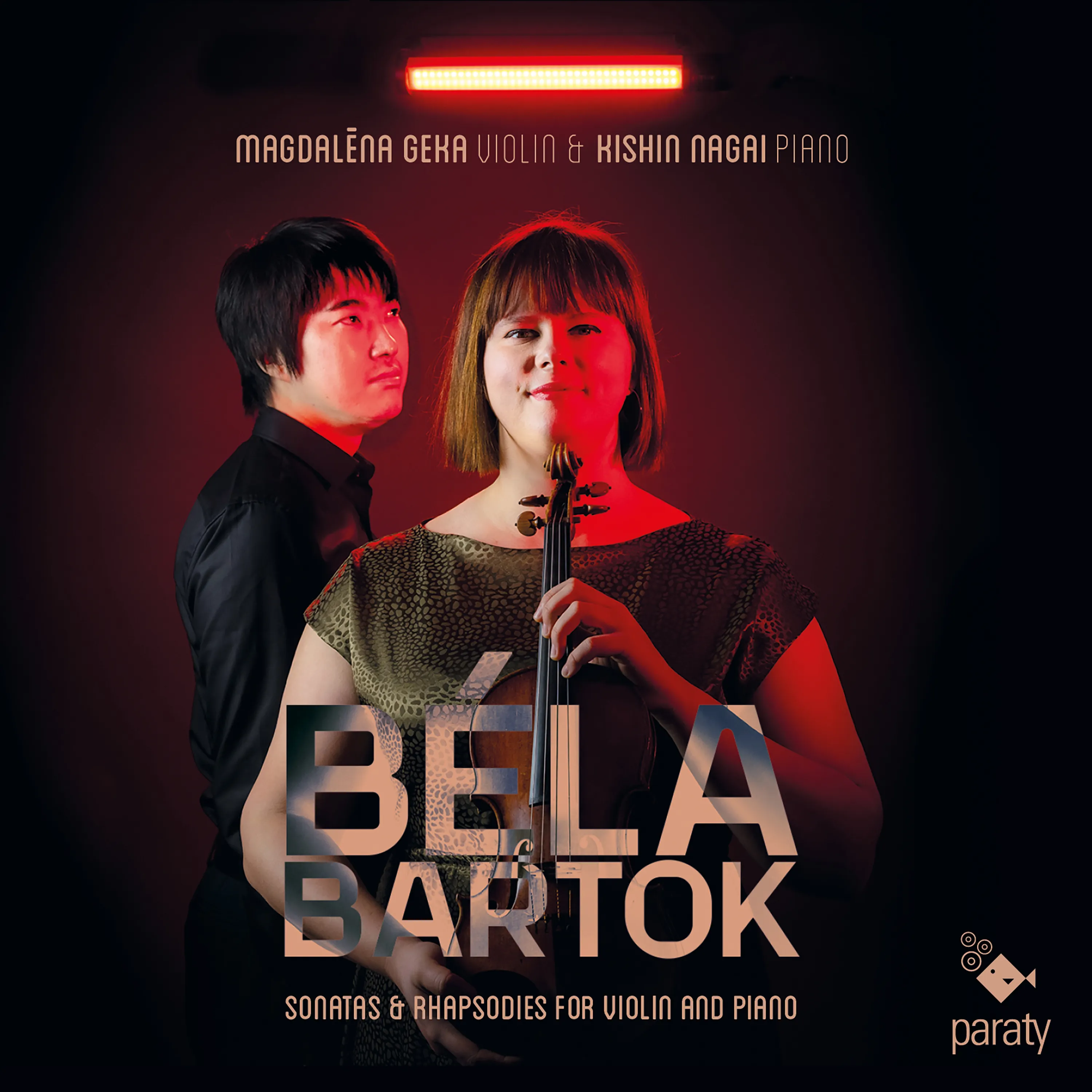
Béla Bartók Sonatas and Rhapsodies for violin and piano, Magdalēna Geka violin, Kishin Nagai piano, Sonata for violin and piano no. 1 Sz.75, Sonata for violin and piano no. 2 Sz.76, Rhapsody no. 2 Sz.76, Rhapsody no. 1 Sz.76, Rhapsody no. 1 Sz.86, Rhapsody no. 1 Sz.86, Rhapsody no. 1 Sz.86, Rhapsody no. 1 Sz.86, Rhapsody no. 2 Sz.86, Rhapsody no. 2 Sz.86, Rhapsody no. 2 Sz.86, Rhapsody no. 2 Sz.86, Rhapsody no. 2 Sz.86, Rhapsody no. 2 Sz.86, Bartók, Bartók violin piano, Sonata for violin and piano Sz.75, Sonata for Violin and Piano No.1 Bartok, Sonata for Violin and Piano Sz.76, Sonata for Violin and Piano No.2 Bartok, Rhapsody for violin and piano No.2 Bartok, Rhapsody for violin and piano Sz.75, Rhapsody for violin and piano Sz.75, Sonata for Violin and Piano No.2 Bartok, Rhapsody for violin and piano No.2 Bartok, Rhapsody for violin and piano Sz.75, Rhapsody for violin and piano No.2 Bartok, Rhapsody for violin and piano No.2 Bartok, Rhapsody for violin and piano Sz.75, Sz.89, Rhapsody No.2 Bartok, Lassú Friss, Hungarian folk music, Hungarian folk music, Romanian Bartók music, 20th century modern violin, violin piano, Magdalēna Geka violin, Magdalēna Geka violin, Magdalēna Geka violin, Kishin Nagai piano, Paraty Bartók
Béla Bartok, Sonatas & Rhapsodies for Violin and Piano
This album brings together all of Béla Bartók's great works for violin and piano: the two Sonatas and the two Rhapsodies, composed between 1921 and 1928. These major pages bear witness to the composer's most daring writing, combining rigorous formal construction with a sound language deeply nourished by the popular traditions of Central and Eastern Europe.
The Sonatas for Violin and Piano No. 1 and No. 2 are characterized by extreme chromatic density, great instrumental requirements and a highly differentiated interaction between the two parts, each maintaining its own material. Rhapsodies No. 1 and No. 2, built according to the Lassú—Friss scheme, are directly inspired by the practices of popular Hungarian and Romanian violinists, integrating dance rhythms, free ornamentations and modal references from the folklore collected by Bartók.
Violinist Magdalēna Geka and pianist Kishin Nagai approach this corpus as a coherent whole, revealing both the radical modernity of these works and their anchoring in a living musical tradition, at the heart of Bartók's aesthetic and ethnomusicological thought.
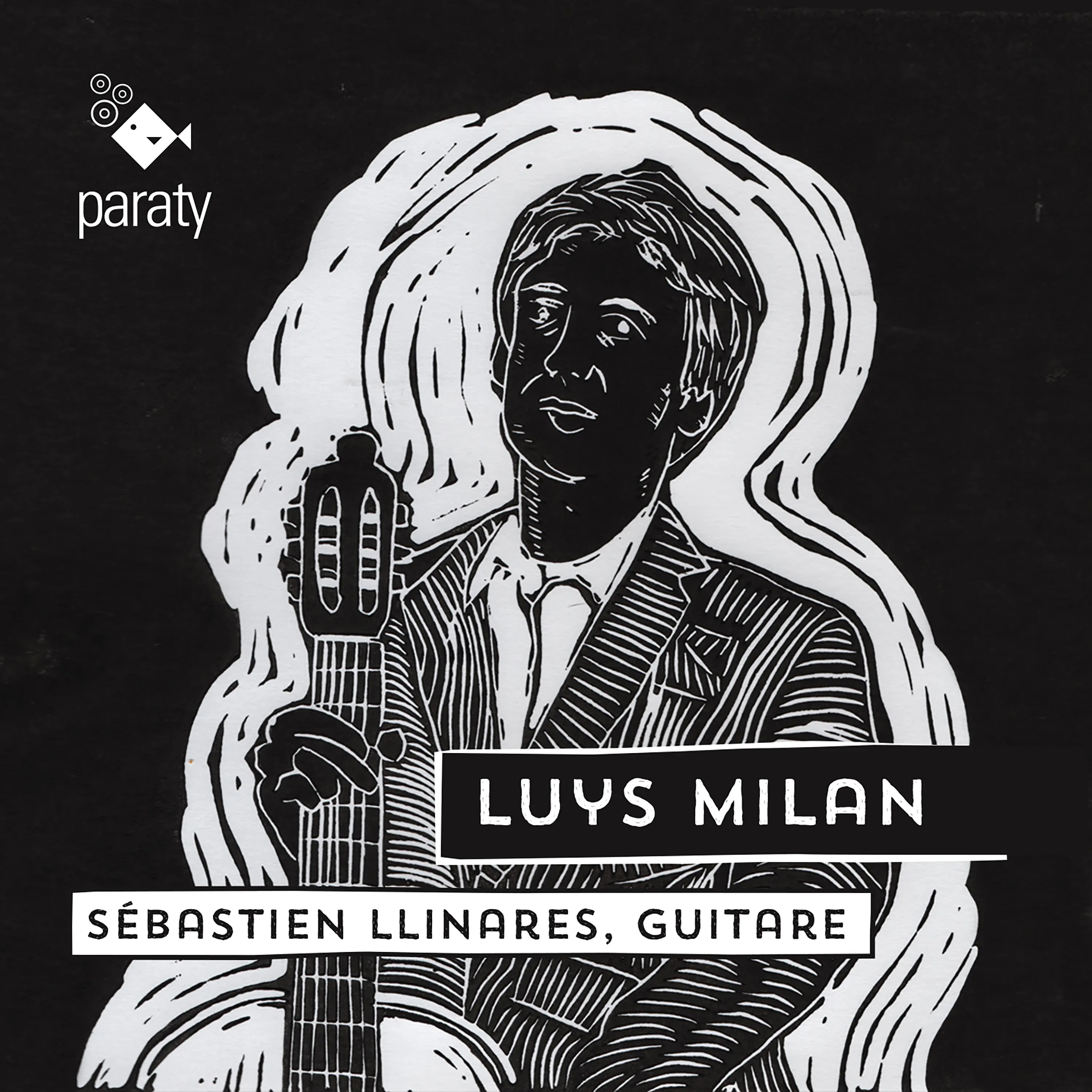
Luys Milán, El Maestro, Vihuela, Spanish Renaissance, Spanish Renaissance, Iberian Renaissance music, Iberian Renaissance music, music for Vihuela, Renaissance, instrumental music, 16th century, Vihuela guitar, classical guitar, Renaissance, guitar, classical guitar, Renaissance, Sébastien Llinares guitar, Sébastien Llinares guitar, Sébastien Llinares guitar, music for vihuela, Luys Milán, music for vihuela, Renaissance, Italian
Luys Milan, Sebastian Llinares
Luys Milán is one of the founding figures of Vihuela music in the 16th century. Published in Valencia in 1536, El Maestro is the first printed collection devoted to this instrument, bringing together fantasies, pavanes and accompanied vocal pieces. This work marks an essential milestone in the history of European instrumental music, both for the diversity of forms and for the precision of its polyphonic writing.
In this album, Sébastien Llinares offers a guitar reading of this emblematic repertoire, based on a thorough knowledge of the sources and practices of the Iberian Renaissance. The program highlights the contrapuntal richness, formal clarity and expressive dimension of Luys Milán's works, while respecting their musical logic and original articulation.
This project is part of a process of transmission and historical perspective, linking the aesthetics of Vihuela to the sonic possibilities of the modern guitar. It offers a coherent and structured approach to this founding corpus, while making accessible a repertoire that is rarely presented in its entirety on the disc.
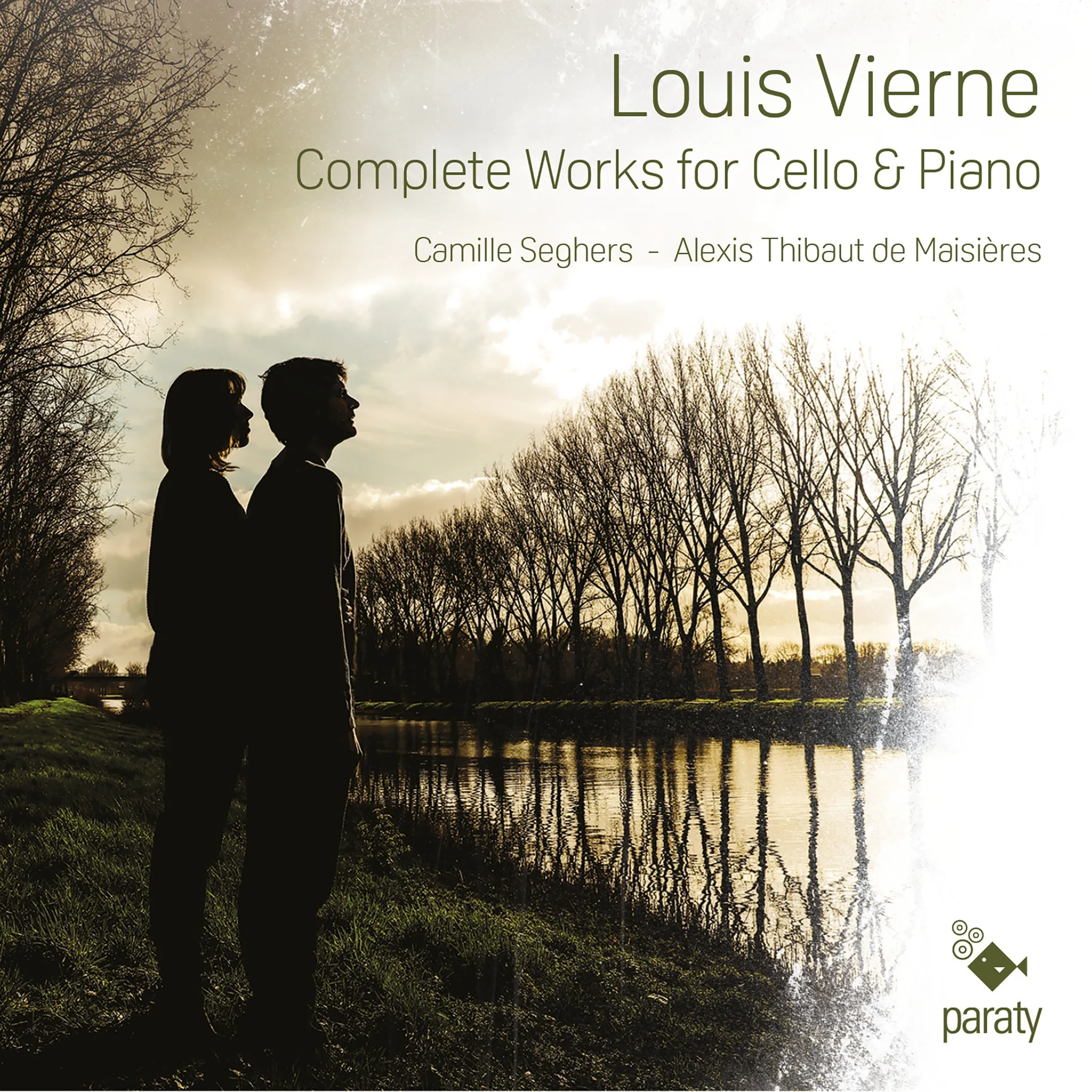
Louis Vierne Sonata for Cello and Piano in B minor Op. 27, Poco lento — Allegro moderato, Molto largamente, Risoluto — Allegro molto, Louis Vierne Two pieces for viola (cello) and piano Op. 5, Op. 5, Le Soir, Légende, Le Soir, Légende, Le Soir, Légende, Louis Vierne Soirs Op. 56, Grenade, Sur le Léman, Venise, Steppe Canadienne, Two pieces for viola (cello) and piano Op. 5, Le Soir, Légende, Le Soir, Légende, Légende, Louis Vierne Thibaut de Maisières piano, 20th century French chamber music, Louis Vierne, Louis Vierne, Complete Works for Cello and Piano, Camille Seghers cello, Alexis Thibaut de Maisières piano, piano, French chamber music, cello and piano, Paraty
Louis Vierne, Complete Works for Cello & Piano
Louis Vierne (1870—1937) composed all of his work for cello and piano between 1895 and 1928, covering his entire career as a composer, from the first influences of César Franck and Gabriel Fauré to a more personal language, marked by dense harmonic writing and great expressive intensity. This recording brings together all of these pages, highlighting an essential but rarely presented part of his chamber music catalog.
The Sonata for Cello and Piano in B minor op. 27, completed in 1910 and dedicated to Pablo Casals, occupies a central place in this corpus. A large-scale work with strong dramatic tension, it is completed by the Two Pieces op. 5, originally written for viola and piano and then adapted for cello, as well as by the later Soirs Étrangers op. 56, Vierne's last chamber music work, composed in 1928 and remained unpublished during his lifetime.
Camille Seghers, cello, and Alexis Thibaut de Maisières, piano, perform this repertoire in its entirety. Their collaboration highlights the richness of the dialogue between the two instruments, the in-depth knowledge of Vierne's writing for strings and piano, as well as the expressive diversity of these works, ranging from introspective lyricism to more colorful and evocative writing.
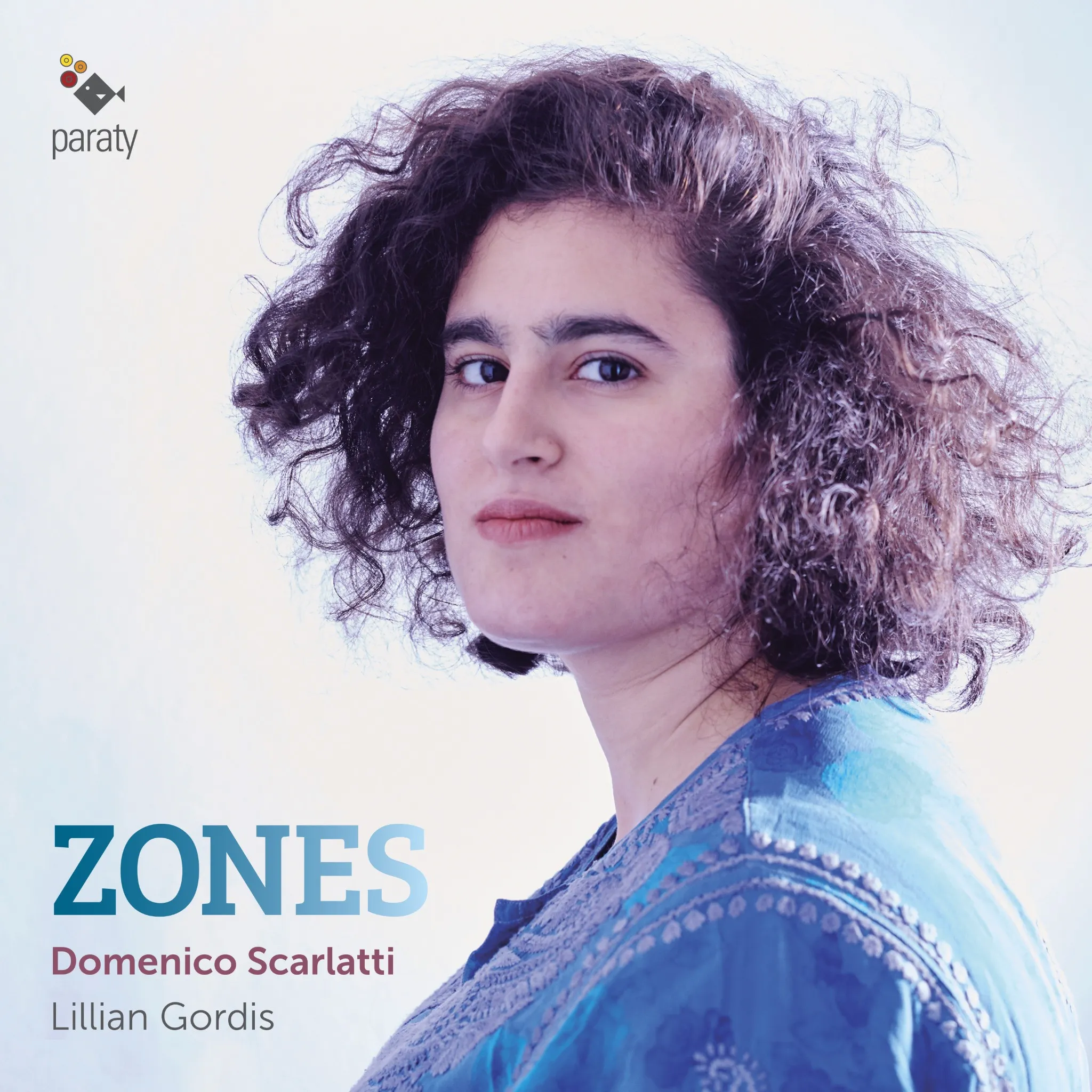
Zones, Domenico Scarlatti, sonatas for harpsichord, solo harpsichord, Lillian Gordis, first album, baroque music, repertoire for keyboard, Scarlatti sonatas, contemporary interpretation of the Baroque, German harpsichord, Philippe Humeau, Philippe Humeau, German model harpsichord harpsichord, Philippe Humeau, German model harpsichord harpsichord harpsichord, harpsichord harpsichord program, Paraty, 2018 recording, recording 2018, Saint-Pierre Paris Lutheran Church, Paris, Sonatas for solo harpsichord, Italian baroque music, Italian baroque music, Philippe Humeau, Philippe Humeau, German model harpsichord harpsichord harpsichord program, French player, 18th century keyboard music. Domenico Scarlatti K.119, K.87, K.25, K.25, K.122, K.215, K.262, K.402, K.264, K.516, K.253, K.474, K.474, K.474, K.474, K.474, K.474, K.474, K.474, K.474, K.474, K.474, K.474, K.474, K.474, K.474, K.474, K.248,
Zones, Scarlatti, Lillian Gordis
Zones is a first recording devoted to Domenico Scarlatti's harpsichord sonatas by Lillian Gordis. The album is based on a conceptual approach to the term “zone”, understood as space, state, fragment or rupture, and applied to a corpus of sonatas considered not as a narrative continuum but as a succession of autonomous territories, sometimes contiguous, sometimes disjointed. Scarlatti's sonatas are treated as independent units, which can switch without transition from one character to another.
The recording is based on an assumed selection of sonatas chosen individually, without following the pairwise grouping of the Kirkpatrick/Gilbert chronology. Lillian Gordis organizes the program in three groups of four sonatas, to which is added a thirteenth piece, according to criteria of tonal proximity and complementary or opposing energies. This organization claims the fragmented nature of the recording medium and echoes the structural discontinuity specific to Scarlatti's writing.
Zones was recorded in July 2018 at the Saint-Pierre Lutheran Church in Paris, on a harpsichord built by Philippe Humeau in 1999 based on German models. Lillian Gordis signed the texts for the booklet and the translations. The album was produced by Paraty, with sound recording, editing and mastering done by Aline Blondiau. This project is a discographic entry based on a musical, formal and perceptive reflection on Domenico Scarlatti's keyboard repertoire.
.webp)
.svg)

.svg)