
.png)
Albums
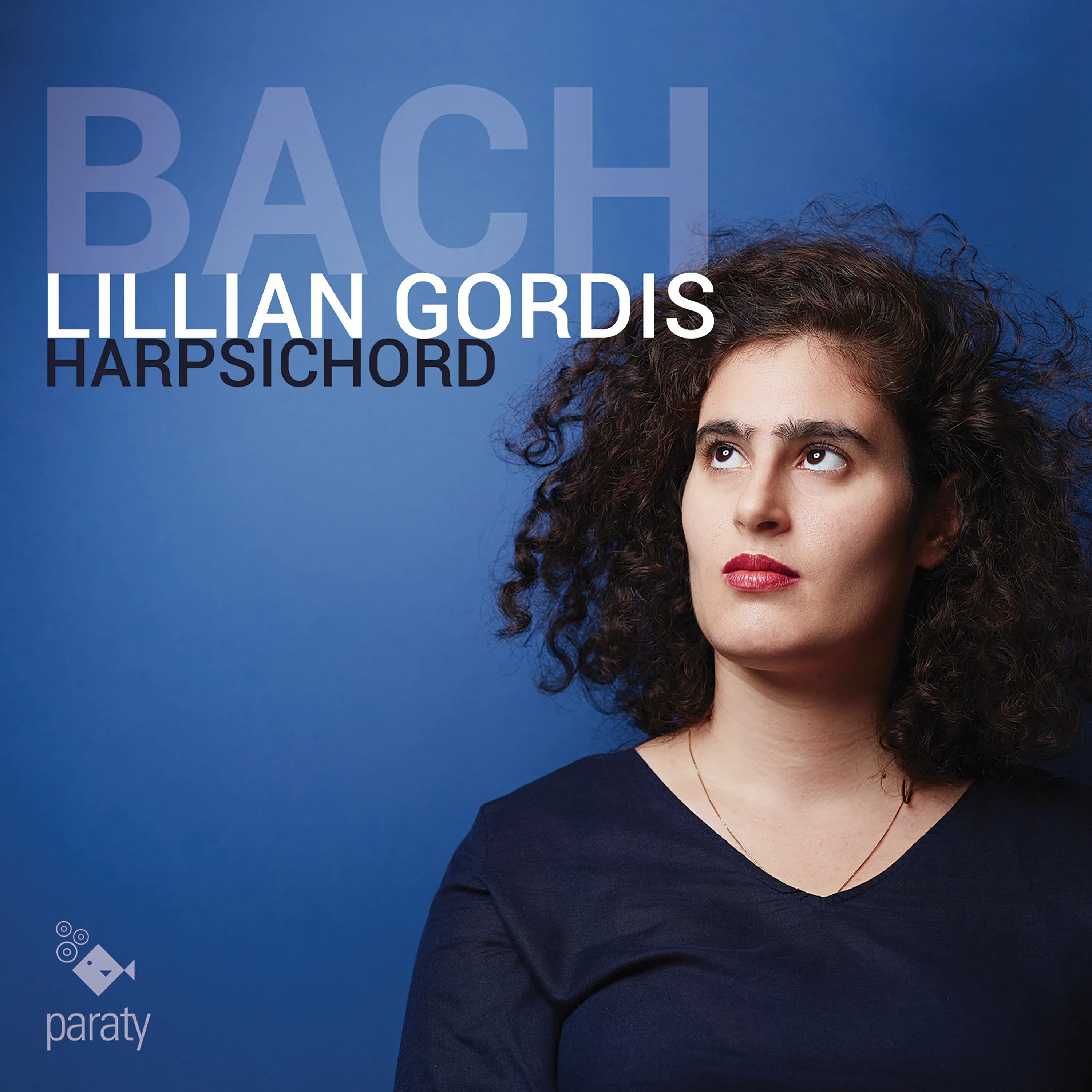

Johann Sebastian Bach, Lillian Gordis, harpsichord, harpsichord, double album, harpsichord, double album, harpsichord, double album, harpsichord, Harpsichord, Harpsichord, Harpsichord, double album, harpsichord, double album, harpsichord, double album, harpsichord, double album, harpsichord, double album, harpsichord, double album, harpsichord, double album, harpsichord, double album, harpsichord, double album, harpsichord, double album, harpsichord, harpsichord, double album, harpsichord, double album, harpsichord, double album, harpsichord, double BWV 891 Well-tempered Clavier II, English Suite no.3 BWV 808 Current German Prelude Sarabande Les Gavotte I II Musette Gigue, English Suite no.5 BWV 810 Current German Prelude Sarabande Passepied I II Gigue, Prelude and Fugue BWV 873 Well-tempered Clavier II, Prelude and Fugue BWV 874 Well-tempered Clavier II, Partita no.4 BWV 828 Current German Overture Aria Sarabande Menuet Gigue, Baroque music, Baroque music, Baroque music, Bach solo keyboard, Bach solo keyboard, contemporary harpsichord recital


Bach, Lillian Gordis
This double album by Johann Sebastian Bach by Lillian Gordis is designed as a mirror recital, recorded in November 2020 at the Doopsgezinde Kerk in Haarlem, on a harpsichord based on German models made by Philippe Humeau (Barbaste, 1999). The project is rooted in a founding memory of the interpreter's childhood, marked by the discovery of the Well-Tempered Clavier and by the iconic sound of Haarlem, heard for the first time in recordings by Gustav Leonhardt and Pierre Hantaï. This location and this acoustics guided the sound and artistic approach of the recording.
Rather than an integral, Lillian Gordis offers a free journey through major works by Bach, emphasizing the intimacy of the recital and the direct relationship with the listener. The program brings together Partitas, English Suites and several Preludes and Fugues from the Well-Tempered Clavier II, chosen for their expressive complementarity. The set forms two distinct programs but designed to dialogue between them, inviting independent or continuous listening.
This project is part of a personal and artistic approach claiming the search for a dynamic and expressive harpsichord sound, shaped by the acoustics of the place and by an in-depth work on touch and musical time. The recording pays tribute to Bach as a central figure in the interpreter's career, while continuing a historical harpsichord tradition in Haarlem, revisited through a contemporary sensibility.
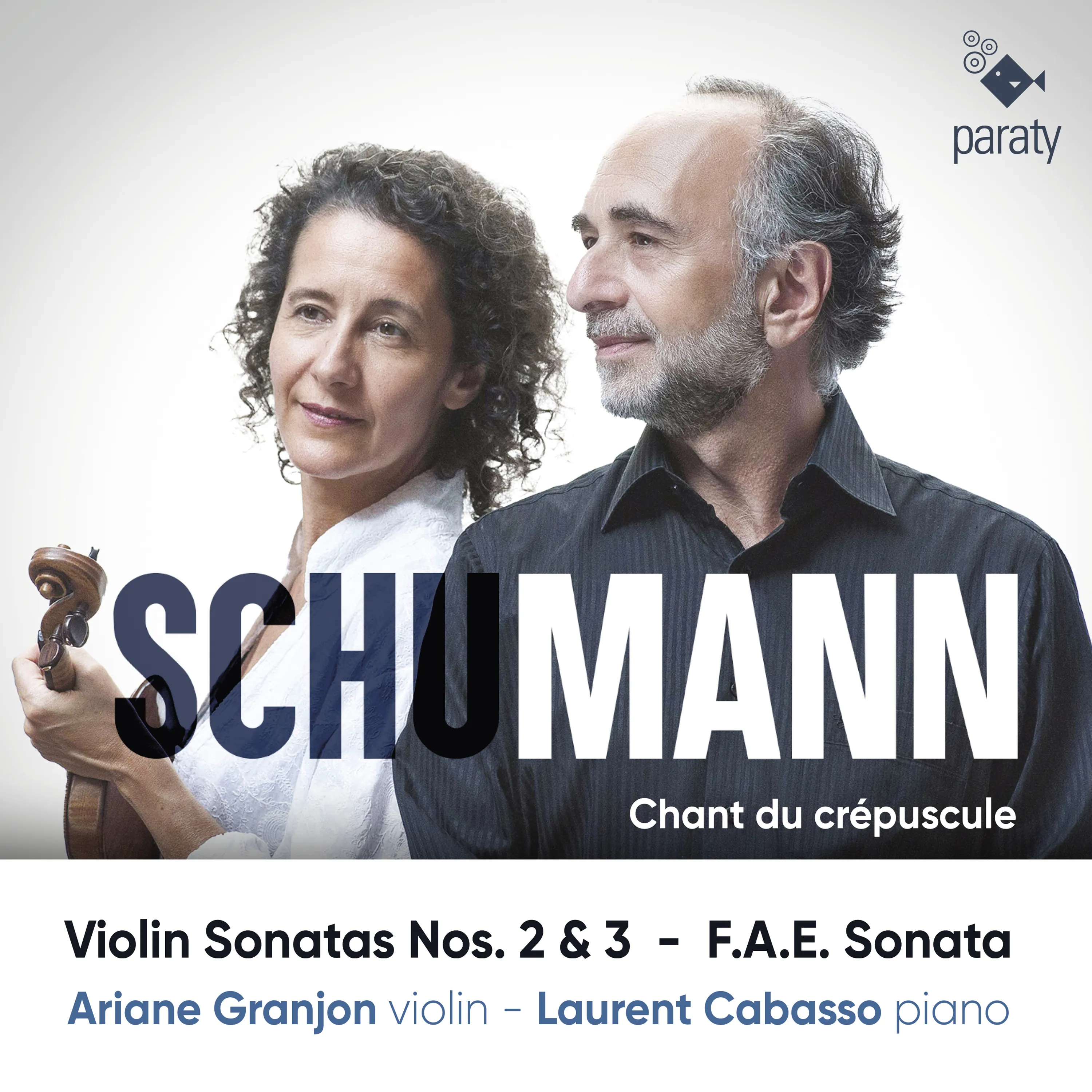
Robert Schumann — Sonata for Violin and Piano No. 2 in D Minor Op. 121, Robert Schumann — Sonata for Violin and Piano No. 3 in A Minor (ex Sonata F.A.E.), Albert Dietrich — Sonata F.A.E. movement I Allegro, Johannes Brahms — Sonata F.A.E. movement I Allegro, Johannes Brahms — Sonata F.A.E. movement III Scherzo, Johannes Brahms — Sonata F.A.E. movement III Scherzo, Johannes Brahms — Sonata F.A.E. movement III Scherzo, Johannes Brahms — Sonata F.A.E. movement III Scherzo, Johannes Brahms — Sonata F.A.E. movement III Scherzo, Johannes Brahms — Sonata F.A.E. movement III Scherzo, Johannes Brahms — Sonata F.A.Mann — Three Romances for violin and piano op. 22, Ariane Granjon violin, Ariane Granjon violin, violin and piano romantica, 19th century German chamber music, Schumann violin piano, Schumann violin piano, Clara Schumann violin piano, Clara Schumann violin piano , Brahms chamber music, Dietrich F.A.E., piano Stephen Paulello, Paraty Records
Schumann, Song of Twilight
This recording brings together Robert Schumann's Sonatas for Violin and Piano No. 2 and No. 3, the Sonata F.A.E. (movements by Dietrich and Brahms) as well as the Three Romances op. 22 by Clara Schumann. The works all fall within a specific period in the composer's life, the year 1853, marked by intense creative activity and by the close relationships between Robert and Clara Schumann, Johannes Brahms, Albert Dietrich and the violinist Joseph Joachim, and the violinist Joseph Joachim, who dedicated several of these pages.
The symphonic Sonata No. 2 in D minor op. 121 was created in Düsseldorf by Joseph Joachim and Clara Schumann. The F.A.E. Sonata, built around the motto “Frei aber einsam”, combines the contributions of Dietrich, Brahms and Robert Schumann, before being transformed by the latter into a Third Sonata in A Minor, the composer's ultimate and singular work. Clara Schumann's Three Romances op. 22, composed in the summer of 1853, complete this program and bear witness to her personal writing and her artistic connection with Joachim.
The interpretation is provided by Ariane Granjon on violin and Laurent Cabasso on piano. The two musicians chose a Stephen Paulello “Opus 102" piano, an instrument inspired by romantic aesthetics, in order to serve the dialogue between the violin and the piano as it was thought of at the time of Schumann. The recording was made in November 2021 at Studio Stephen Paulello.
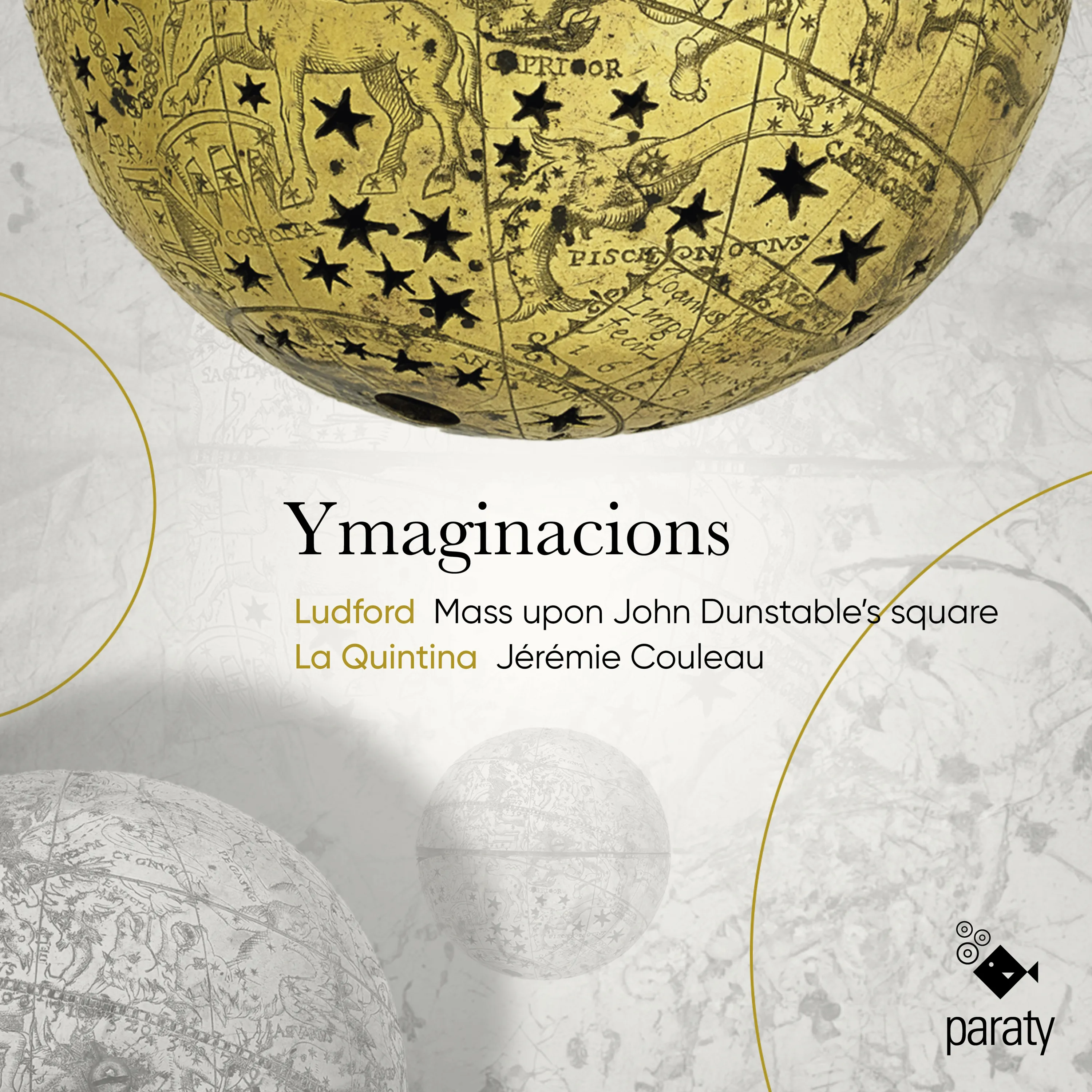
La Quintina, Jérémie Couleau, Nicholas Ludford, John Ludford, John Dunstable, John Dunstable, William Whitbroke, William Whitbroke, Ymaginacions, Missa Sabato, English Music, Medieval Music, English Polyphony, Faburden, Gymel, Faburden, Gymel, Selden Carol Book, Selden Carol Book, Selden Carol Book, Selden Carol Book, English Carol Book, English Carol Book, English Carol Book, English Carol Book, English Carol Book, English Carol Book, English Carol Book, English Carol Book, English Carol Book, English Carol Book, English Carol Book, English Carol Book, English Carol Book, English Carol Book, English Carols, English Carol Book
Ymaginacions, La Quintina
With Ymaginacions — Mass upon John Dunstable's Square, the La Quintina ensemble continues its exploration of English polyphonies from the late Middle Ages and the Renaissance, focusing on a rare and deeply experimental repertoire. Founded in 2019 around the tenor and artistic director Jérémie Couleau, La Quintina takes its name from a vocal ideal from the Sardinian tradition: a fifth voice, not sung but born of harmonics, symbol of sonic and spiritual balance. This project is a continuation of the first recording praised by the press, Heavenly Songe, and affirms an artistic line focused on original sources, incomplete works and contrapuntal reconstruction.
At the heart of this program is the Missa Sabato by Nicholas Ludford, built on a square attributed to John Dunstable, a major figure in the “English container”. These squares, pre-existing melodies that serve as a basis for counterpoint, bear witness to a musical practice based on imagination, memory and mental improvisation. La Quintina restores this spirit by completing the monodic verses with counterpoints written in the style of ancient techniques — gymel, faburden, concerted counterpoint — creating a dialogue between the works of Ludford and William Whitbroke with contemporary creations faithful to the languages of the time.
Conceived as a concert program rather than as a strict liturgical reconstruction, Ymaginacions combines masses, carols and instrumental glosses improvised on the portable organ by Christophe Deslignés. Anonymous pieces from the Selden Carol Book, such as Nowel syng we bothe al and som or An Hevenly Songe, complete this Marian and festive journey. Recorded in live conditions, this album offers an immersion in a sound universe where the medieval and Renaissance imaginary fully unfolds, revealing the vitality of a repertoire that has long remained on the fringes of musical history.
La Quinta Pars, Harmonic Treasury, Renaissance music, Renaissance music, Renaissance songs, Renaissance songs, Renaissance dances, 16th century music, Renaissance polyphony, printed Renaissance music, Pierre Attaingnant, Tylman Susato, Pierre Phalèse, Ottaviano Petrucci, Ottaviano Petrucci, Ottaviano Petrucci, Josquin Petrucci, Josquin des Pruci, Josquin des Prez, Josquin des Prez, Claudin de Sermisy, Claudin de Sermisy, Claudin de Sermisy, Orlande de Lassus, Orlande de Lassus, Antoine Busnois, Francesco da Milano, Claude Gervaise, Pierre Phalèse, Ottaviano Petrucci, Ottaviano Petrucci, Ottaviano Petrucci, Josquin des Pruci, Josquin des Prez, Josquin, Pavane Renaissance, Gaillarde Renaissance, Saltarello Renaissance, Saltarello Renaissance, Renaissance intabulation, Renaissance vocal and instrumental music, Renaissance lute, flute Renaissance mouthpiece, Renaissance viola da gamba, Renaissance violin, Renaissance violin, Morgan Marquié, Ondřej Hanuš, André Costa, Haruna Nakaie, Haruna Nakaie, Lucas Alvarado, Paraty
Harmonic Treasury, La Quinta Pars
La Quinta Pars — Harmonic Treasury brings together Renaissance songs and dances from 16th century printed sources, mainly published by Pierre Attaingnant, Tylman Susato, Pierre Phalèse, and Ottaviano Petrucci. The program covers a vast repertoire combining pavanes, gaillardes, saltarelli, French songs, motets and intabulations, with anonymous works and pieces by Josquin des Prez, Claudin de Sermisy, Pierre Sandrin, Pierre Sandrin, Orlande de Lassus, Orlande de Lassus, Orlande de Lassus, Antoine Busnois, Antoine Busnois, Philippe Rogier, Jean Richafort, Jacquet da Mantua, Claude Gervaise, Giovanni Bassano, Albert de Ritua, Claude Gervaise, Giovanni Bassano, Pierre Sandrin, Orlande de Lassus, Orlande de Lassus, Orlande de Lassus, Antoine Busnois, Philippe Rogier, Jean Richafort, Jacquet da Mantua, Claude Gervaise, Sermisy, Pierre Sandrin, Pierre Sandrin, Orlande de Lassus Pope, Thomas Crecquillon and Francesco da Milano.
The recording takes place in the context of the massive distribution of printed music during the Renaissance and highlights the porosity between vocal and instrumental music, characteristic of 16th century humanist practices. The use of tablatures, decreases, and improvised ornamentation reflect historical uses intended for professional musicians as well as enlightened amateurs. Italian dances and French songs form the basis of this journey, where polyphonic textures dialogue with instrumental forms from oral tradition.
La Quinta Pars is performed by Morgan Marquié on lute, Ondřej Hanuš on recorders, André Costa on violin, Haruna Nakaie and Lucas Alvarado on viola da gamba. The recording was made from September 8 to 10, 2024 at Rolf Lislevand's Moose Studios. Sound recording, editing, mixing and mastering are provided by Rolf Lislevand. The texts of the booklet are written by Morgan Marquié, with an English translation by Alexander Robinson.
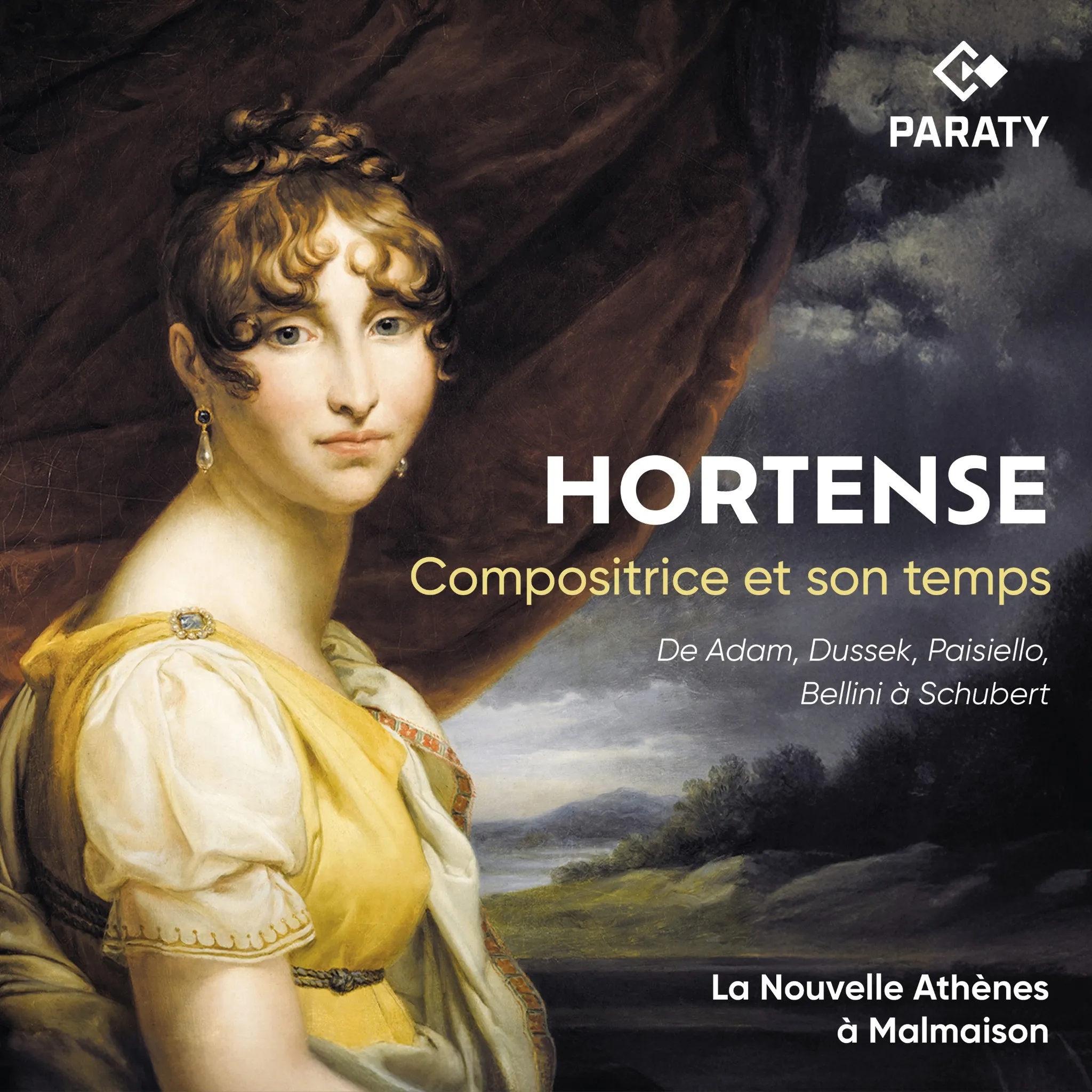
Hortense de Beauharnais, Hortense composer, Hortense queen of Holland, Hortense queen of Holland, Napoleonic romances, Napoleonic romances, music from the First Empire, 19th century living room music, music in Malmaison, Malmaison Whitsun Festival, La Nouvelle Athène Center for Romantic Pianos, La Nouvelle Athène Center for Romantic Pianos, Louis Adam, Queen of Holland, Louis Adam, Queen of Holland, Romance Piano Center, Louis Adam, Queen of Holland, Napoleonic romances, Romance Piano Center, Louis Adam, Queen of Holland, Napoleonic romances, Romance Piano Center, Louis Adam, Queen of Holland, Napoleonic romances, Romance pianos, Louis Adam, Queen of Holland, Napoleonic romances, Romance pianos, Louis Adam, Queen of Holland, Napoleonic romances, Romance pianos, France, France Schubert, 19th century French romances, romantic vocal music, romantic vocal music, romantic instrumental music, historical piano, historical harp, romantic guitar, period instruments, National Museum of the Castles of Malmaison and Bois-Préau, Malmaison live recording, Malmaison, live recording, Malmaison, Clara, Hugo soprano, Coline Dutilleul soprano, Daniel Thomson tenor, Arnaud Marzorati baritone, David Ghilardi baritone, David Ghilardi baritone, David Ghilardi baritone, David Ghilardi baritone, Imanol Iraola baritone, Imanol Iraola baritone, Imanol Iraola baritone, Imanol Iraola baritone, Imanol Iraola baritone, Imanol Iraola baritone, Baritone, Imanol Iraola baritone, Imanol Iraola baritone, Baritone, Imanol Iraola baritone, Imanol Iraola baritone, Bugnoli violin, Edoardo Torbianelli piano, Aline Zylberajch piano, Aline Zylberajch piano, Aline Zylberajch piano, Aline Zylberajch piano, Aline Zylberajch piano, Aline Zylberajch piano, Laura Granero harp, Laura Granero harp, Laura Granero harp, Sebastian Bausch cello, Eloy Orzaiz Galarza guitar, guitar, Pernelle Marzorati harp, harp, Pernelle Marzorati harp, piano 1825, Naderman 1815 harp, Fabricatore 1827 guitar, La Nouvelle Athène à Malmaison, Paraty Productions
Hortense, Composer and her time
Queen Hortense de Beauharnais (1783—1837), daughter of the Empress Joséphine, wife of Louis Bonaparte and mother of the future Napoleon III, was a prolific composer and a central figure in the musical life of the first 19th century. Author of more than 150 romances, she actively participated in the musical aesthetics of the Consulate and the Empire, especially in the salons of Malmaison, before continuing this activity in exile at Arenenberg Castle. His romances, which were very popular at the time, were part of the taste for an intimate, natural and sentimental expression, characteristic of the living room repertoire.
Recorded during the 2nd Whitsun Festival in Malmaison, this record is the result of a partnership between the National Museum of the Castles of Malmaison and Bois-Préau and La Nouvelle Athène — Center for Romantic Pianos. It brings together works by Hortense de Beauharnais as well as composers appreciated by the Napoleonic court or inspired by her work, including Louis Adam, Jan Ladislav Dussek, Giovanni Paisiello, Ferdinando Paer, Ferdinando Paer, Vincenzo Paer, Vincenzo Bellini, Vincenzo Bellini, Johann Franz Xaver Sterkel, Johann Franz Xaver Sterkel, George Onslow and Franz Schubert. The program compares vocal romances, instrumental pieces and variations, testifying to the richness and diversity of the musical repertoire of this period.
The interpreters gathered for this recording are Clara Hugo, Coline Dutilleul, Daniel Dutilleul, Daniel Thomson, Daniel Thomson, Arnaud Marzorati, David Ghilardi, Imanol Iraola and Patrick Wibart for the vocal parts, as well as Masumi Nagasawa, Alexis Kossenko, Kossenko, Eloy, Francesco, Francesco Romano, Francesco Romano, Francesco Romano, Francesco Romano, Francesco Romano, Francesco Romano, Luca Montebugnoli, Luca Montebugnoli, Eloy Torbianelli, Aline Zylberajch, Laura Granero, Sebastian Bausch, Eloy Orzaiz Galarza and Pernelle Marzorati for the instrumental parts. The works are performed on period instruments — piano Carré Érard 1806, piano Rosenberger 1825, harp Naderman 1815, guitar Fabricatore 1827 — in a historically informed approach, in the very heart of the places where this music was initially conceived and heard.
Chopin, Frédéric Chopin, Auguste Franchomme, Chopin Franchomme, Chopin Franchomme, Chopin Franchomme, Chopin, Chopin Franchomme, Chopin Franchomme, Chopin Franchomme, Chopin Franchomme, Sonata for cello and piano, op. 65, op. 65, romantic romantic music, romantic cello, piano, live recording, Edoardo Torbianelli, Fernando Caida-Greco, Fernando Caida-Greco, Fernando Caida-Greco, Pleyel Greco, Pleyel Greco, piano, piano, piano, piano, piano, piano, piano, piano, piano canto instrumental, romantic repertoire
Cello singing
This live album brings together works by Frédéric Chopin and Auguste Franchomme, testifying to the artistic collaboration and friendship that united the Polish composer and the French cellist in the musical Paris of the 1830s and 1840s. Their relationship is based on a deep aesthetic affinity, based on the search for instrumental bel canto, the sobriety of expression and the balance of forms, in a musical context marked by the opposition between an elite culture and the rise of a taste for excess and spectacular virtuosity.
The program highlights Chopin's Sonata for Cello and Piano in G minor op. 65, a work created in a private setting by Chopin and Franchomme, then partially performed during the composer's last public appearance at the Salons Pleyel in February 1848. This sonata, mentioned by Chopin in his correspondence as particularly demanding, combines almost improvised creativity with rigorously controlled architecture. The slow movement, originally planned in another position according to Franchomme's autograph manuscript, concentrates a remarkable poetic intensity, while the whole work reveals a constant search for cantability, fusion and transparency between piano and cello.
The interpretation is provided by Edoardo Torbianelli, Pleyel piano from 1842, and Fernando Caida-Greco, Miremont cello from 1880. The two musicians have been collaborating since 2000 and base their joint work on a thorough research of the aesthetic and technical sources of the 18th and 19th centuries, as well as on the study of interpretive practices from the turn of the 20th century. This approach, nourished by a detailed knowledge of historical instruments and styles of performance, aims to restore a shared language from the great romantic tradition, of which this live record is a testimony.
Pierre Colin, Renaissance music, masses and motets, Missa Estans assis, Missa Estans assis, Missa Ave gloriosa, Magnificat, Motets Renaissance, La Note Brève, Simon Gallot direction, Laura Cartier soprano, Marie Remandet mezzo-soprano, Marie Remandet mezzo-soprano, Josquin Gest, countertenor, Josquin Gest countertenor, Josquin Gest countertenor, Jean-Noël Poggiali tenor, Magnificat, Motets Renaissance, La Note Brève, Simon Gallot, direction, Simon Gallot, organ, direction, Laura Cartier soprano, Marie Remandet, mezzo-soprano, Marie Remandet, mezzo-soprano, Marie Remandet, mezzo-soprano, Josquin Gest, countertenor, Josquin Gest, countertenor, Josquin Gest, countertenor Y
Forgotten Renaissance treasure, La Note Brève
This album is devoted to the sacred work of the Renaissance composer Pierre Colin, active in the 16th century and for a long time remained poorly documented despite the significant distribution of his works in major European religious centers. The program brings together two masses, Missa Estans assis and Missa Ave Gloriosa, as well as a Magnificat and several motets, completed by a transcription for organ alone of the song L'Oeil dict enough if it is heard. The recording offers a representative overview of Pierre Colin's liturgical writing, based on the technique of syntactic imitation and on a constant attention to the intelligibility of the text.
The interpretation is provided by the La Note Brève ensemble, specialized in Middle Ages and Renaissance repertoires. The musical direction is entrusted to Simon Gallot. The solo and vocal parts are performed by Laura Cartier, soprano, Marie Remandet, soprano, Marie Remandet, mezzo-soprano, Josquin Gest, countertenor, Jean-Noël Poggiali, tenor, and Simon Gallot, tenor, and Simon Gallot, bass. The instrumental accompaniment is provided by Ryoko Katayama on the positive organ. The ensemble works from original sources, facsimiles and period treatises, in an approach based on current musicological research.
The recording was made in 2021 at the church of Gigors-et-Lozeron, in Drôme. Production is provided by the Paraty label, under the direction of Bruno Procopio. Sound recording and mastering were done by Enrico Fiocco. The texts of the booklet are signed Jean Duchamp, with an English translation by Jeremy Harrison. This disc is the first worldwide recording devoted to this corpus of works by Pierre Colin and is part of the rediscovery work carried out by La Note Brève around Renaissance music.
Mozart piano four hands, Wolfgang Amadeus Mozart, sonatas four hands, KV 497, KV 521, KV 501, Andante and Variations, Duo Pégase, Morgane Le Corre, Knut Jacques, Knut Jacques, Knut Jacques, piano fortepiano Anton Walter, Jacques, Knut Jacques, piano four hands, piano forte, Knut Jacques, Antonio Jacques, piano fortepiano Anton Walter, Christopher Clarke, Knut Jacques, piano fortepiano Anton Walter, Christopher Clarke, Knut Jacques
Mozart Piano 4 Hands
This recording is dedicated to works for piano for four hands by Wolfgang Amadeus Mozart, bringing together two major sonatas, the Sonatas in F major KV 497 and in C major KV 521, as well as the Andante and Variations in G major KV 501. These works date from Mozart's Viennese period, between 1786 and 1787, when he was at the height of his creative maturity. The sonatas reflect an elaborate style of writing, in which Mozart goes beyond the traditional hierarchy between primo and secondo to develop a genuine polyphonic and concerting dialogue.
The interpretation is provided by Morgane Le Corre and Knut Jacques, united in the Pégase Duo. The two musicians approach this repertoire on a five-octave fortepiano after Anton Walter, made by Christopher Clarke, an instrument representative of those used by Mozart in Vienna. Their approach highlights the specificities of writing with four hands, the richness of textures, the contrasts of registers and the diversity of characters, from orchestral effects to passages evoking chamber music.
The recording was made at the Villefavard Farm in February 2019. Production is provided by the Paraty label under the direction of Bruno Procopio, with sound recording and mastering carried out by Mathilde Genas. The texts of the booklet are signed by Adelaïde de Place. This record is part of the fundamental work of Duo Pégase devoted to the repertoire for four hands, with particular attention paid to historically informed interpretation and to period instruments.
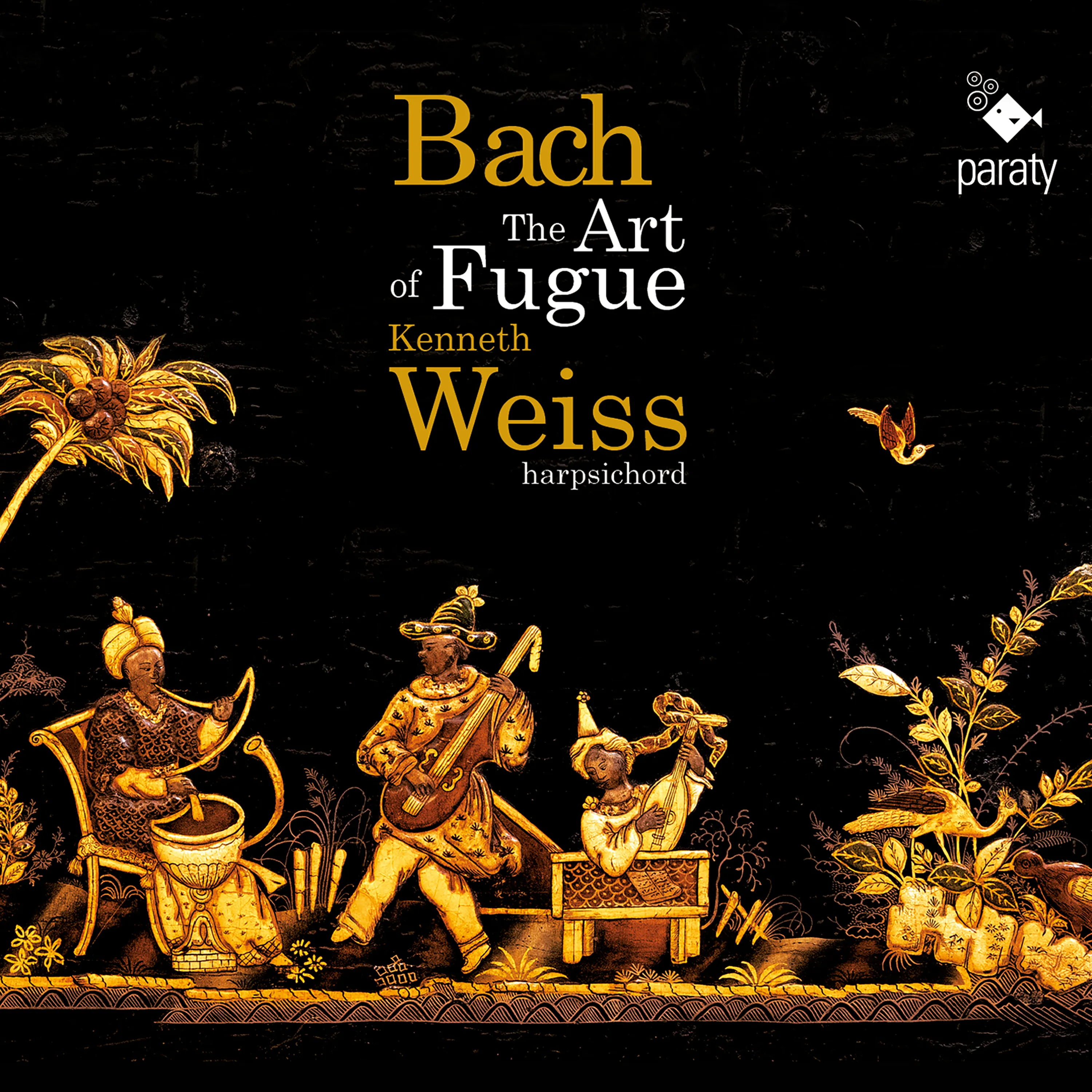
Art of Fugue, Johann Sebastian Bach, Kenneth Weiss, solo harpsichord, solo harpsichord, Bach, keyboard, baroque music, counterpoint, fugue, canon, Pascal Taskin 1782, Taskin Colares, Museu Nacional da Música, Museu Nacional da Música, Museu Nacional da Música, Centro Cultural de Belém, Centro Cultural de Belém, Centro Cultural de Belém, Centro Cultural de Belém, Belém, Centro Cultural de Belém, recording harpsichord, Bach, Baroque music, counterpoint, fugue, canon, Pascal Taskin 1782, Taskin Colares, Museu Nacional da Música, Museu Nacional da M
The Art of Fugue, Kenneth Weiss
The Art of Fugue by Johann Sebastian Bach is performed here by Kenneth Weiss on harpsichord. Composed during the last ten years of Bach's life, the work consists of fourteen fugues, called Contrapunctus, and four cannons, all constructed from a single subject in D minor. This work constitutes Bach's ultimate and most successful exploration of the field of contrapuntal writing, with each fugue progressively developing the complexity of the musical material through the reversal, the increase, the decrease, the mirror composition, and the introduction of new themes derived from the original subject.
Kenneth Weiss began working on the Art of Fugue in its entirety in 2020, a period during which the interruption of musical life allowed him to immerse himself in this work on a daily basis. The last counterpoint, Contrapunctus XIV, left unfinished, introduces the B-A-C-H motif corresponding to the composer's musical signature. This final break is presented as an open conclusion, making incompleteness a constituent element of the work itself.
The recording was made on May 16 and 17, 2021 at the Centro Cultural de Belém in Lisbon, on a Pascal Taskin harpsichord built in Paris in 1782, belonging to the Museu Nacional da Música. This historic instrument, restored from 2016, is known as Taskin Colares. The album was co-produced by Paraty and the Museu Nacional da Música, with sound recording and mastering provided by Hugo Romano Guimarães.
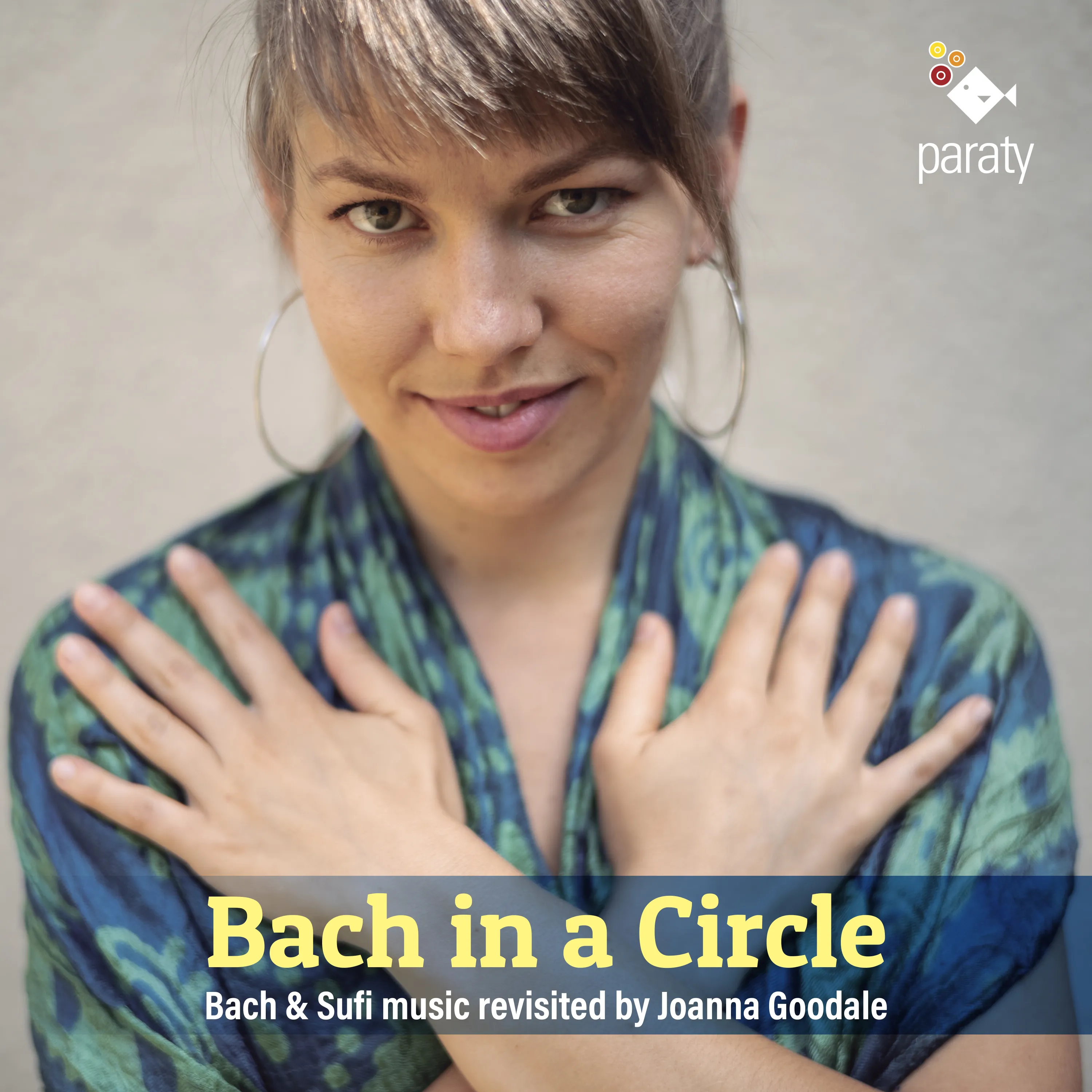
Bach in a Circle, Joanna Goodale, Johann Sebastian Bach, solo piano, classical music, classical music, classical music, adaptations of Bach, Sufi music, Sufi songs, Yunus Emre, Rûmi, prepared piano, piano arrangements, piano arrangements, spirituality and music, Paraty, spirituality and music, Paraty, spirituality and music, Paraty, Studio Ansermet Genève, Studio Ansermet Genève, contemporary music inspired by Bach, Sufi songs, Yunus Emre, Rûmi, piano transcriptions, music and mystic, piano album
Bach in a Circle Bach & Sufi music revisited by Joanna Goodale
Bach in a Circle is a project designed and performed by pianist and composer Joanna Goodale, offering a dialogue between works by Johann Sebastian Bach and adaptations inspired by Sufi music. The program compares original Bach pieces with transcriptions or arrangements made by Joanna Goodale, built around cyclic forms, repetitive patterns and a search for spiritual resonance common to these two musical worlds.
The album is based on works by Johann Sebastian Bach such as Fantasy and Fugue in C Minor BWV 906, preludes and fugues from the Well Tempered Clavier, and the Adagio BWV 974. These pieces dialogue with adaptations and compositions by Joanna Goodale, inspired by Sufi songs from Turkey and Iran, mystical poems by Yunus Emre and Rûmi, and traditional rhythms. Some pieces incorporate objects placed in piano strings to evoke the tones of Middle Eastern instruments.
Recorded in October 2018 at Studio Ansermet in Geneva, Bach in a Circle is performed by Joanna Goodale on the Steinway & Sons model D piano prepared. The album is dedicated to the memory of the pianist Alain Kremski. It was co-produced by Paraty and RTS Radio Télévision Suisse — Espace 2, with sound recording, editing and mastering by Mathilde Genas.
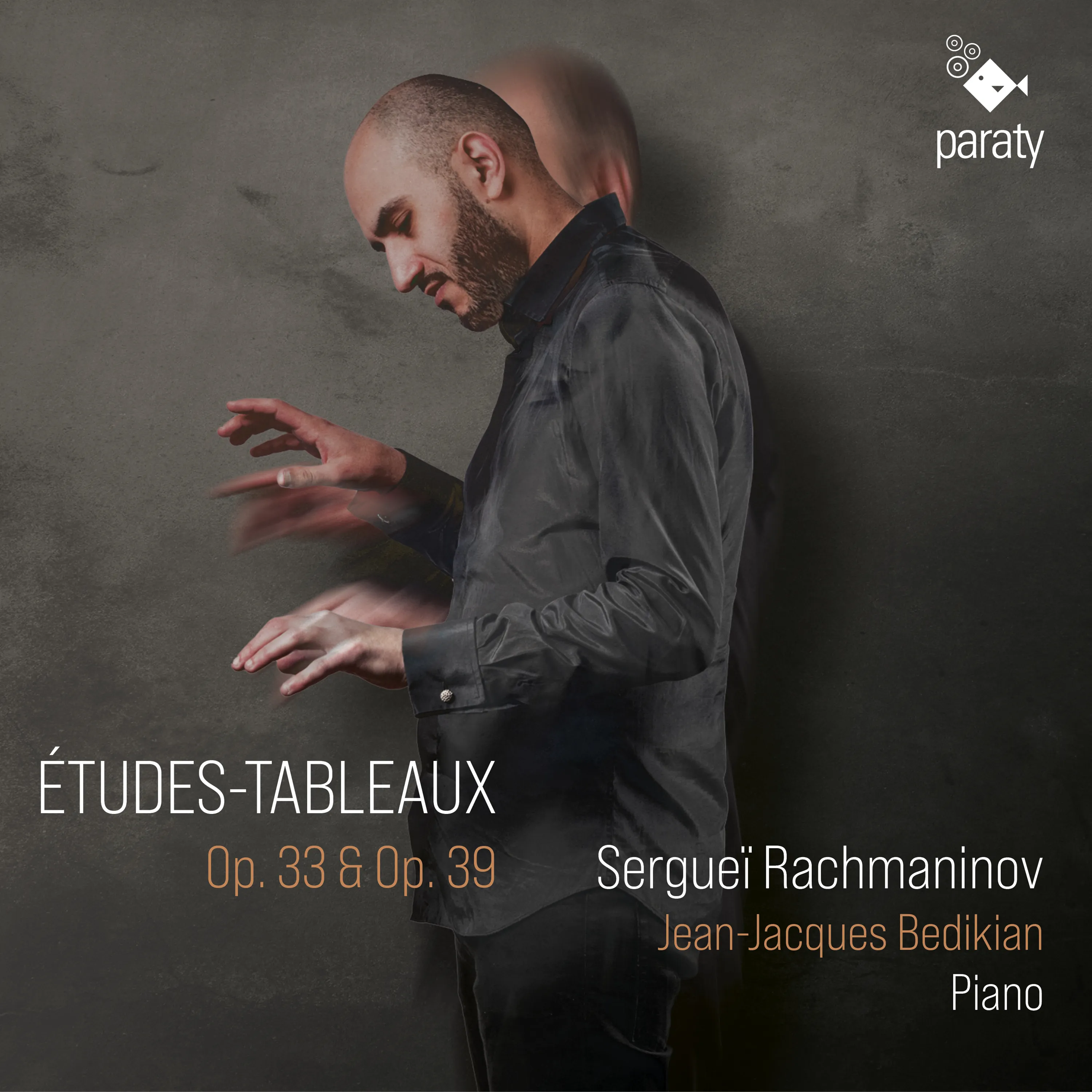
Jean-Jacques Bedikian, solo piano, Sergei Rachmaninov, Études-Tableaux Op.33, Études-Tableaux Op.39, piano music, Russian piano, Russian piano school, romantic repertory, piano Steinway D, piano Steinway D, piano Steinway D, piano Steinway D, piano room, Salle Colonne, Salle Colonne, Salle Colonne, Salle Colonne, Salle Colonne, Salle Colonne, recording piano solo, record Paraty, Rachmaninov piano
Études Tableaux, 0p. 33 & 0p. 39
This recording marks the first disc by pianist Jean-Jacques Bedikian and is entirely devoted to Sergei Rachmaninov's Études-Tableaux, combining the two cycles Op. 33 (1911) and Op. 39 (1917). The program presents all of these works for solo piano, organized in a succession of seventeen pieces exploring a great diversity of characters, tempi, and expressive climates. The Études-Tableaux occupy a central place in Rachmaninov's piano catalog and constitute a major part of his keyboard writing.
Through these works, Jean-Jacques Bedikian approaches Études-Tableaux as “sound paintings”, using an approach that highlights the expressive richness, harmonic density and emotional depth of this music. The pianist places his interpretation in a claimed connection with the tradition of the Russian school, considering piano technique as a means at the service of musical expression. The booklet gives the floor to Jean-Jacques Bedikian in an interview conducted by Lionel Pons, in which he discusses his career, his musical influences and his personal relationship with Rachmaninov's work.
The recording was made in April 2021 at the Salle Colonne, on a Steinway D piano tuned by Bastien Herbin. Sound recording is provided by Pierre Jacquot, with editing and mastering done by Olivier Marzullo and Lucie Bourely.
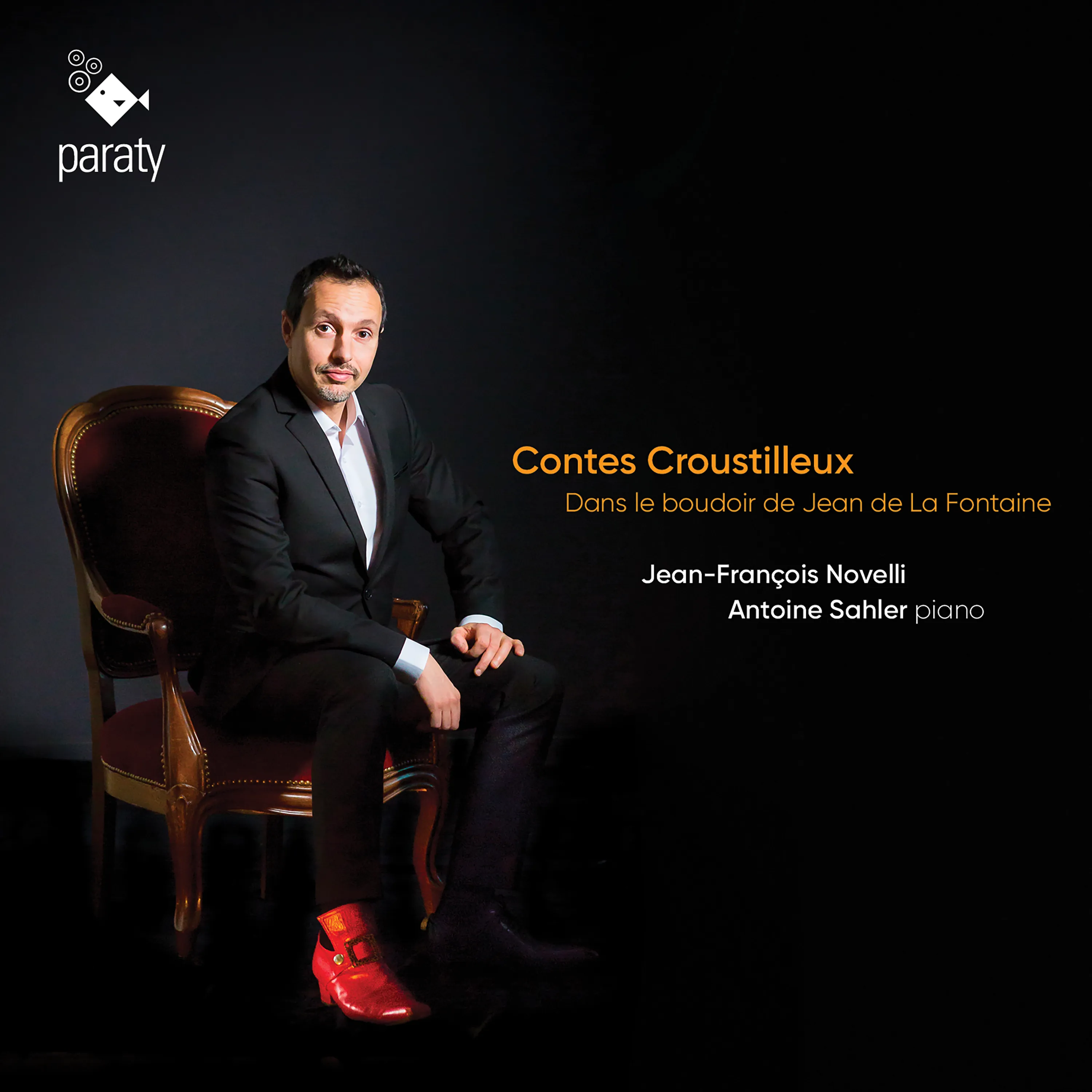
Tales eux, Jean de La Fontaine, music and literature, music and literature, recitation and piano, recitation and piano, Jean-François Novelli voice, Antoine Sahler piano, Antoine Sahler composer, contemporary French music, texts set to music, texts set to music, French poetry, French poetry, musical story, musical story, musical story, record Paraty, literary song, Montreuil recording
Crispy Tales, Jean-François Novelli
This disc offers a musical setting of texts by Jean de La Fontaine, gathered under the title Contes eux, in a project combining spoken voice, singing and piano. The texts selected highlight a lesser-known aspect of La Fontaine's work, far removed from the sole tradition of fables intended for children, and are part of a contemporary literary and musical approach. The entire program is designed as a series of short pieces, designed to restore the flavor of the verb, the rhythm of the text and its narrative dimension.
The interpretation brings together Jean-François Novelli, voice, and Antoine Sahler, piano and compositions. Antoine Sahler signs all of the original music, written specifically for this project, with constant attention to the prosody and intelligibility of the text. Jean-François Novelli provides diction and singing, giving substance to the stories through precise articulation and an assumed theatrical approach. The project was born from the artistic encounter between the two performers, with the common desire to make La Fontaine heard in a renewed musical framework.
The artistic direction is entrusted to Juliette, the graphic creation to Antoine Vivier, and the texts of the booklet are signed Jean-François Novelli. This disc is part of an approach aimed at combining French literature and contemporary musical creation, by offering a musical reading of La Fontaine's Tales intended for an adult audience.
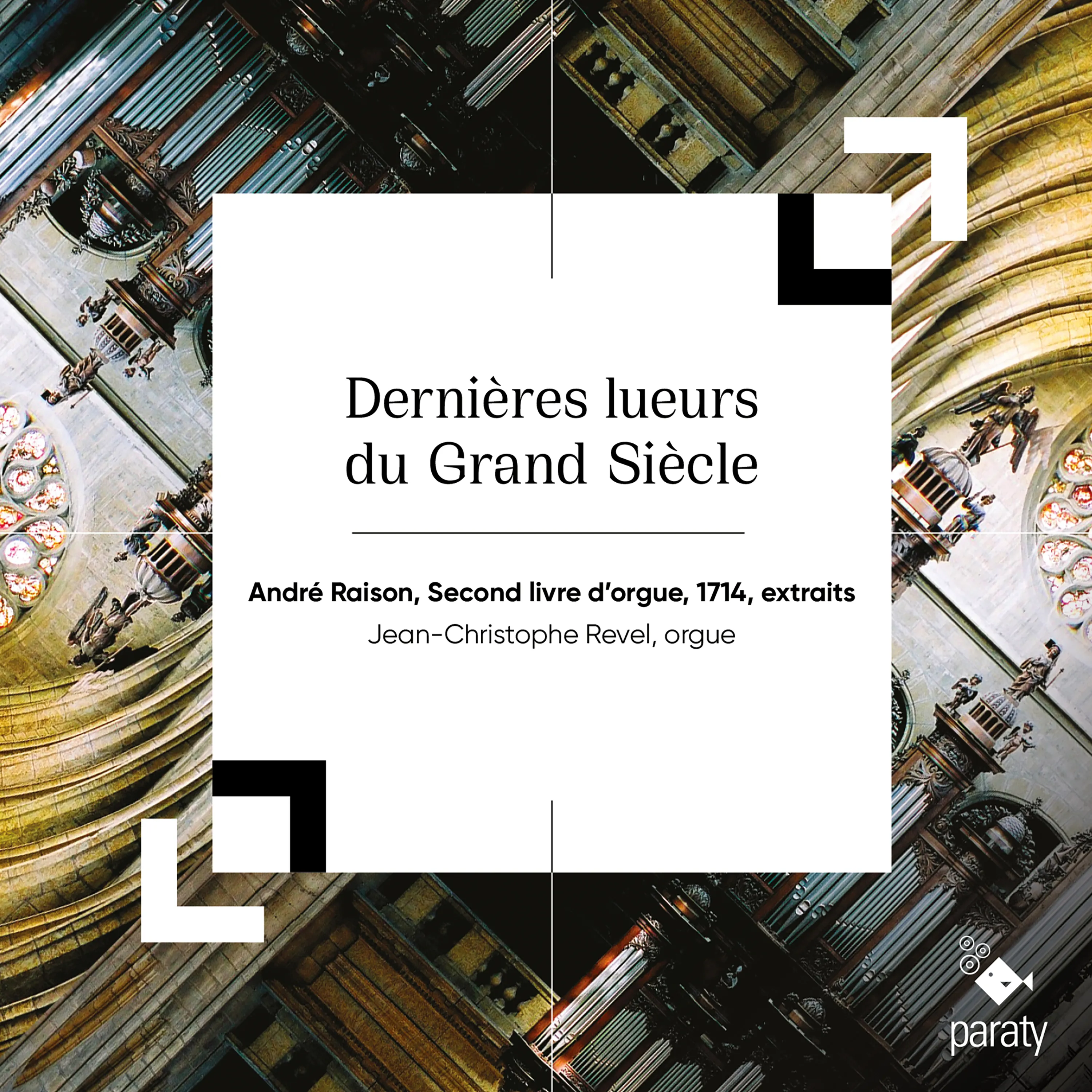
André Raison, Second organ book 1714, Grand Siècle, Grand Siècle, French Baroque music, French baroque music, ancient French organ, ancient Christmas, Da Pacem Domine, Jean de Joyeuse organ, Saint-Marie d'Auch cathedral, Jean-Christophe Revel organ, Jean-Christophe Revel organ, Vincent Lièvre-Picard organ, organ and voice recording, Vincent Lièvre-Picard high-contra, high-contra, Lisandro Nesis, Lisandro Nesis, Size, Da Pacem Domine, organ, organ and voice, Paraty Productions
Last lights of the Grand Siècle
This recording offers an overview of André Raison's Second Organ Book, published in 1714, through a selection of emblematic extracts, compared with Noëls from Christmas stamps published by Christophe Ballard in 1703. The program is organized around two main sections: The Long Desired Peace, centered on the antiphon Da Pacem Domine and its developments in preludes, fugues and overture, then a vast series of Christmases illustrating the mystery of the Incarnation, from pastoral scenes to popular devotion. This construction reflects the spiritual and formal unity of the collection, considered to be one of the last major manifestations of Grand Siècle aesthetics.
The Jean de Joyeuse organ (1694) in Sainte-Marie Cathedral in Auch is run by Jean-Christophe Revel, who is also in charge of the artistic direction of the project. The vocal parts use a formation of three male voices, according to a practice attested at the end of the 17th century, with Vincent Lièvre-Picard (high-contra), Lisandro Nesis (size) and Jean-Manuel Candenot (low-rise). Several Noëls are presented either in monody or in polyphony with three voices, in arrangements made by Jean-Pascal Chaigne, respecting the historical sources and liturgical uses of the time.
The recording was made in May 2018 in the Sainte-Marie Cathedral in Auch, maintaining the natural sounds linked to the instrument and the place. The choice of registrations is based on the indications of contemporary game tables by André Raison and the factor Jean de Joyeuse, as well as on the prefaces of the composer's organ books. This project is part of a process of historical restoration aimed at contextualizing André Raison's Second Organ Book, by combining organ and voice to restore the narrative and spiritual dimension of this repertoire.
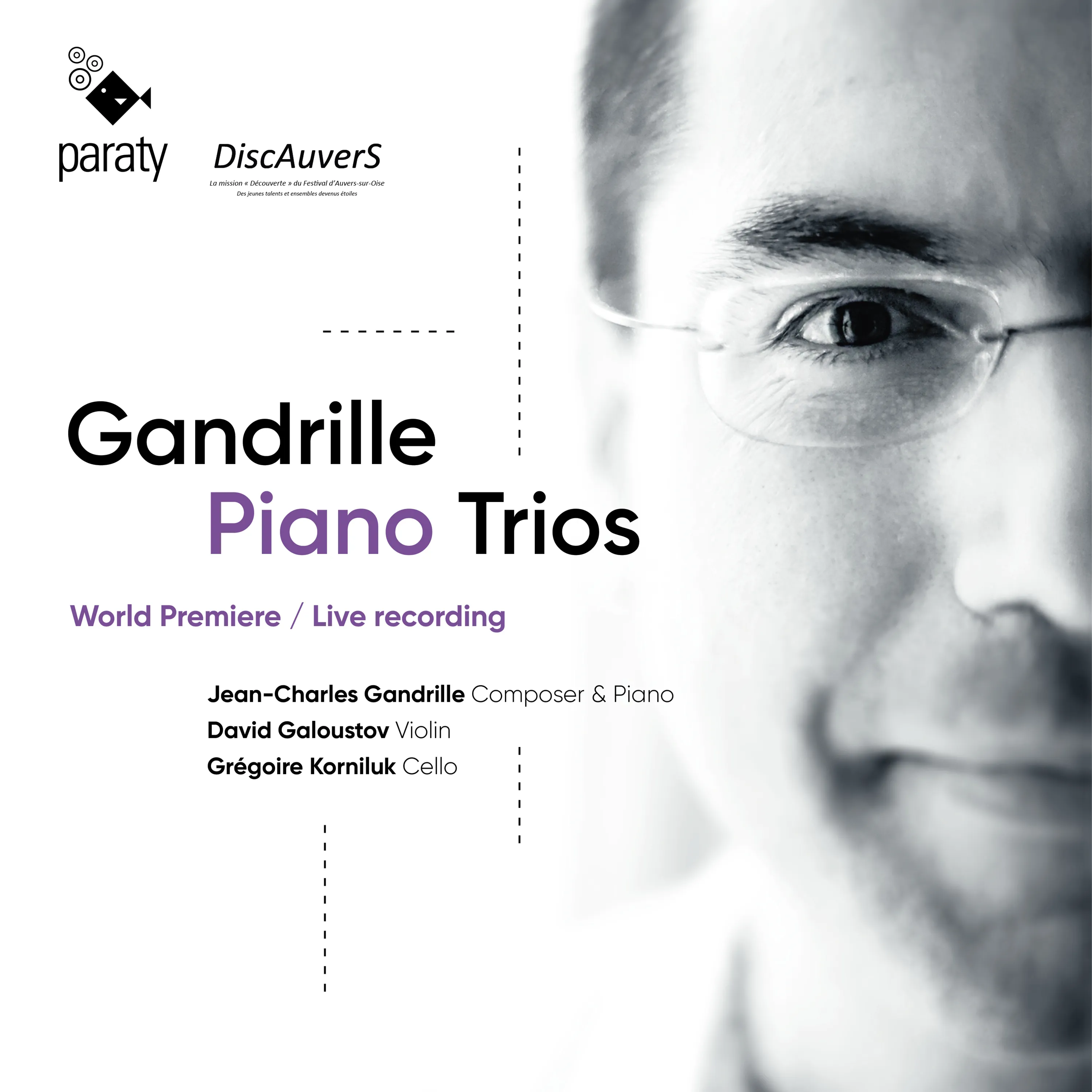
Jean-Charles Gandrille, piano trios with piano, contemporary piano trio, Nox-Trio op.31, Nox-Trio op.31, Pop-Trio op.43, Triads op.57, An Angel op.85, David Galoustov violin, Grégoire Korniluk cello, Grégoire Korniluk cello cello, cello cello, cello cello, cello piano, Grégoire Korniluk cello, cello cello, Cello piano, Jean-Charles, Jean-Charles Gandrille piano, Jean-Charles Gandrille piano, piano, Jean-Charles Gandrille piano, piano, Jean-Charles Gandrille piano, piano, Jean-Charles Gandrille piano, piano, contemporary music
Gandrille Piano Trios
This recording brings together four piano trios by composer Jean-Charles Gandrille, performed by Jean-Charles Gandrille on piano, David Galoustov on violin and Grégoire Korniluk on cello. The recorded works are Nox-Trio, Trio n°1 op.31 (2010), Pop-Trio, Trio n°2 op.43 (2011—2013), Triads, Trio n°3 op.57 (2016—2017) and An Angel..., Trio n°4 op.85 (2021—2022). The entire program is part of the piano trio genre, a formation combining violin, cello and piano, chosen by the composer for its contrapuntal, melodic and harmonic potential. In these trios, Jean-Charles Gandrille explores influences from both classical music and dance or popular music. Nox-Trio opposes two contrasting movements, Cantus and Contrapunctus. Pop-Trio is characterized by a pulsation inspired by pop music, while Triads takes its name from the recurrent use of perfect chords in their fundamental state. The second movement of Triads, entitled Auschwitz Impressions, is inspired by the composer's visit to the Auschwitz camp in 2016 and is a tribute to the victims.
An Angel..., the fourth and final trio on the recording, was written especially for this record and for the interpretation of David Galoustov and Grégoire Korniluk. Its thematic material comes from a passage from the Christmas Oratorio, op.78, by Jean-Charles Gandrille, on a text by Jean de La Ceppède, a 16th century poet. The recording was made on July 4, 2023 at Sonchamp Church, with sound recording, editing, mixing and mastering provided by Grégoire Korniluk and Tristan Devaux, under the Paraty label.
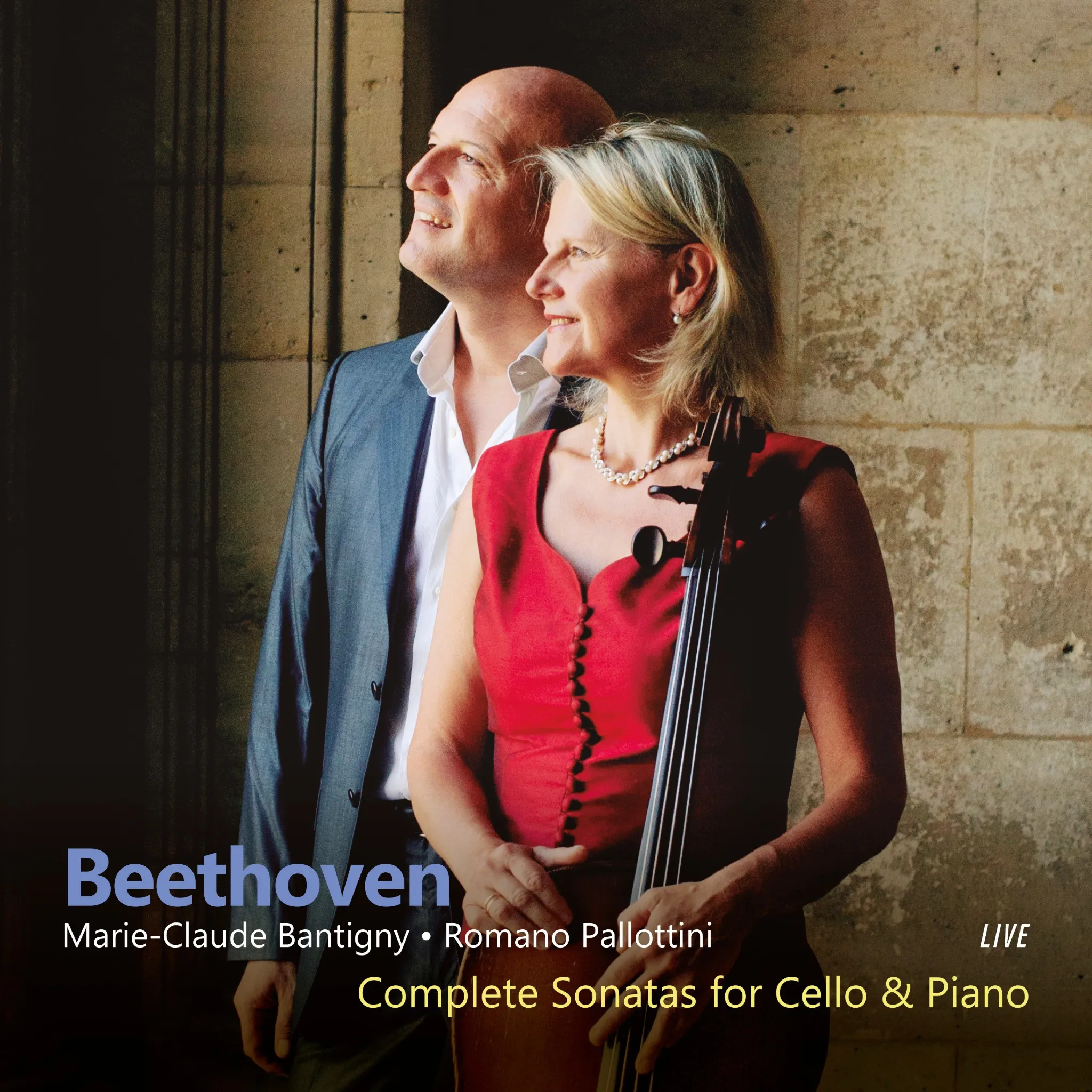
Beethoven, Complete Sonatas for Cello and Piano, Marie-Claude Bantigny, Marie-Claude Bantigny, Romano Pallottini, Sonatas for Cello and Piano, Beethoven Opus 5, Beethoven Opus 102, chamber music, cello, piano, chamber music, cello piano, recording Salle Colonne, Romano Pallottini, Romano Pallottini, sonatas for cello and piano, Beethoven Opus 102, chamber music, cello piano, chamber music, cello piano, recording Salle Colonne, Romano Pallottini, recording Salle Colonne, Paraty, piano piano, Beethoven Opus 102, chamber music, cello piano, chamber music, cello piano, recording Salle Colonne, piano, recording
Beethoven: Complete Sonatas for Cello & Piano
This recording brings together the complete sonatas for cello and piano by Ludwig van Beethoven, performed by the cellist Marie-Claude Bantigny and the pianist Romano Pallottini. The five sonatas cover the entire creative career of the composer, from the two Opus 5 sonatas composed in 1796 to the works of Opus 102 written between 1815 and 1816. They bear witness to Beethoven's stylistic evolution and to his innovative approach to the dialogue between cello and piano.
The two sonatas in Opus 5 were dedicated to King Frederick William II of Prussia and incorporate techniques from the cellistic writing of Jean-Louis Duport. Sonata No. 3 in A major, Opus 69, belongs to Beethoven's so-called “middle” period and was dedicated to Baron Ignaz von Gleichenstein. It was probably created by the cellist Joseph Linke with Carl Czerny at the piano. This work is distinguished by its formal balance and its thematic invention.
The two sonatas of Opus 102 mark Beethoven's entry into his late period. Composed between 1815 and 1816 and dedicated to Countess Marie von Erdödy, they herald new formal freedoms and daring rhythmic and melodic writing. The recording was made during the concert on April 2, 2017 at the Salle Colonne, on Steinway piano, under the artistic direction of the Paraty label.
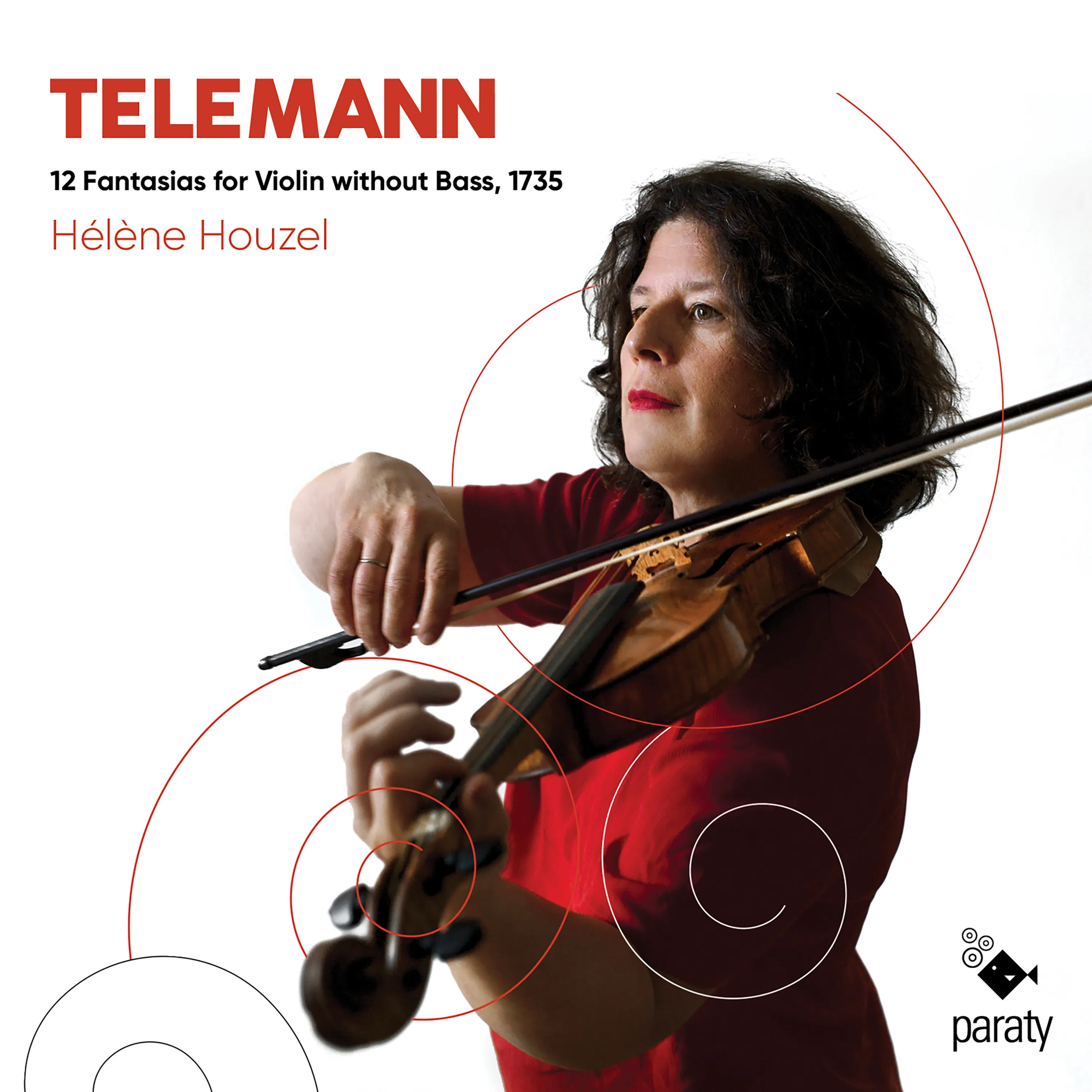
Georg Philipp Telemann, Fantaisies for solo violin, Telemann solo violin, Telemann solo violin, Hélène Houzel violin, baroque violin, German baroque music, violin solo, fantasies for violin, baroque repertoire, baroque repertoire, Telemann 1735, Telemann 1735, Paraty Records, Paraty Records, Animus, Théâtre du Grand Orme Feings
Telemman, 12 Fantasias for Violin without Bass, 1753
This album is dedicated to the Twelve Fantasies for solo violin by Georg Philipp Telemann, published in 1735 in Hamburg. These works are part of an important series of fantasy cycles composed by Telemann in the early 1730s, including fantasies for flute, viola and harpsichord. Violin fantasies explore a great diversity of forms, characters, and tones, covering ten different keys, from F minor to E major, and alternating slow and fast movements in flexible and free patterns.
The violin, an essentially melodic instrument, is treated as an instrument capable of suggesting polyphonic writing by playing the ellipse and the implicit. Fantasies incorporate elements evoking preludes, fugues, dances or choruses without ever explicitly naming them. Their concise and varied writing allows great freedom of interpretation and highlights the ability of the violin to evoke different expressive registers, from singing to dance, from contrapuntal discourse to instrumental virtuosity.
The interpretation is provided by the violinist Hélène Houzel, who approaches these works as a musical, educational and imaginary journey. The booklet highlights the soloist's long-standing relationship with these fantasies, nourished by her activities as a concert artist and teacher, as well as by a personal reflection on the solitude of the solo violin. The recording was made from 28 to 31 October 2019 at the Théâtre du Grand Orme in Feings. The production is provided by Paraty, in co-production with Animus, with artistic direction by Aude-Marie Piloz and Patrick Bismuth.
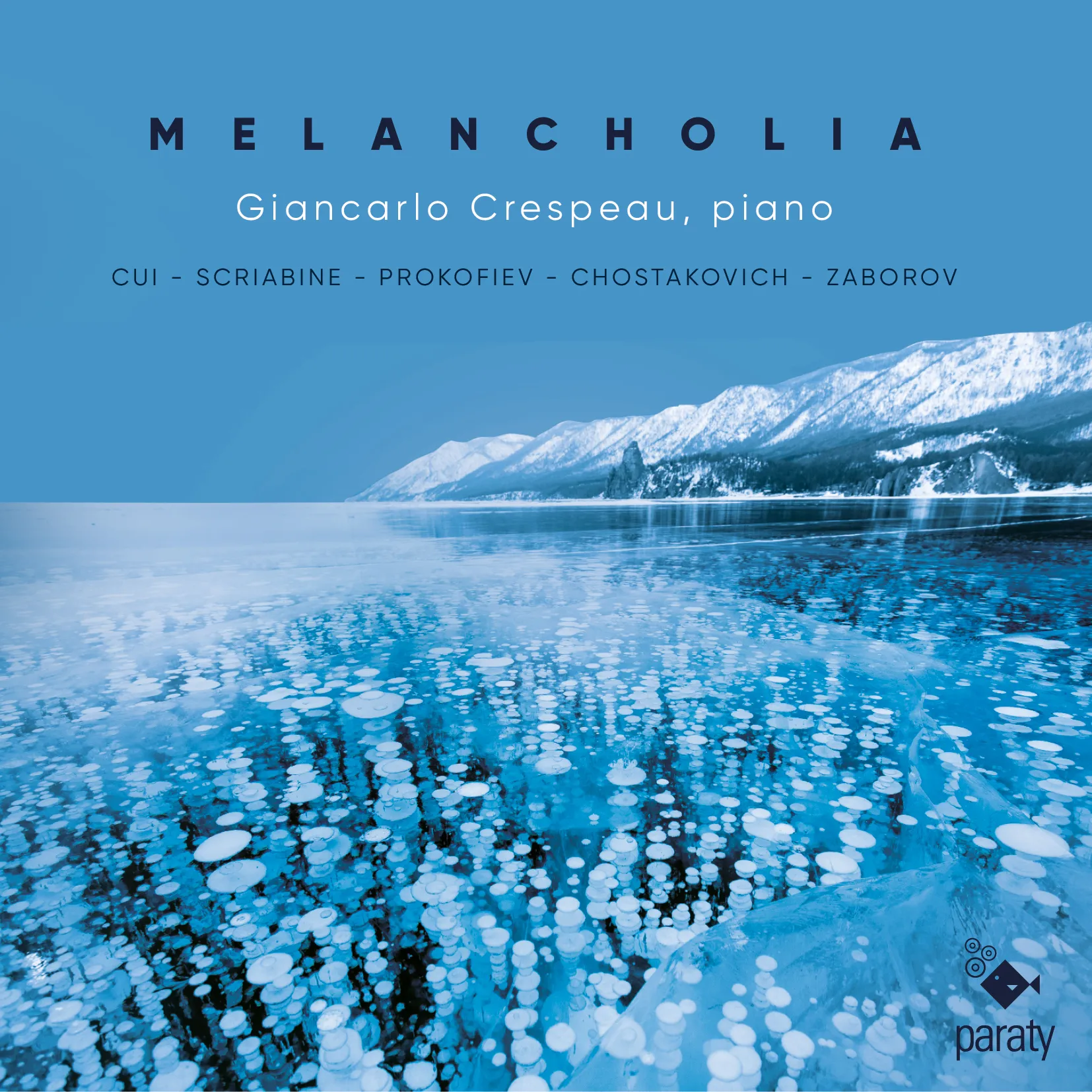
Melancholia, Giancarlo Crespeau, solo piano, Russian music, César Cui, Russian music, César Cui, Scriabine, Prokofiev, Shostakovich, Kirill Zaborov, Vermeer Sonata, Vienna Variations, Steinway D piano, Steinway D piano, piano music, Vienna Variations, Steinway D piano, piano, piano, music, Russian music, Vienna Variations, Steinway D piano, piano, piano, piano, Steinway D, piano, piano, piano, piano, piano, piano, Steinway D, music, music, piano, piano, Russian, Russian music, Russian music, Russian music, piano, piano, Vienna Variations, Steinway D, piano, piano
Melancholia, Giancarlo Crespeau, piano
This disc brings together piano works by Russian composers covering a wide period of time, from César Cui to Kirill Zaborov, performed by the pianist Giancarlo Crespeau. The program includes the Nocturne op. 22 no. 3 and two Preludes op. 64 by César Cui, the Third Piano Sonata op. 23 by Alexander Scriabin, the Third Piano Sonata op. 28 by Sergei Prokofiev, and the Prelude and Fugue op. 87 no. 24 by Dmitri Shostakovich.
The disc also features two works by Kirill Zaborov: the Vermeer Sonata, composed in 2018 and dedicated to his parents, and the Vienna Variations, composed in 2010. These contemporary pieces are part of an aesthetic continuity combining formal tradition and expressiveness, while integrating elements from various Russian and Western currents. The entire program highlights a constant search for balance between musical structure and inner expression.
Giancarlo Crespeau, French pianist and composer born in 1985, interprets the entire program. A child prodigy, trained at the Conservatoire National Supérieur de Musique de Paris in the class of Jacques Rouvier, he has performed in Europe, Russia and Asia. He collaborates regularly with the composer Kirill Zaborov and in this recording gives the world premiere of the Vermeer Sonata and the Vienna Variations. The recording was made in April 2021 at the Salle Colonne in Paris on a Steinway D piano.
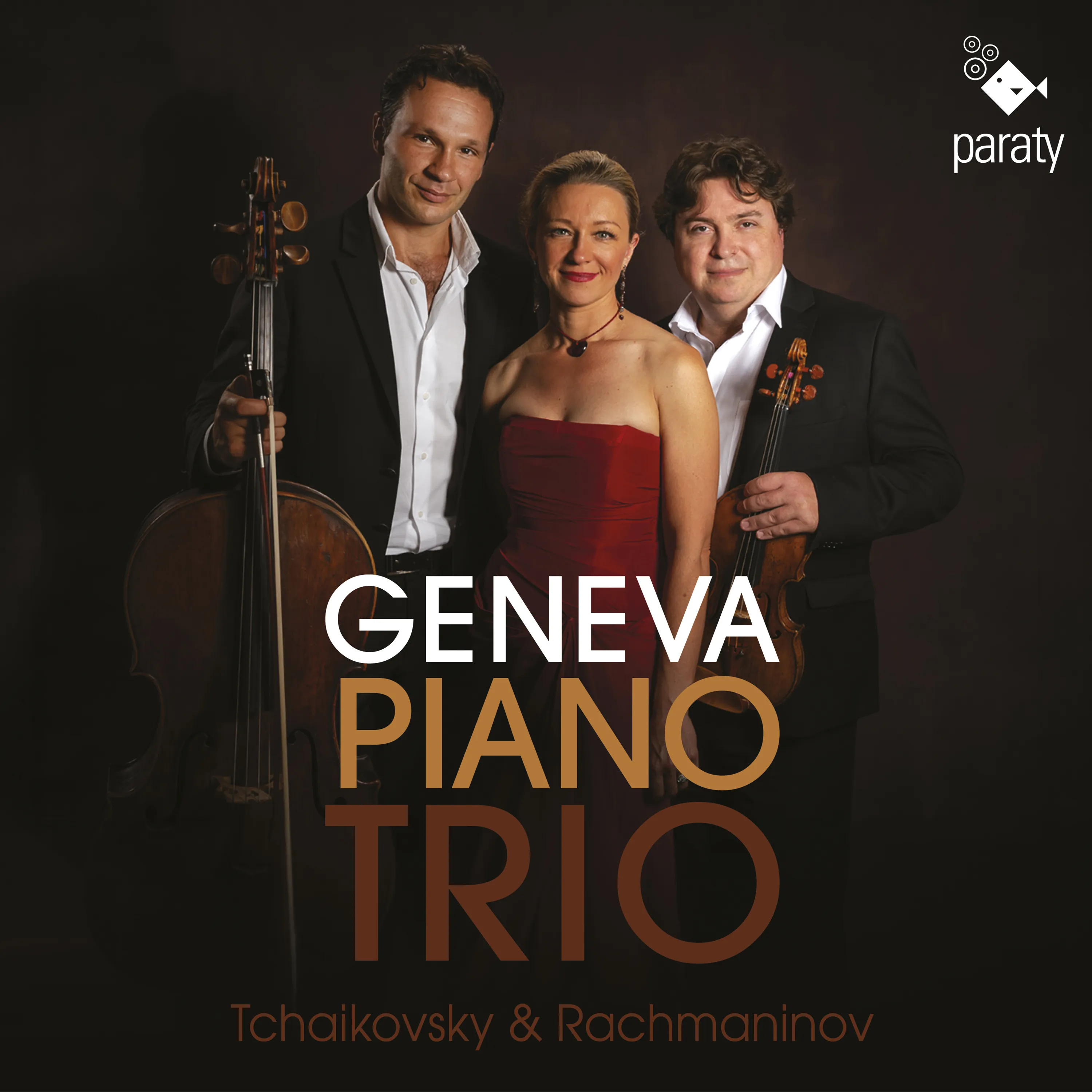
Geneva Piano Trio, Irina Shkurindina piano, Sergey Ostrovsky violin, Sergey Ostrovsky violin, Dan Sloutskovsky cello, piano trio, chamber music, Tchaikovsky Trio op. 50, In memory of a great artist, In memory of a great artist, Rachmaninov Elegiac Trio No. 1, Rachmaninov Elegiac Trio No. 1, Piano Trio No. 1, Rachmaninov Elegiac Trio No. 1, Music, Piano Trio
Geneva Piano Trio
This recording brings together the Geneva Piano Trio around two major works from the piano trio repertoire by Pyotr Ilyich Tchaikovsky and Sergei Rachmaninov. The ensemble is composed of Irina Shkurindina on piano, Sergey Ostrovsky on violin, and Dan Slutskovski on cello. The program combines Tchaikovsky's Piano Trio in A Minor, Op. 50, op. 50, subtitled In Memory of a Great Artist, and Rachmaninov's Elegiac Trio No. 1 in G Minor.
Tchaikovsky's Trio op. 50, composed in 1881—1882, is structured in two main parts: a first movement Pezzo elegiaco, followed by a vast Tema con variazioni including a series of contrasting variations and a final coda. This work pays tribute to Nikolai Rubinstein, pianist and founder of the Moscow Conservatory. The interpretation proposed by Irina Shkurindina, Sergey Ostrovsky, and Dan Slutskovski highlights the formal architecture and expressive richness of this score.
Sergei Rachmaninov's Elegiac Trio No. 1, composed in 1892, completes the program. Written in a single movement, it testifies to Tchaikovsky's stylistic influence on the young composer. The Geneva Piano Trio interprets this work alongside the Tchaikovsky trio, offering a coherent overview of the Russian romantic repertoire for piano trio, carried by Irina Shkurindina, Sergey Ostrovsky and Dan Slutskovsky.
.webp)
.svg)

.svg)