
.png)
Albums
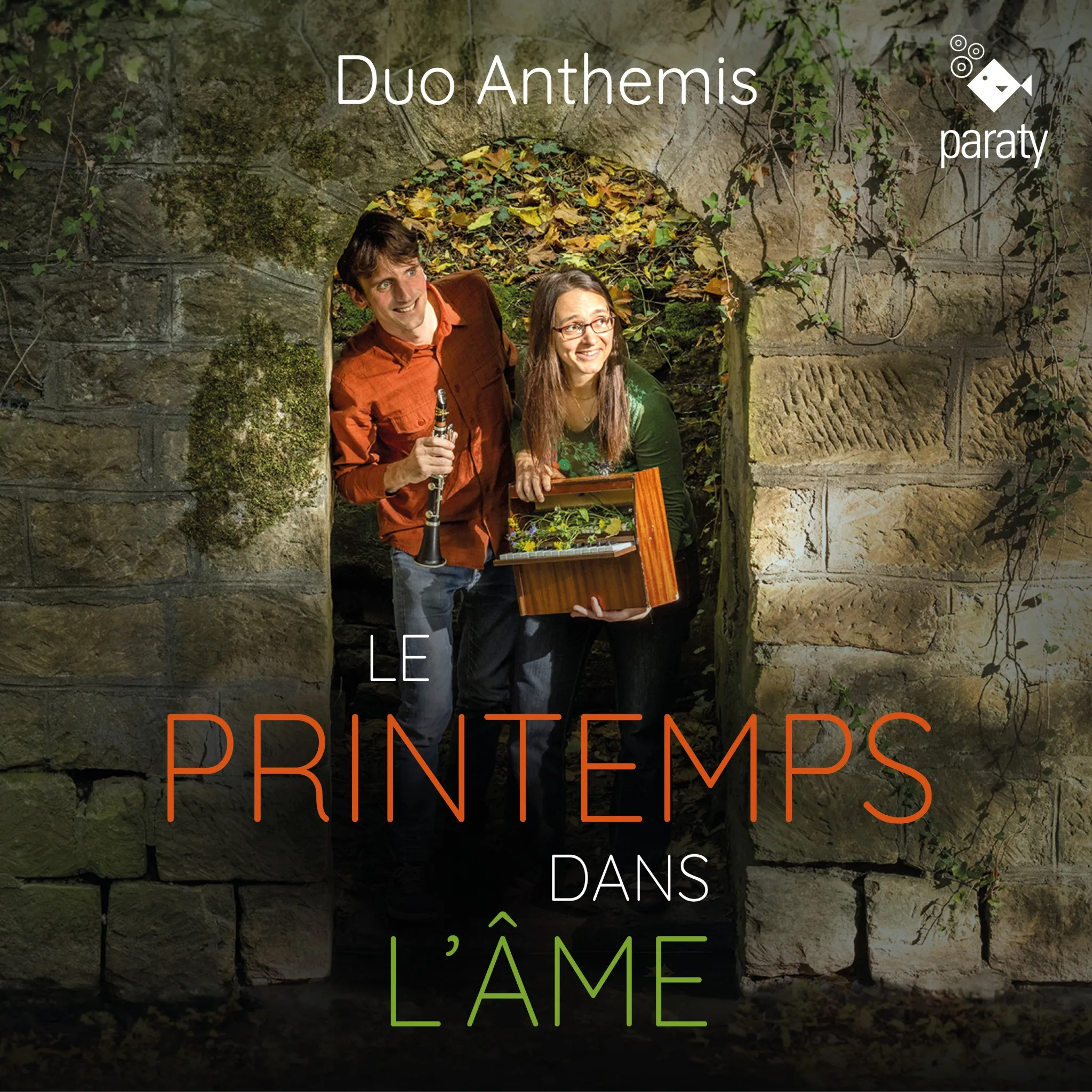

Spring in the soul, Duo Anthemis, clarinet and piano, clarinet and piano, chamber music, 20th century repertoire, Joseph Horovitz, Jean Françaix, Claude Debussy, Leonard Bernstein, Olivier Dartevelle, Darius Milhaud, Darius Milhaud, First Rhapsody, First Rhapsody, Scaramouche, chamber music, 20th century repertoire, Joseph Horovitz, Jean Françaix, Claude Debussy, Leonard Bernstein, Olivier Dartevelle, Darius Milhaud, Darius Milhaud, First Rhapsody, First Rhapsody, Scaramouche, Scaramouche, Sonatine, Sonata, French music, French music, influence of jazz, Juliette Boubel, Florent Charpentier, Darius Milhaud, Darius Milhaud, Première Rhapsody, Y Productions


Spring in the soul, Duo Anthemis
Spring in the soul is a program for clarinet and piano built around works from the 20th and 21st centuries, combining French, American and British repertoires. The disc brings together pieces by Joseph Horovitz, Jean Françaix, Claude Debussy, Claude Debussy, Leonard Bernstein, Olivier Dartevelle and Darius Milhaud, in an alternation of short forms and structured cycles, ranging from sonatine to rhapsody and sonata.
The program highlights the influence of jazz and popular music in the writing of several works, both rhythmically and harmonically. Horovitz's Sonatine, Bernstein's Sonata and Dartevelle's play dialogue with Debussy's Première Rhapsody and Milhaud's Scaramouche, whose duet reduction evokes Brazil and samba. The works also address worlds related to childhood, travel and musical narration.
The album is performed by Duo Anthemis, formed by Juliette Boubel on piano and Florent Charpentier on clarinet. It was recorded in May 2022 at the Salle de l'Esplanade of the Arsenal in Metz. Production is provided by Paraty, with sound recording, editing, mixing and mastering done by Frédéric Briant.
David Lampel, Orchestral Music, works for orchestra, contemporary music, Symphonic Studies for Orchestra, Symphonic Studies for Orchestra, Concerto for Cello and Orchestra, contemporary orchestral music, Emmanuelle Bertrand, Marie-Josèphe Jude, Marie-Josèphe Jude, Orchestre Symphonique de Mulhouse, Orchestre Symphonique de Mulhouse, Orchestre Symphonique de Mulhouse, Orchestre Symphonique de Mulhouse, Orchestre Symphonique de Mulhouse, Orchestre Symphonique de Mulhouse, Orchestre Symphonique de Mulhouse, Orchestre Symphonique de Mulhouse, Orchestre Symphonique de Mulhouse, Orchestre Victor Hugo Franche-Comté, Jacques Lacombe, Jean-François Verdier, Joseph Bastian, Contemporary Concerto, Contemporary Symphony, Paraty Productions
David Lampel, Orchestral Works
This album brings together four orchestral works by David Lampel composed between 2004 and 2019: Symphonic Studies for Orchestra, Concerto for Cello and Orchestra, Mandala Symphony for Orchestra and Concerto for Piano and Orchestra. Each piece explores a distinct form, ranging from a suite of orchestral studies to a five-movement symphony, to two solo concertos.
The Symphonic Studies for Orchestra is based on a unique motif derived from the musical letters of the city of Sofia, developed through a series of contrasting studies that highlight instrumental groups, orchestral writing techniques, and the overall form of the work. The Concerto for Cello and Orchestra is part of the classical and romantic concerto tradition, establishing a continuous dialogue between the soloist and the orchestra, structured around successive patterns and a formal reversal between the two parties.
The Mandala Symphony for Orchestra, inspired by the Buddhist symbol of the mandala, unfolds in five movements corresponding to notions of wisdom, will, patience, energy and serenity. The Concerto for Piano and Orchestra adopts a cyclic form built around the note D, with rhythmic and thematic alternations evoking contrapuntal and figurative forms. The album brings together the Mulhouse Symphony Orchestra and the Victor Hugo Franche-Comté Orchestra, under the direction of Jacques Lacombe, Jean-François Verdier and Joseph Bastian, with Emmanuelle Bertrand on cello and Marie-Josèphe Jude on piano.
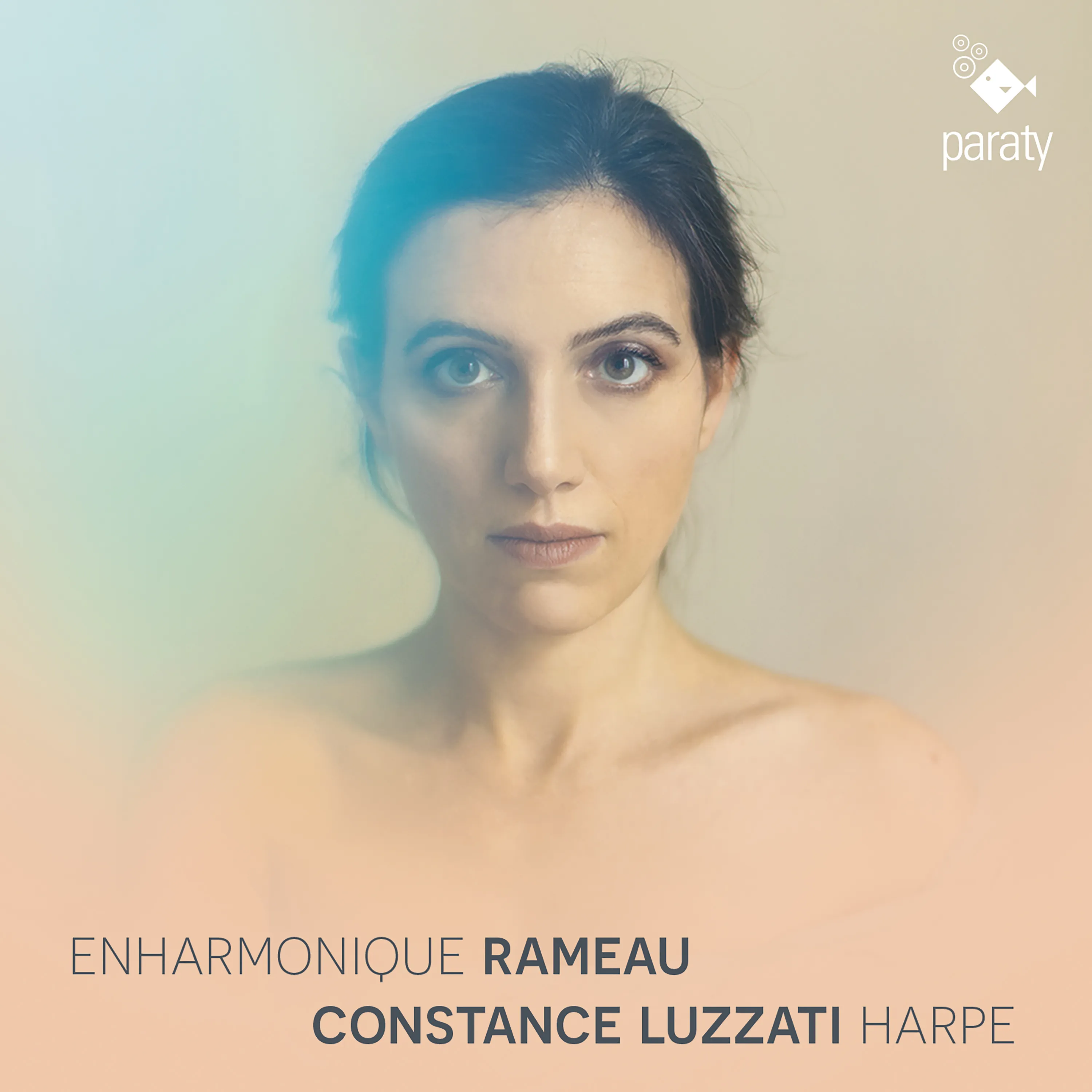
Enharmonic, Jean-Philippe Rameau, Constance Luzzati, harp, harpsichord pieces, harpsichord pieces, transcription for harp, French harpsichord 18th century, French baroque music, Les Cyclopes, Les Sauvages, La Poule, L'Enharmonique, L'Enharmonique, L'Enharmonique, Les Tendres Plaintes, Les Soupirs, transcription for harp, 18th century French harpsichord, French baroque music, Les Cyclopes, Les Sauvages, La Poule, L'Enharmonique, L'Enharmonique, Les Tendres Plaintes, Les Soupirs
Enharmonic Rameau, Constance Luzzati
This recording is devoted to harpsichord pieces by Jean-Philippe Rameau, mainly from collections of 1724 and 1728 as well as from La Dauphine (1747), performed on the modern harp. The program brings together iconic works such as Les Cyclopes, L'Entretien des Muses, Les Soupirs, Les Tendres Plains, La Poule, Les Sauvages and L'Enharmonique, organized in suites corresponding to the original keys.
The project is part of an approach of reading harpsichord scores directly, without systematic rewriting, by questioning the transition of the tone and the instrumental gesture from the harpsichord to the harp. It addresses issues of temperament, French ornamentation, broken style, and harmonic density, taking into account the mechanical and sonic constraints specific to the modern pedal harp.
The album is performed by Constance Luzzati on the Camac Atlantide Prestige harp. It was recorded in December 2021 at Royaumont Abbey. Production is provided by Paraty, with sound recording and mastering by Marie-Ange Carrez. The texts of the booklet are signed Constance Luzzati.
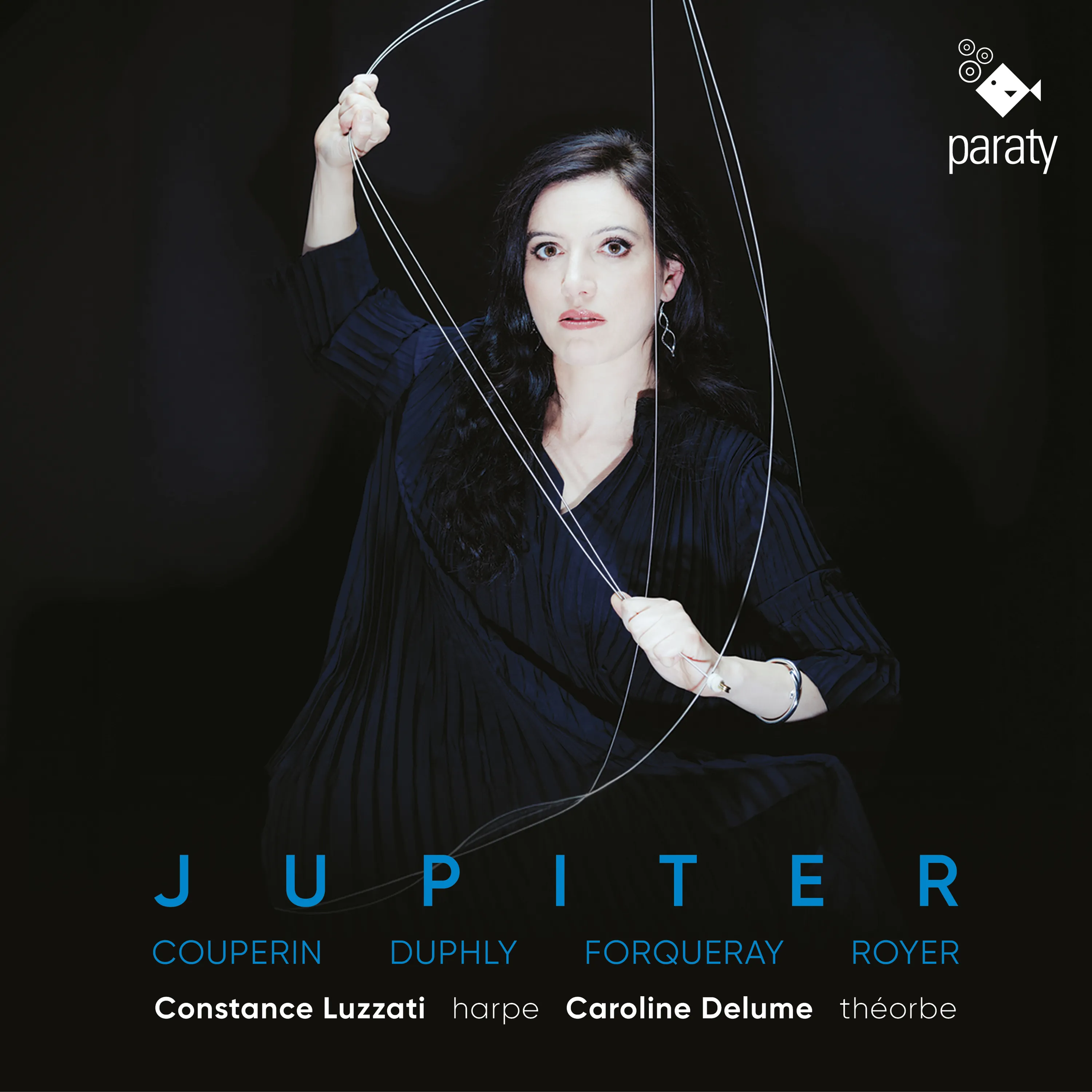
Jupiter, Constance Luzzati, Caroline Delume, harp, theorbo, harp, theorbo, French music 18th century, French music, 18th century, transcription for harp, French harpsichord, Viola da gamba, François Couperin, Jacques Duphly, Pancrace Royer, Pancrace Royer, Antoine Forqueray, Antoine Forqueray, Antoine Forqueray, Antoine Forqueray, Jean-Baptiste Forqueray, Jean-Baptiste Forqueray, Jean-Baptiste Forqueray, Jean-Baptiste Forqueray, Michel Corrette, Michel Corrette, Les Barricades euses, La Marche des Scythes, Médée, broken style, French baroque music, Paraty Productions
Jupiter, Constance Luzzati
This album brings together works for French harpsichord from the 18th century transcribed for harp, by François Couperin, Jacques Duphly, Pancrace Royer, Antoine and Jean-Baptiste Forqueray, as well as Michel Corrette. The program includes Les Barricades euses, La Marche des Scythes, Médée, Jupiter, Les Regrets and several pieces from the Viola Pieces set in harpsichord pieces by Forquerays, exploring a repertoire originally designed for harpsichord or viola da gamba.
The project is part of a reflection on transcription in the 18th century and on the transition of works between viola da gamba, harpsichord and harp. The pieces selected question the technical and expressive limits of the instrument, in particular in the low registers, chromatism, broken style and sound density effects. Some works are performed as a duo, offering an intermediate approach between the viola score with basso continuo and the transcription for solo harpsichord.
The album is performed by Constance Luzzati on the harp, accompanied by Caroline Delume at the theorbo on several pieces. It was recorded in December 2023 at Royaumont Abbey, on a Camac Atlantide Prestige harp. Production is provided by Paraty, with sound recording, editing, mixing and mastering done by Marie-Ange Carrez.
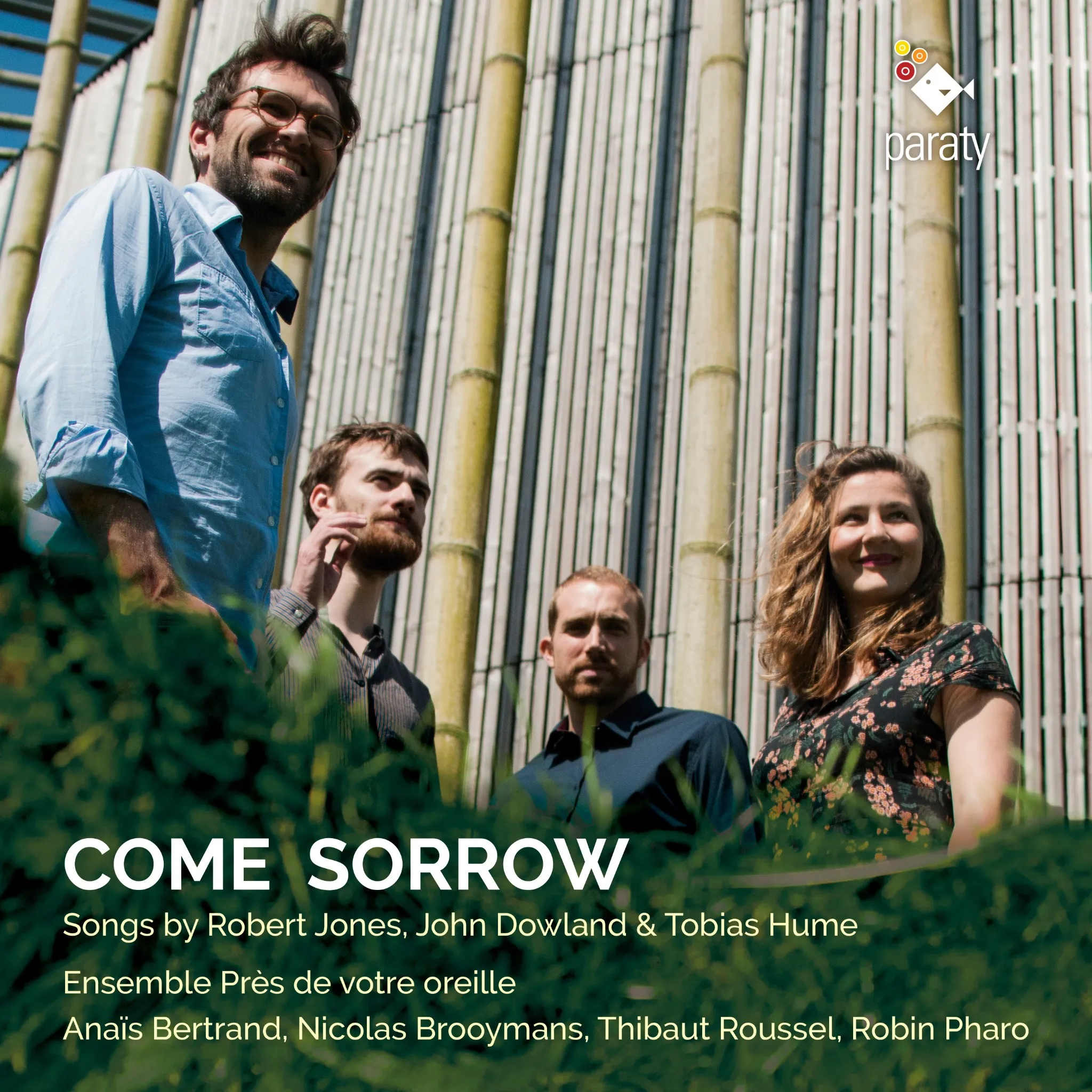
Come Sorrow, Robert Jones, John Dowland, Tobias Hume, Tobias Hume, Alfonso Ferrabosco II, English Renaissance songs, Elizabethan music, lute rape, viola da gamba, lute renaissance, ancient vocal music, early vocal music, Ancient vocal music, Ensemble Close to Your Ear, Ensemble Close to Your Ear, Anaïs Bertrand, Anaïs Bertrand, Anaïs Bertrand, Nicolas Brooymans, Nicolas Brooymans, Thibaut Roussel, Robin Pharo, First Tuning, English Music Renaissance, Early Vocal Music, Ancient Vocal Music, Ancient Vocal Music, Ensemble Near Your Ear, Anaïs Bertrand, Anaïs Bertrand, Nicolas Brooymans, Nicolas Brooymans, Thibaut Roussel, Robin Pharo, First Tuning
Come Sorrow, Close to Your Ear Set
This program brings together English songs from the end of the Renaissance, composed by Robert Jones, John Dowland, Tobias Hume and Alfonso Ferrabosco II. The corpus is based primarily on The Second Booke of Songs and Ayres by Robert Jones (1601), The Second Booke of Songs or Ayres by John Dowland (1600), and The First Part of Ayres by Tobias Hume (1605), as well as on instrumental pieces from Ferrabosco II's Lessons for 1, 2 and 3 Viols.
The recording compares different vocal accompaniment practices from the Elizabethan era, combining voice, viola da gamba and Renaissance lute. In particular, he explores the use of lyra-violet in tablature, specific tuning systems such as First Tuning, and the coexistence of monodic and polyphonic functions of the viola da gamba in the English vocal repertoire of the early 17th century.
The album is performed by Ensemble Près de Votre Oreille, bringing together Anaïs Bertrand (mezzo-soprano), Nicolas Brooymans (bass), Thibaut Roussel (Renaissance lute) and Robin Pharo (viola da gamba and direction). It was recorded in June 2018 at the Elizabethan Theater of Château d'Hardelot, with a pitch at 400 Hz and a mesotonic temperament to the sixth of a comma.
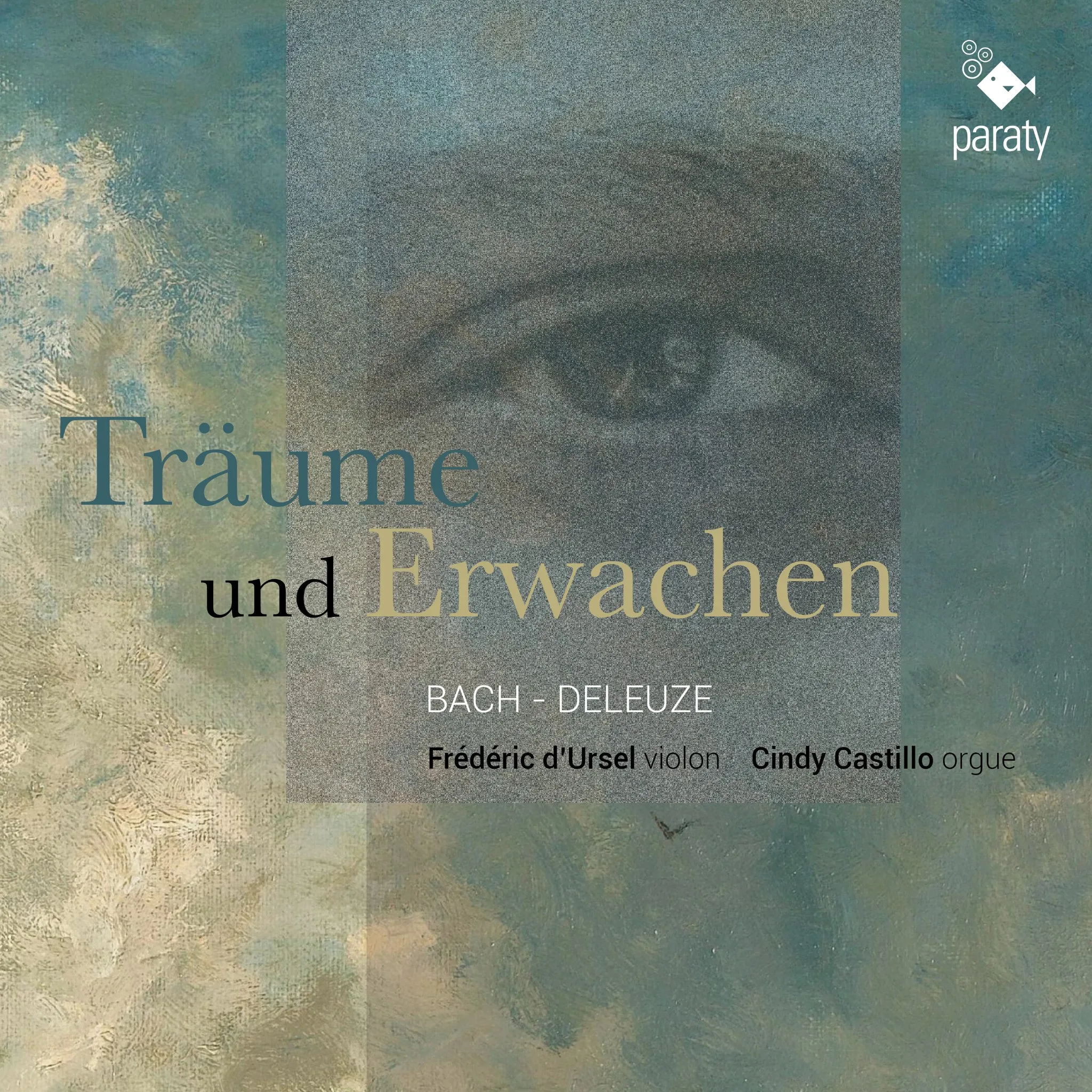
Bach BWV 1017, Bach BWV 1019, Sonatas for violin and keyboard, Sonatas for violin and organ, Johann Sebastian Bach, Jean-Pierre Deleuze, Träume und Erwachen, Frédéric d'Ursel, Cindy Castillo, violin and organ, violin and organ, organ, organ, Korfmacher Thomas, organ Korfmacher Thomas, organ, Korfmacher Thomas, organ, organ, Korfmacher Thomas, organ, organ, Korfmacher Thomas, organ, organ, Korfmacher Thomas, organ, organ, organ, Korfmacher Thomas, organ, organ, organ, Korfmacher Thomas, organ, organ, organ, Korfmacher Thomas, organ, organ, organ, organ, Korfmacher Thomas, organ, organ, organ, Korfmacher Thomas, organ, organ, organ, Y Productions
Träume und Erwachen, Bach & Deleuze
The first part of a triptych, this recording combines violin and organ around two sonatas by Johann Sebastian Bach, the Sonata in C minor BWV 1017 and the Sonata in G major BWV 1019, framed by contemporary works by Jean-Pierre Deleuze. The program combines Prelude, Interlude and Postlude composed for this project, according to a structured alternation with the movements of Bach's sonatas.
The project is based on a historical and musical reading of the Sonatas for violin and keyboard BWV 1014—1019, performed here on the organ in accordance with the original name Sechs Trios für Clavier und die Violine appearing on the handwritten copy by Johann Christoph Altnickol. Writing in a trio, with two mandatory upper parts and an independent bass, finds a particular sound balance with the violin on the organ.
The recording brings together Frédéric d'Ursel on violin and Cindy Castillo on the organ Wilhelm Korfmacher/Thomas (1841), recorded at the Saint-Sébastien Church in Stavelot in July 2022. Jean-Pierre Deleuze's works dialogue with those of Bach based on formal, contrapuntal and motivational references, in particular around the B-A-C-H motif and the chorale Ich ruf zu dir, Herr Jesu Christ.
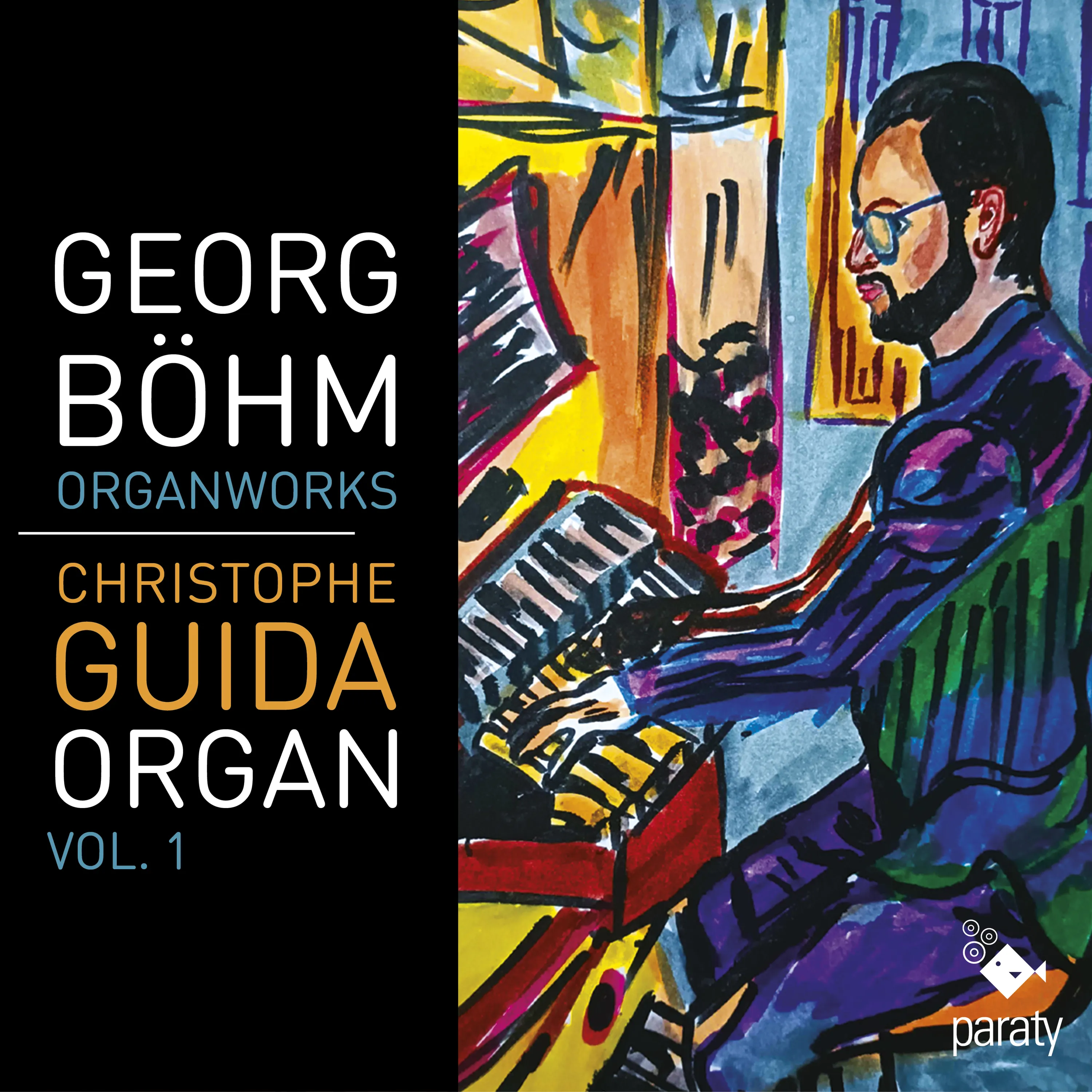
Georg Böhm, Böhm organ works, organ works, works for organ, German baroque music, German baroque music, baroque organ, Christoph (e) Guida, organist Christoph (e) Guida, organ Dominique Thomas, Saint-Jean church in Wissembourg, Lutheran chorals, Lutheran chorals, lutheran chorals, partita for organ, German organ, organ partita, baroque, partita, organ partita, praeludium and fugue, baroque organ, Paraty organ, baroque music 17th 18th century
Georg Böhm, Christophe Guida
This first volume devoted to the organ works of Georg Böhm (1661—1733) brings together a program centered on the preludes, fugues, chorals and partitas of the composer, a major figure in the North German organ at the turn of the 17th and 18th centuries. The program includes Praeludia and Fugues in C, D minor and A minor, as well as partitas and variations on Lutheran chorals such as Ach wie nichtig, ach wie flüchtig, Freu dich sehr, meine Seele, Wer nur den lieben Gott läst walten or Herr Jesus Christ, dich zu uns wend.
The recording was made at the Saint-Jean Protestant Church in Wissembourg on the organ built by Dominique Thomas in 2015. The program highlights Böhm's contrapuntal writing, his use of the stylus phantasticus, as well as the alternation between manualiter and pedaliter pieces. The works selected illustrate the characteristic forms of his organ production: free preludes, fugues, various chorals and partitas structured in several versus.
Christophe Guida interprets the entire program. Organist and improviser, he is a professor at Notre-Dame de Vincennes and teaches organ and harpsichord at the CRD in Chartres. This recording is part of an effort to restore the organ repertoire of Georg Böhm, a composer whose influence on the young Johann Sebastian Bach is documented by several historical sources, in particular during his stay in Lüneburg.
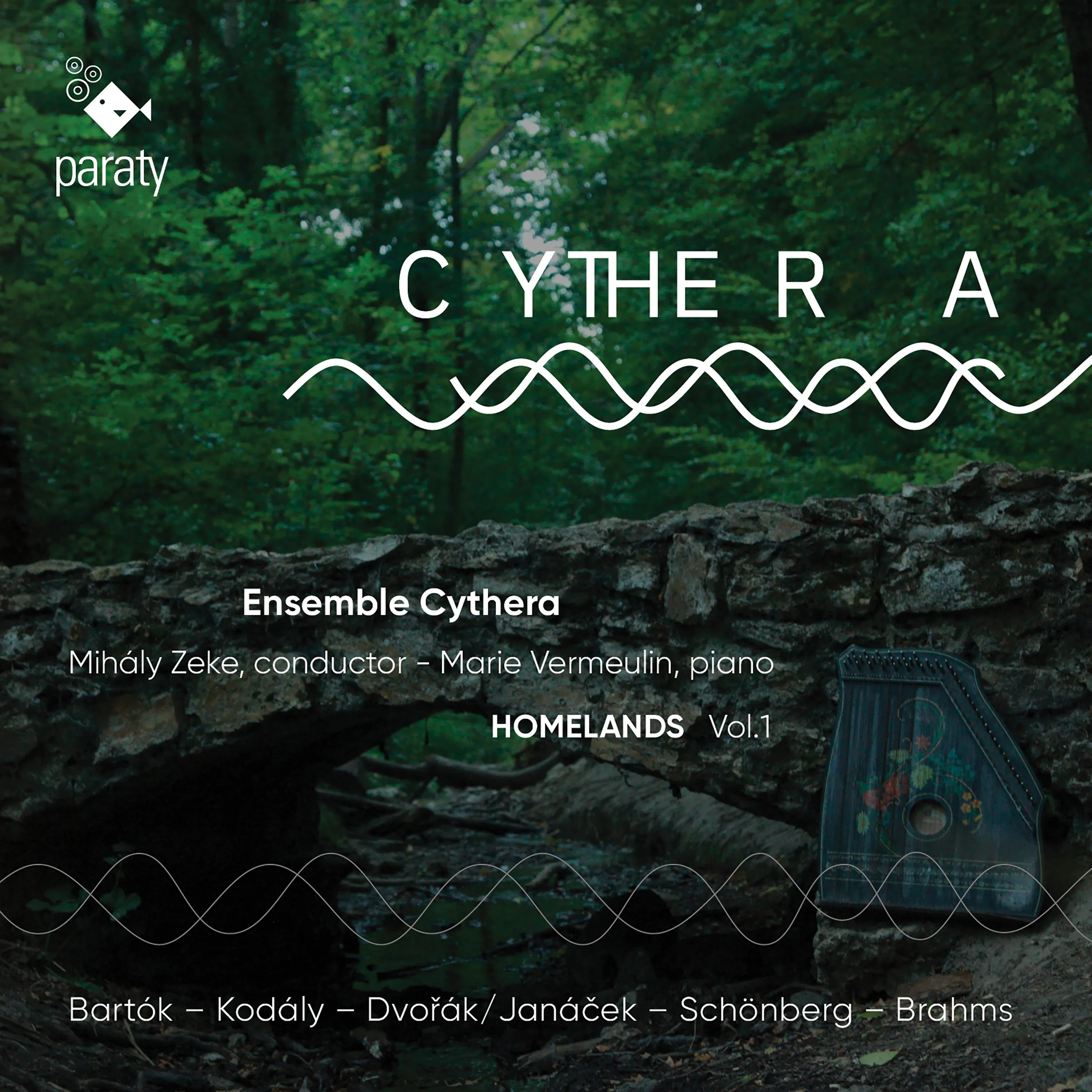
Homelands Vol.1, Ensemble Cythera, Mihály Zeke, Marie Vermeulin, choral music, chamber choir, European choral repertoire, folk songs, European folklore, Kodály Mátrai képek, Kodály Mátrai képek, Bartók Hungarian folk songs, Bartók Hungarian folk songs, Bartók Hungarian folk songs, Bartók Hungarian folk songs, Bartók Slovak folk songs, Bartók Slovakian folk songs, Dvořák Moravian duos, Janáček choral arrangements, Schönberg Drei Volkk Slieder op.49, Brahms Volkslieder, 19th century vocal music, 20th century vocal music, mixed chorus, piano and chorus, Central European music, Paraty
Cythera Ensemble, HOMELANDS Vol.1
First volume in the series Homelands, this recording offers a panorama of choral music inspired by popular songs from Central Europe, reinterpreted by composers of the 19th and 20th centuries. The program brings together works by Zoltán Kodály, Béla Bartók, Antonín Dvořák (arranged by Leoš Janáček), Arnold Schönberg, and Johannes Brahms, bringing together popular traditions and scholarly writing. All the pieces explore the transformation of folk materials into elaborate choral forms, for mixed chorus, with or without piano accompaniment.
The Cythera Ensemble, a European chamber choir founded and directed by Mihály Zeke, brings together singers from several countries in a group of varying numbers. The choir is accompanied on the piano by Marie Vermeulin, on a Steinway from 1896. The recorded works cover a broad stylistic spectrum: choral paintings inspired by the Mátra region at Kodály, Hungarian and Slovak folk songs at Bartók, Moravian duets by Dvořák reworked by Janáček, German folk songs revisited by Schönberg, and Volkslieder and vocal quartets by Brahms.
Conceived as a pentalogy, the collection Homelands is interested in the links between cultural identity, collective memory and musical writing. This first volume, centered on a journey from Hungary to Germany, highlights how composers used the choral voice to place popular traditions in artistic continuity, between oral transmission and written musical heritage.
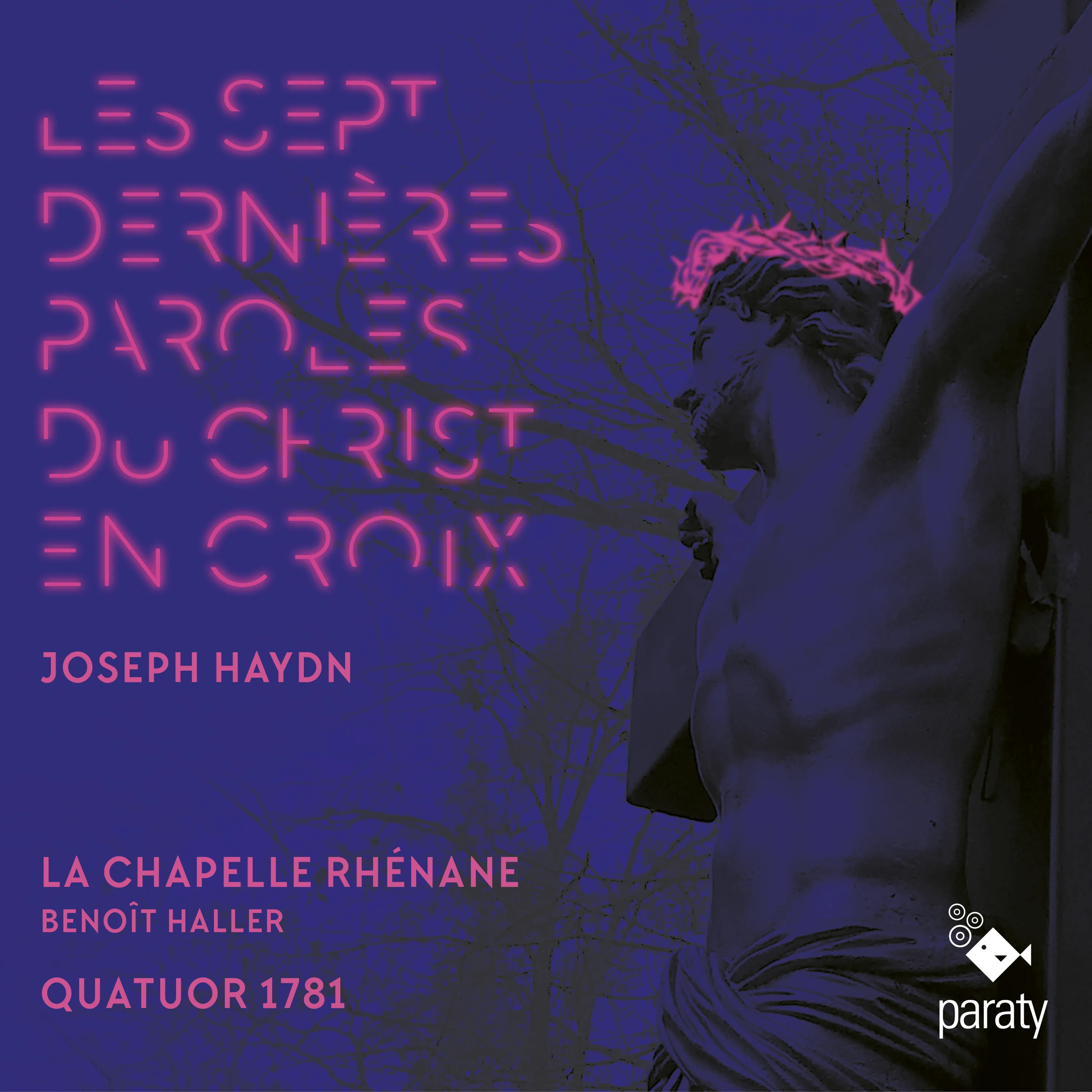
Joseph Haydn, The Seven Last Words of Christ on the Cross, La Chapelle Rhénane, La Chapelle Rhénane, La Chapelle Rhénane, Quartet 1781, Helene Walter, Salome Haller, Pierre-Yves Cras, Guillaume Humbrecht, Koji Yoda, Koji Yoda, Satryo Aryobimo Yudomartono, Yudomartono, Quartet, Satryo Aryobimo Yudomartono, Jérôme Vidaller, Jérôme Vidaller, Jérôme Vidaller, Classical Sacred Music, Oratorio, Sonatas, Evangelist, String Quartet, 18th Century, Religious Music, Koji Yoda, Satryo, Yoda, Yoda, Satryo Aryobimo Yudomartono, Yudomartono, Jérôme Vidaller, Jérôme Vidaller,
The last seven words of Christ on the cross
The Seven Last Words of Christ on the Cross by Joseph Haydn is presented here in a version combining La Chapelle Rhenane and the Quartet 1781. The work alternates instrumental introductions, sonatas and interventions by the Evangelist, following the liturgical structure designed by Haydn at the end of the 18th century. The instrumental ensemble restores the musical continuity between orchestral meditation and sung lyrics.
The vocal parts are provided by Hélène Walter (soprano), Salomé Haller (mezzo-soprano), Benoît Haller (tenor) and Pierre-Yves Cras (bass baritone). The interventions of the Evangelist and the vocal soloists are inserted between the seven sonatas, each corresponding to a word of Christ, from the Introduzione to the final earthquake.
The instrumental production brings together Guillaume Humbrecht (first violin), Koji Yoda (second violin), Satryo Aryobimo Yudomartono (viola) and Jérôme Vidaller (cello). This interpretation compares Haydn's expressive writing and the spiritual dimension of the work, in a structured reading that is faithful to the original form.
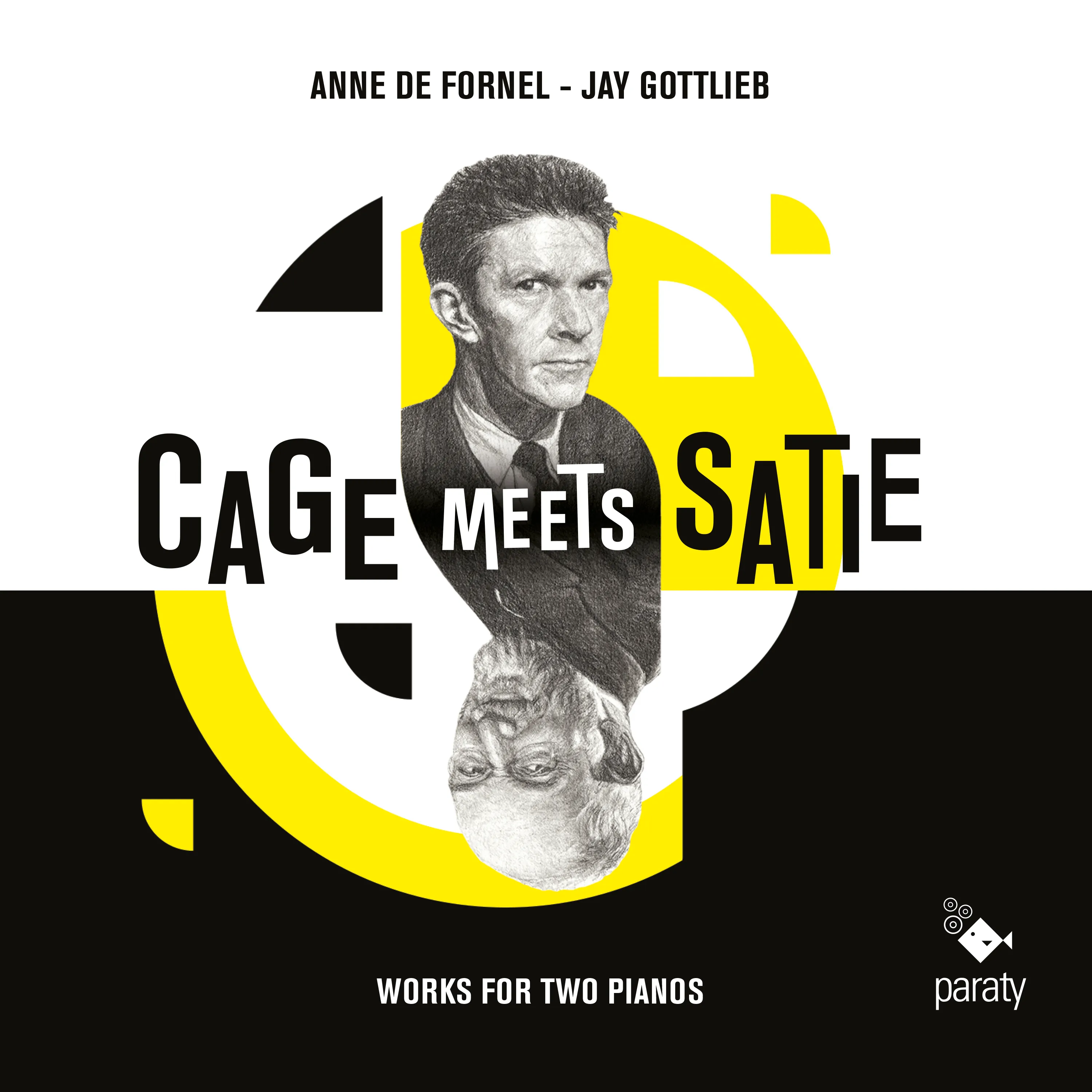
Cage Meets Satie, John Cage, Erik Satie, Socrate Satie, Socrate Satie, Socrate arrangement John Cage, Experiences No. 1, Three Dances, piano prepared, two pianos, Anne de Fornel, Jay Gottlieb, contemporary music, music of the 20th century, music of the 20th century, music of the 20th century, music of the 20th century, Merce Cunningham, Merce Cunningham, Black Mountain College, Piano Steinway, Paraty Productions, American music, French music, musical avant-garde
Cage Meets Satie, Anne de Fornel - Jay Gottlieb
This program explores the artistic and intellectual relationship between John Cage and Erik Satie, a relationship that has developed over several decades. As early as 1948, Cage played a central role in the rediscovery and dissemination of Satie's work in the United States, in particular through a series of concerts organized at Black Mountain College, devoted exclusively to her music. During his stays in Paris in 1949, Cage studied Satie's manuscripts, met several of his close collaborators and discovered in particular the Vexations, a work that he introduced to the American public during a marathon performance organized in New York in 1963.
The disc presents several works emblematic of this artistic filiation. Socrates by Erik Satie, composed between 1917 and 1918 on texts by Plato translated by Victor Cousin, is proposed in the arrangement for two pianos made by John Cage between 1944 and 1969. This adaptation work is part of Cage's collaboration with choreographer Merce Cunningham. The program also includes Experiences No. 1, composed in 1945, which testifies to Satie's aesthetic influence on Cage's musical language, as well as Three Dances for two prepared pianos, a major work from the prepared piano period.
The recording features pianists Anne de Fornel and Jay Gottlieb. Anne de Fornel is a French-American pianist and musicologist, doctor in musicology, specialist in John Cage and author of a reference monograph published in 2019. Jay Gottlieb, an American pianist who studied at Juilliard and Harvard in particular, worked with many major composers of the 20th century and performed at major international festivals. The recording was made in March 2019 at the Auditorium of the Conservatoire à Rayonnement Régional de Paris, on Steinway model D pianos, under the artistic direction and sound recording of Cyrille Métivier.

Johannes Brahms, Brahms cello sonatas, sonatas for cello and piano, Marie-Claude Bantigny, Karolos Zouganelis, romantic chamber music, Brahms Op. 38, Brahms Op. 78, Brahms Op. 78, Brahms Op. 99, Brahms Op. 99, Brahms, 99, 99, Brahms, Op. 99, Brahms, Piano, Piano, Piano Sonatas, Piano Sonatas, Piano Sonatas
Brahms, Four Sonatas for Cello & Piano
This recording brings together for the first time the four sonatas by Johannes Brahms for cello and piano, including the two original cello sonatas (op. 38 and op. 99) as well as the transcriptions made by the composer himself or by the performers of the violin sonatas op. 78 and op. 108. The ensemble covers a period of more than twenty years of creation, from the composer's youth to full maturity, and highlights the continuity of his chamber music writing, marked by a strong lyrical dimension and a constant reference to vocality.
The Sonata op. 38 in E minor, composed between 1862 and 1865, is characterized by introspective writing and a marked use of counterpoint, especially in the final movement inspired by Bach's The Art of Fugue. The Sonata op. 78, originally written for violin and piano, is presented here in its transposed version for cello and piano in D major, using material from Lied Regenlied op. 59 no. 3. The Sonata op. 99 in F major, composed in 1886 on the shores of Lake Thun, developed a denser and more passionate style, while the Sonata op. 108 in D minor, transcribed for cello, marked the culmination of Brahms's instrumental language through its formal and expressive breadth.
Marie-Claude Bantigny interprets these works on the cello, an instrument whose range and tone reinforce the vocal and introspective dimension of these sonatas. She is accompanied on the piano by Karolos Zouganelis. The recording was made in February 2020 at the Prayssas auditorium. The two performers offer a continuous reading of this corpus, comparing the different periods of Brahms's creation and emphasizing the profound unity of his writing for string instruments and keyboards.
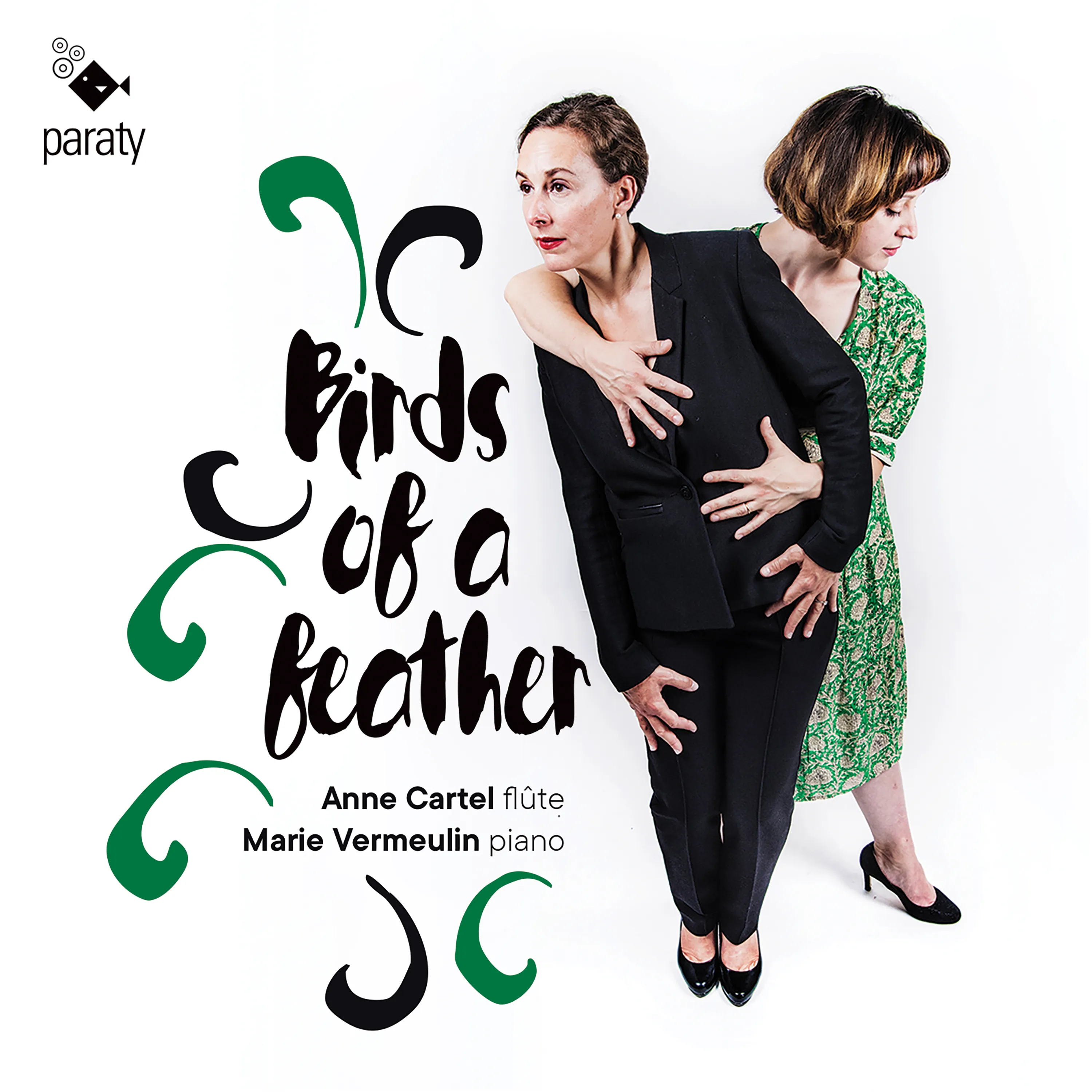
Birds of a Feather, Anne Cartel, Marie Vermeulin, flute and piano, flute and piano, French music 20th century, contemporary music, Olivier Messiaen birds, Debussy flute piano, Prelude to the afternoon of a faun transcription, François-Bernard Mâche Sopiana, François-Bernard Mâche Sopiana, Tristan Murail, flute and piano, Tristan Murail, flute piano, Tristan Murail, flute piano, Tristan Murail, flute piano, Tristan Murail, flute piano, Tristan Murail, flute piano, Tristan Murail, flute piano, Tristan Murail, flute piano, Tristan Murail, flute piano, Tristan Murail, flute piano, Tristan Murail, flute piano, Tristan Murail, flute piano, Tristan Nut nut, birds' songs music, contemporary flute, contemporary piano, first recording, spectral music, piano flute repertoire, Paraty Productions
Bird of a Feather
Birds of a Feather brings together flautist Anne Cartel and pianist Marie Vermeulin for a program devoted to performances of birds' songs in French music, from the end of the 19th century to contemporary creation. The record explores the filiation that connects Claude Debussy to Olivier Messiaen, then to several composers of the 20th and 21st centuries, considering the bird both as a source of poetic inspiration and as a structuring musical material.
The program includes the Prelude to the Afternoon of a Faun by Claude Debussy in the transcription for flute and piano by Gustave Samazeuilh, Le Merle noir et Sigle by Olivier Messiaen, as well as works by François-Bernard Mâche, Michaël Levinas, Michaël Levinas, Tristan Murail, Philippe Hurel, and Sigle by Olivier Messiaen, as well as works by François-Bernard Mâche, Michaël Levinas, Michaël Levinas, Tristan Murail, Philippe Hurel, and Marc Monnet. Some pieces use bird songs recorded and integrated into the instrumental writing, in particular Sopiana by François-Bernard Mâche for flute, piano and fixed sounds. Several works are being recorded here for the first time.
The recording brings together various aesthetics, ranging from the direct transcription of the bird song to its spectral or symbolic treatment. It is part of an approach of dialogue between nature and musical creation, by exploring more than a century of French music. Birds of a Feather thus offers a coherent overview of the repertoire for flute and piano inspired by the avian world, performed by two musicians who have long been involved in contemporary creation.
David Achenberg, Bleu Ébène, contemporary string quartet, quartet and electronics, quartet and electronics, magnetic tape, contemporary French music, Quatuor Tana, complete quartets, microtonal music, contemporary creation, contemporary chamber music, contemporary chamber music, Studio Igloo recording, recording Studio Igloo, Paraty Productions, string quartet 21st century
Bleu Ébène, Tana Quartet
In 2011, David Achenberg entrusted his first two string quartets to the Tana Quartet. These works gave rise to a close collaboration that quickly led to the commission of a third quartet, conceived as the natural culmination of a coherent ensemble. The first three pieces constitute a triptych based on common musical material, divided from different formal and expressive perspectives.
The fourth quartet, also commissioned by the Tana Quartet, introduced electronics by adding magnetic tape. His microtonal language favors writing that is often close to silence, sometimes interrupted by more abrupt breaks. This work extends the sound reflection initiated in previous quartets while opening a new listening space through the integration of the electroacoustic medium.
This recording brings together all of David Achenberg's string quartets, performed by the Tana Quartet, an ensemble involved in their genesis from the very beginning. It was made in March 2018 at the Igloo Studio in Brussels. The artistic direction is provided by the Tana Quartet, with sound recording, editing and mastering carried out by Daniel Léon. The texts are written by David Achenberg and Antoine Maisonhaute.
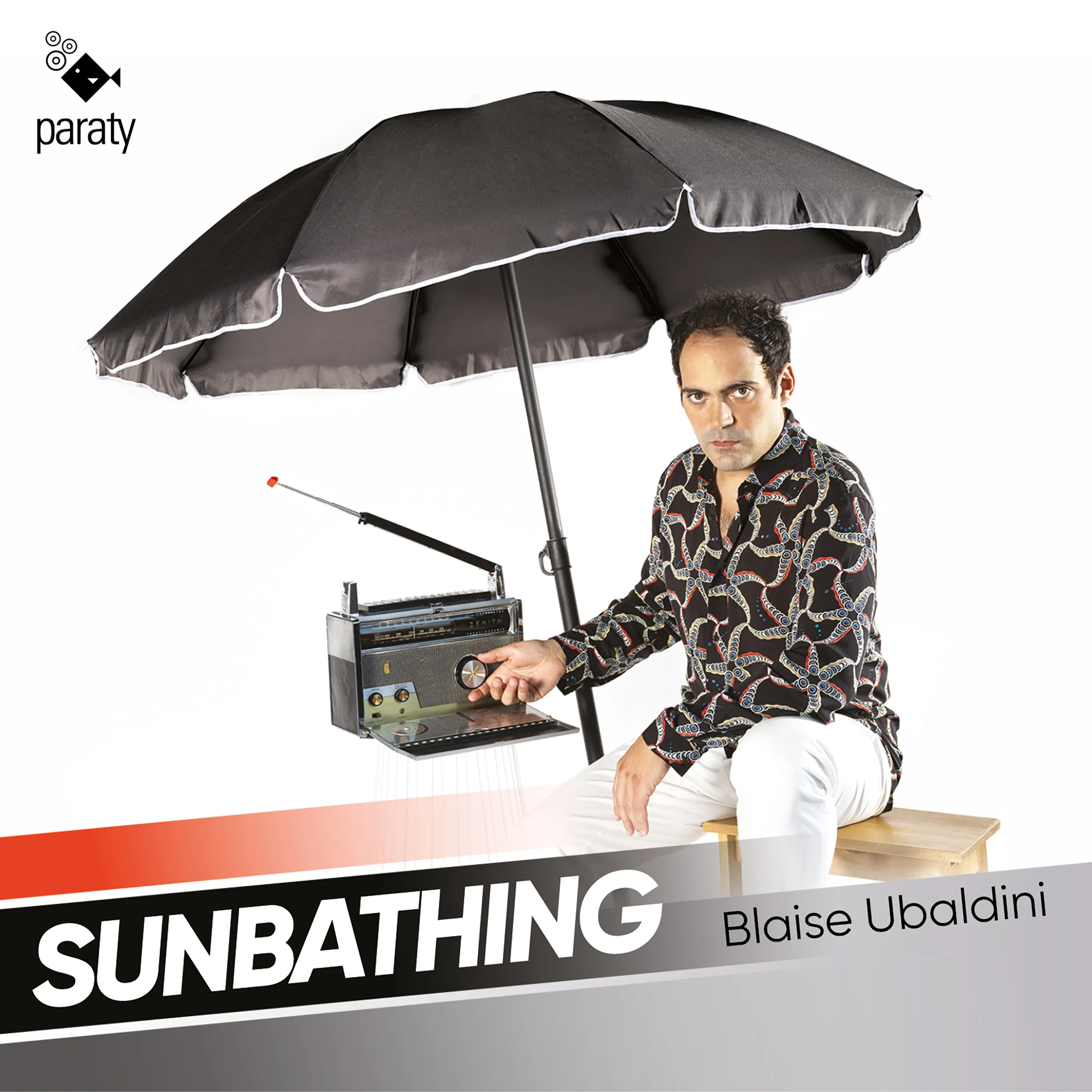
Sunbathing, Blaise Ubaldini, contemporary music, music with electronics, music with electronics, electroacoustic music, electroacoustic music, electroacoustic music, bass clarinet and electronics, piano and electronics, Paetzold flute, double bass, Liz Pearse, Liz Pearse, Shanna Pranaitis, Shanna Pranaitis, electroacoustic music, electroacoustic music, electroacoustic music, electroacoustic music, Of the 21st century
Sunbathing
Sunbathing brings together five pieces for soloist and electronics composed by Blaise Ubaldini between 2010 and 2021. The program explores the relationship between acoustic sound and electronic processing through sound transmission, mirror, and reflection devices. Each work involves a solo instrument or the voice, in direct interaction with electronics, designed as an extension, duplication or transformation of musical material.
The record includes Impasse for bass clarinet and electronics, Isaac Newton in a spaceship for bass flute and electronics, La Livri for piano and electronics, Ferocious Purposes for Paetzold flute double bass in F and electronics, and Sunbathing for voice and electronics, and Sunbathing for voice and electronics based on a poem by Kamau Daaood. The works address notions of memory, inner voice, remembrance, and spectral presence, drawing on literary, philosophical, and musical references, from Rameau to Antonin Artaud and Isaac Newton.
The performers gathered for this recording are Liz Pearse (vocals), Shanna Pranaitis (flutes), Layla Ramezan (piano), Martin Adámek (bass clarinet) and Jan Van Hoecke (Paetzold recorder). The album was recorded at Espace Consonance in Saxon (Switzerland) in August 2021. The artistic direction and sound recording were provided by Vincent Mons. The record is produced by Paraty, with a booklet written by the composer.
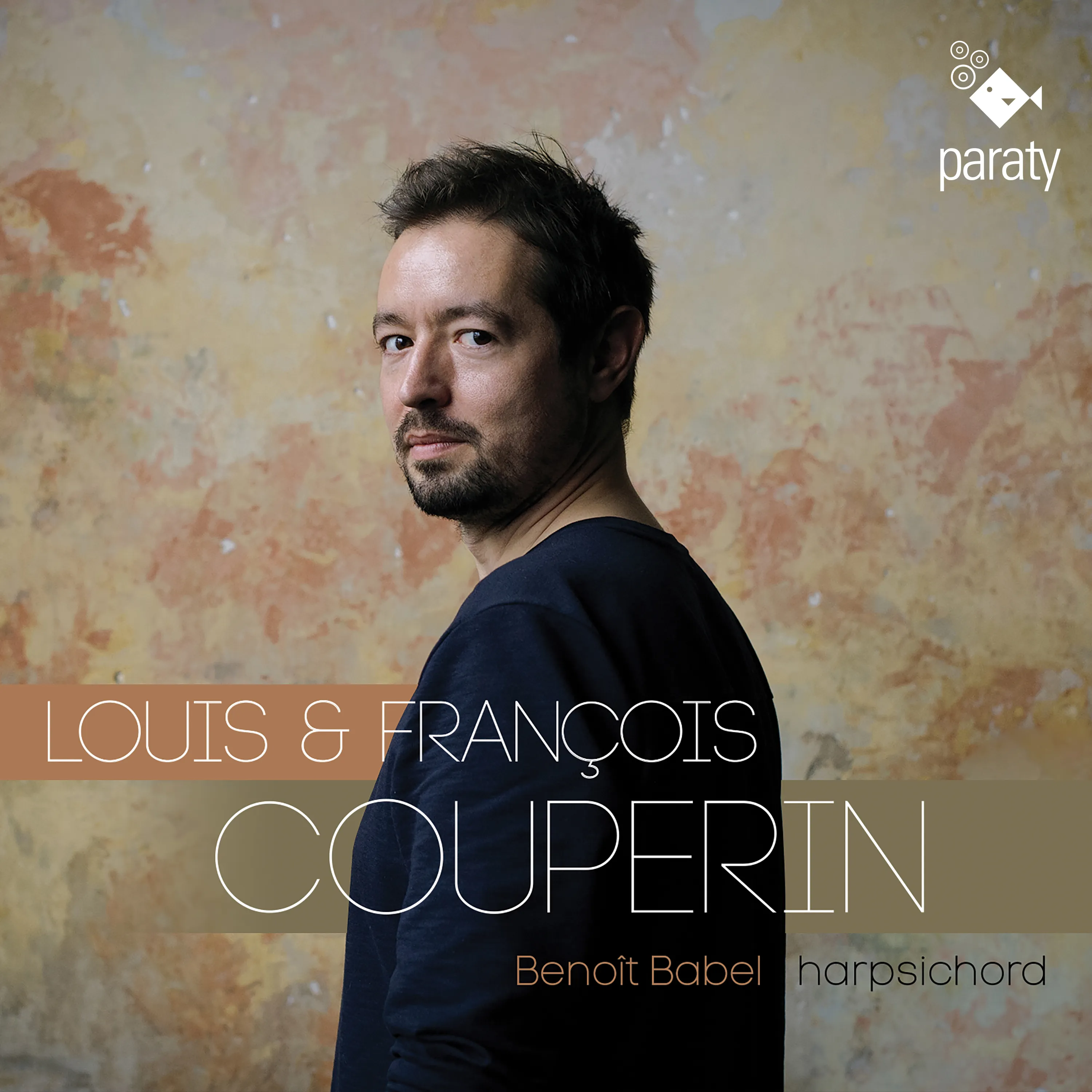
Louis Couperin, François Couperin, Benoît Babel, harpsichord, harpsichord, French baroque music, 17th century French harpsichord, harpsichord pieces, Paraty, Guillaume Rebinguet-Sudre, 1667 harpsichord, 1667 harpsichord, harpsichord, 1667 harpsichord, harpsichord, harpsichord, 1667, harpsichord, harpsichord, 1667, harpsichord, temperament, mesotonic, mesotonic temperament, keyboard music, Grand Siècle, harpsi
Louis & Francois Couperin, Benoît Babel
This recording brings together harpsichord works by Louis Couperin (1626—1661) and François Couperin (1668—1733), major figures of the Couperin dynasty. The program combines character pieces, dances and preludes, illustrating two distinct generations of French harpsichord music. Louis Couperin, active in Paris and a musician in the King's Chamber, leaves a work transmitted mainly by manuscripts. François Couperin, organist at Saint-Gervais and at the Royal Chapel, developed a structured and codified style of writing, which he precisely fixed in his play books.
The program is performed by Benoît Babel on harpsichord. The instrument used is a copy made in 2006 by Guillaume Rebinguet-Sudre of an anonymous French harpsichord dated 1667, preserved at the Museum of Fine Arts in Boston. This harpsichord uses the dimensions, the brass string layout and the internal structure of the original instrument. Two slightly differentiated chords, based on an adapted mesotonic temperament, were used in order to respect the specific sonic characteristics of each composer.
The recording was made in April 2021 at the Notre-Dame-de-l'Assomption church in Metz-le-Comte (Nièvre, France). The decoration of the soundboard and the harpsichord lid were designed by Florence Humeau. Sound recording, editing, mixing and mastering were provided by Arthur Delzescaux.
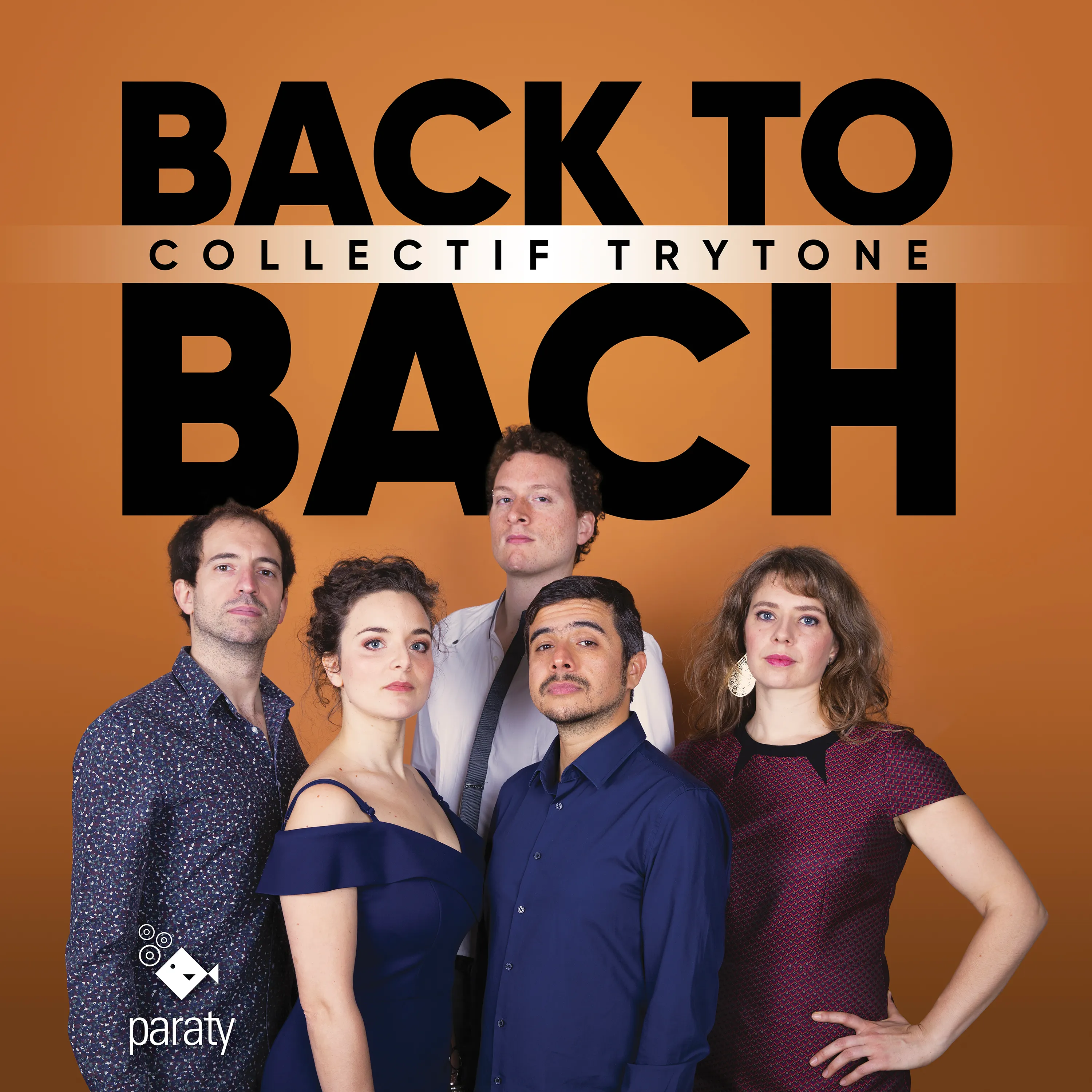
Back to Bach, Trytone Collective, Johann Sebastian Bach, BWV, revisited baroque music, jazz and classical music, musical improvisation, contemporary arrangements Bach, Lucie Chartin soprano, Joao Driessen saxophone, Joao Driessen saxophone, Joao Driessen saxophone, Mihail Ivanov saxophone, Mihail Ivanov double bass, Mihail Ivanov double bass, Joan Terol Amigó drums, Joan Terol Amigó drums, Joan Terol Amigó drums, jazz baroque fusion, contemporary classical music, contemporary classical music, crossover ensemble, Paraty Productions, Joao Driessen saxophone, Joao Driessen saxophone, Mihail Ivanov, saxophone, Mihail Ivanov, double bass, Mihail Ivanov, double bass, Mihail Ivanov, double bass, Mihail Ivanov
Back to Bach
Back to Bach is the first album by the Trytone Collective, an ensemble founded in 2016 by the pianist and arranger Lucie de Saint Vincent. The project is based on works by Johann Sebastian Bach used as starting material for arrangement, composition and improvisation. The pieces take as sources cantatas arias, excerpts from the Saint John Passion, from the Missa Brevis in A minor, as well as two preludes for keyboard, transformed and developed in a contemporary musical language integrating elements of jazz and ancient music.
The arrangements are mainly made by Lucie de Saint Vincent, with a specific contribution from Pascal Mabit for a piece. The work consists in extracting elements of Bach's songwriting — harmonic progressions, melodic lines, counterpoint — in order to form the basis for new musical forms. The pieces alternate written sections, passages inspired by Bach's style and spaces for improvisation, while maintaining an explicit reference to the original works identified by their BWV numbers.
The Trytone Collective brings together Lucie Chartin (soprano), Lucie de Saint Vincent (piano, arrangements), Joao Driessen (soprano and tenor saxophones), Mihail Ivanov (double bass) and Joan Terol Amigó (drums). The album was recorded in November 2019 at E-Sound Studios in the Netherlands, with Jonas Leopold and Thomas Cochrane recording the sound, mixed by Jonas Leopold and mastered by Pieter de Wagter. Back to Bach is part of an approach aimed at combining baroque, classical and jazz practices within the same collective project.
Intutions, Johann Sebastian Bach, Bach transcriptions, Bach chamber music, Bach chamber music, Bach violin organ, Stephanie Paulet, Elisabeth Geiger, violin and organ, Baroque violin, organ, Sonata BWV 1021, Partita BWV 1002, Partita BWV 1002, Sinfonias BWV 1002, Sinfonias BWV 788—801, Sinfonias BWV 788—801, Chorals BWV 788—801, Chorals BWV 645 BWV 659, Chorals BWV 645 BWV 659, Charolles organ, BWV 1021, Partita BWV 1002, Partita BWV 1002, Sinfonias BWV 1002, Sinfonias BWV 788—801, Sinfonias BWV 788—801 Musik, Bach trio sonatas, Bach inventions and sinfonias
Intuition, Stéphanie Paulet
INTUITIONS brings together original works by Johann Sebastian Bach and transcriptions for violin and organ, performed by Stéphanie Paulet and Élisabeth Geiger. The program combines sonatas, sinfonias, chorals, a partita for solo violin and a trio sonata, combining solo pieces, chamber music works and pages originally intended for keyboard or organ. Some transcriptions and adaptations are part of a reflection on the circulation of works by Bach and on the historical practice of transcription, which is central to his musical universe.
The project is based on a process of rereading and instrumental experimentation. The violin is integrated as an additional organ voice, fully participating in counterpoint and chamber music dialogue. The choices of registration and distribution of lines make it possible to explore different layers of Bachian writing, in particular in the Inventions and Sinfonias, the Sonata BWV 1021 and the Partita in B minor BWV 1002, some sections of which are the object of a new space between the two instruments. An Intermediate Current was imagined by Élisabeth Geiger using the material of the Partita.
The recording was made at the Charolles organ, built by the Blumenroeder factory and designed in collaboration with François Ménissier, in a concerted perspective adapted to the Baroque repertoire and to dialogue with a melodic instrument. The program also refers to Wilhelm Friedemann Bach, for whom Johann Sebastian Bach composed several of the works presented. Historical texts, in particular those by Johann Friedrich Agricola, shed light on the practice of implicit harmonization and confirm the coherence of this approach between violin and organ.
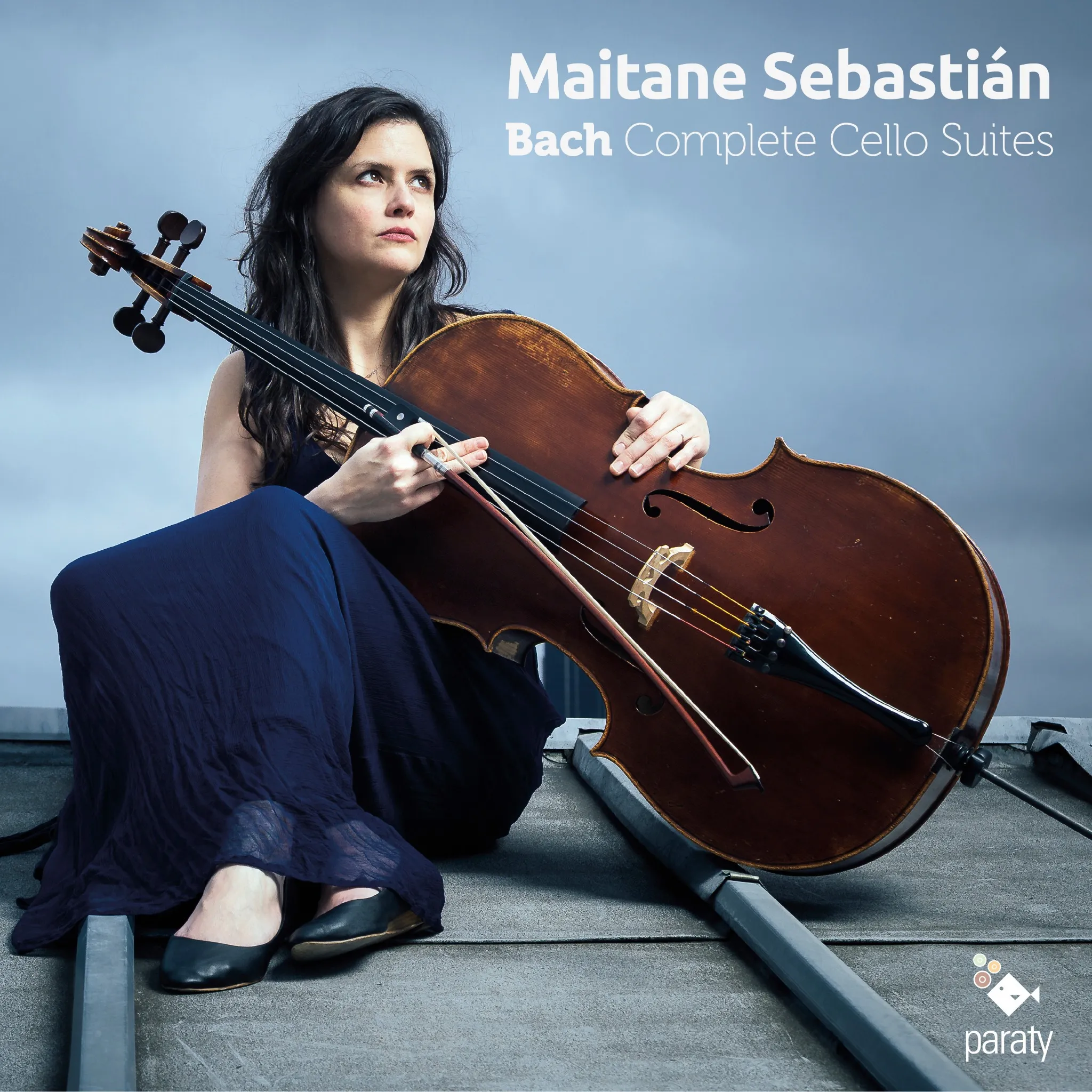
Bach, Johann Sebastian Bach, Bach cello suites, suites for solo cello, complete cello suites, complete cello suites, complete cello suites, complete cello suites, complete cello suites, complete cello suites, complete cello suites, complete cello suites, complete cello suites, complete cello suites, complete cello suites, complete cello suites, complete cello suites, complete cello suites, complete cello suites, complete cello suites, complete cello suites, complete cello suites, complete cello
Bach Complete Cello Suites
This recording brings together the complete six suites for solo cello by Johann Sebastian Bach, performed by cellist Maitane Sebastián. These works, composed at a period when Bach was already a violist, organist, organist, improviser and recognized composer, are part of a context where his liturgical functions did not elicit specific instrumental commissions. The Suites explore the polyphonic possibilities of a monodic instrument and are based on architectural and contrapuntal writing.
The interpretation follows scrupulously the manuscript by Anna Magdalena Bach, chosen as the main source. This work aims at a stripped-down approach to the musical text, without artifics, in order to restore the original flow of each Suite. The six works are envisaged as six distinct worlds, differentiated by their characters, tones and structures, while forming a coherent whole based on the internal diversity of Bach's language.
The recording was made at the chapel of the Domaine d'Aguerria, in Mauleon (Zuberoa). Suites 1 to 5 are performed on a copy of Joseph Guarneri senior cello made by Frédéric Chaudière, while Suite No. 6 is played on an anonymous 18th century French piccolo cello restored by Yair Hod Fainas. Several bows are used depending on the Suite. Sound recording is provided by Jérémie Garat, with editing and mastering done by Cyrille Métivier, Dimitri Soudoplatoff and Julien Costa. The booklet notes are written by Maitane Sebastián.
.webp)
.svg)

.svg)